

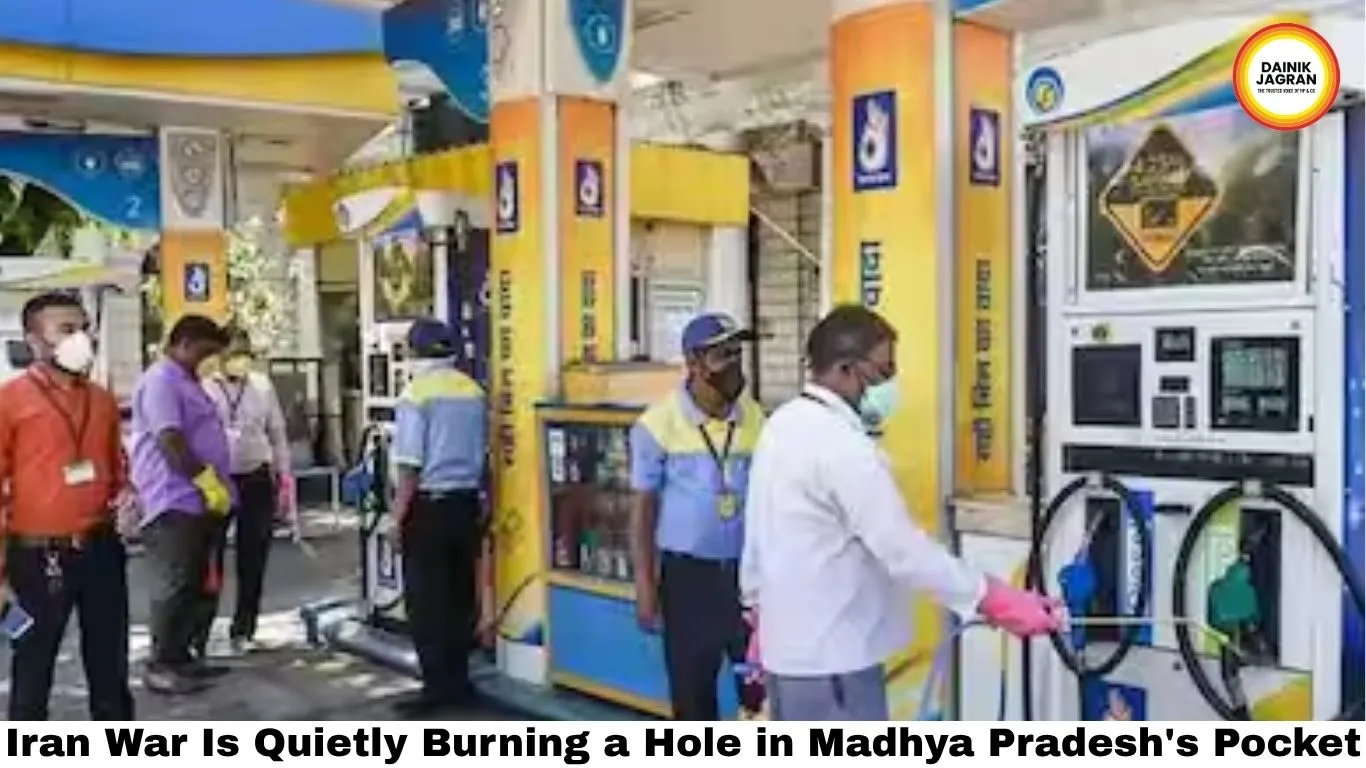
Diesel Price in Madhya Pradesh Today — March 23, 2026 City-Wise Rates

Digital Desk

Diesel Price in Madhya Pradesh Today — March 23, 2026 City-Wise Rates

Diesel price in Madhya Pradesh reaches ₹93.10 average on March 23 — Bhopal at ₹91.99, Indore at ₹92.33. Iran war drives crude to $114; another hike likely as Hormuz disruption continues.

Diesel at ₹93 and Rising: How the Iran War Is Quietly Burning a Hole in Madhya Pradesh's Pocket

Diesel prices in MP have climbed from ₹92.69 in January to ₹93.10 by March 22 — and with Brent crude crossing $119 per barrel and the Strait of Hormuz still disrupted, transport operators, farmers and small businesses are staring at another hike within days.


The Pump Price Nobody Is Talking About

While LPG cylinders and petrol prices dominate the fuel crisis headlines in Madhya Pradesh, diesel — the fuel that moves the state's food, freight, agriculture and construction — has been quietly and steadily rising for weeks. On March 22, 2026, the average diesel price across Madhya Pradesh stood at ₹93.10 per litre, with Bhopal recording ₹91.99 per litre and Indore at ₹92.33. The state-wide average has climbed from ₹92.69 in January through ₹92.72–₹92.78 in the January–February band and is now clearly trending higher. For a state that depends on diesel for virtually everything that moves, a sustained upward trajectory carries consequences far beyond the pump.


City-by-City Diesel Prices in MP — March 23, 2026

City Diesel Price (₹/litre)
Bhopal ₹91.99
Indore ₹92.33
Jabalpur ₹92.48
Gwalior ₹92.21
Ujjain ₹92.19
Rewa ₹92.76
Satna ₹92.71
Sagar ₹92.55
Chhindwara ₹92.62
Ratlam ₹92.38
State Average ₹93.10

Prices revised daily at 6 AM and include all applicable central and state taxes.


Why MP Pays More Than Most States

Madhya Pradesh has one of the highest diesel tax burdens in India. The state government levies a VAT of 23.22 percent per litre of diesel — the second highest VAT rate on diesel of any Indian state. This state tax is applied on top of the central government's excise duty of ₹15.33 per litre — a fixed component that does not change with market conditions. Together, these taxes mean that a significant portion of what an MP resident pays at the diesel pump goes directly to government coffers rather than reflecting the cost of the fuel itself.

When international crude prices rise — as they are currently doing sharply due to the US-Israel-Iran war — the VAT component rises in proportion because it is a percentage of the base price. This means MP consumers pay more per litre of price increase than consumers in states with lower or flat diesel tax structures. Every ₹1 increase in the base price of diesel costs MP consumers approximately ₹1.23 at the pump — the extra ₹0.23 going straight to state VAT.


The Iran War's Fuel Math

The global crude market has moved dramatically since the US-Israel-Iran war began on February 28. Brent crude, which was trading around $85 per barrel before the conflict, climbed to approximately $119.50 per barrel in intraday trading on March 10 — its largest single-day percentage and absolute rise since mid-2022. It has since stabilised in the $112–$114 per barrel range as of March 23, but the direction remains firmly upward as long as the Strait of Hormuz — which handles approximately 20 percent of global oil exports — remains disrupted.

India imports over 70 percent of its crude oil requirements. The Indian crude basket directly tracks Brent crude with a short lag. Every $10 per barrel increase in the Indian crude basket translates to approximately ₹4–5 per litre increase in petrol and diesel prices at the retail level before the government absorbs any portion through excise duty reductions. With crude at $114 and no confirmed date for Hormuz normalisation, oil marketing companies are under mounting pressure to revise fuel prices upward — pressure that has so far been resisted but cannot be deferred indefinitely.


What Another Hike Would Mean for MP

Diesel is not a consumer fuel in the way petrol is. It is an industrial fuel that powers every truck on NH-12, NH-44 and NH-52, every tractor in Vidisha and Hoshangabad, every generator at construction sites across Bhopal and Indore, and every bus in the MPSRTC fleet. When diesel prices rise, the cost increase does not stay at the pump — it moves through the economy in the form of higher freight rates, higher food prices, higher construction costs and higher public transport fares.

A ₹5 per litre diesel hike — conservative given the current crude trajectory — would add approximately ₹2,500 to ₹3,000 per month to the operating costs of a single medium goods vehicle plying MP's highways. For a small fleet operator running five trucks, that is ₹12,500 to ₹15,000 per month in additional fuel expenditure — money that is ultimately recovered from the cost of every tomato, onion and grain sack that moves from MP's farms to its cities.

For farmers in the Malwa plateau and the Chambal belt who are just entering the critical harvesting season for rabi crops — wheat and gram — diesel powers the threshers, the tractors and the irrigation pump sets. A hike at this precise moment in the agricultural calendar adds to costs at the worst possible time.


No Relief Expected in the Near Term

The central government has so far chosen not to reduce excise duty on diesel in response to the Iran war-driven price surge — a decision that reflects both the fiscal pressure of the current budget cycle and the government's stated preference for using the oil PSU balance sheets as a buffer rather than cutting tax revenue. Oil marketing companies have absorbed losses per litre in the short term. But that absorption has limits — and when those limits are reached, retail prices move.

The MP state government has made no announcement of any VAT reduction on diesel. With the state facing its own fiscal pressures and the BMC budget just presented at ₹3,500 crore, a revenue reduction on diesel taxes is unlikely in the current political and economic environment.


What to Watch

Three developments will determine diesel prices in Madhya Pradesh over the next two to four weeks. First — whether the Strait of Hormuz opens, partially or fully, following the expiry of Trump's 48-hour ultimatum. Second — whether the central government announces any excise duty cut as part of a broader economic relief package in response to the war's impact on Indian consumers. Third — whether the state government intervenes with a VAT reduction of its own — a step that would provide immediate relief but cost the state treasury an estimated ₹200–300 crore per percentage point of VAT reduction.

Until one or more of those three things happens, the diesel meter in Madhya Pradesh will keep climbing — quietly, relentlessly, and at the second-highest tax rate in the country.

english.dainikjagranmpcg.com
23 Mar 2026 By Jiya.S

Diesel Price in Madhya Pradesh Today — March 23, 2026 City-Wise Rates

Digital Desk

Diesel at ₹93 and Rising: How the Iran War Is Quietly Burning a Hole in Madhya Pradesh's Pocket

Diesel prices in MP have climbed from ₹92.69 in January to ₹93.10 by March 22 — and with Brent crude crossing $119 per barrel and the Strait of Hormuz still disrupted, transport operators, farmers and small businesses are staring at another hike within days.


The Pump Price Nobody Is Talking About

While LPG cylinders and petrol prices dominate the fuel crisis headlines in Madhya Pradesh, diesel — the fuel that moves the state's food, freight, agriculture and construction — has been quietly and steadily rising for weeks. On March 22, 2026, the average diesel price across Madhya Pradesh stood at ₹93.10 per litre, with Bhopal recording ₹91.99 per litre and Indore at ₹92.33. The state-wide average has climbed from ₹92.69 in January through ₹92.72–₹92.78 in the January–February band and is now clearly trending higher. For a state that depends on diesel for virtually everything that moves, a sustained upward trajectory carries consequences far beyond the pump.


City-by-City Diesel Prices in MP — March 23, 2026

City Diesel Price (₹/litre)
Bhopal ₹91.99
Indore ₹92.33
Jabalpur ₹92.48
Gwalior ₹92.21
Ujjain ₹92.19
Rewa ₹92.76
Satna ₹92.71
Sagar ₹92.55
Chhindwara ₹92.62
Ratlam ₹92.38
State Average ₹93.10

Prices revised daily at 6 AM and include all applicable central and state taxes.


Why MP Pays More Than Most States

Madhya Pradesh has one of the highest diesel tax burdens in India. The state government levies a VAT of 23.22 percent per litre of diesel — the second highest VAT rate on diesel of any Indian state. This state tax is applied on top of the central government's excise duty of ₹15.33 per litre — a fixed component that does not change with market conditions. Together, these taxes mean that a significant portion of what an MP resident pays at the diesel pump goes directly to government coffers rather than reflecting the cost of the fuel itself.

When international crude prices rise — as they are currently doing sharply due to the US-Israel-Iran war — the VAT component rises in proportion because it is a percentage of the base price. This means MP consumers pay more per litre of price increase than consumers in states with lower or flat diesel tax structures. Every ₹1 increase in the base price of diesel costs MP consumers approximately ₹1.23 at the pump — the extra ₹0.23 going straight to state VAT.


The Iran War's Fuel Math

The global crude market has moved dramatically since the US-Israel-Iran war began on February 28. Brent crude, which was trading around $85 per barrel before the conflict, climbed to approximately $119.50 per barrel in intraday trading on March 10 — its largest single-day percentage and absolute rise since mid-2022. It has since stabilised in the $112–$114 per barrel range as of March 23, but the direction remains firmly upward as long as the Strait of Hormuz — which handles approximately 20 percent of global oil exports — remains disrupted.

India imports over 70 percent of its crude oil requirements. The Indian crude basket directly tracks Brent crude with a short lag. Every $10 per barrel increase in the Indian crude basket translates to approximately ₹4–5 per litre increase in petrol and diesel prices at the retail level before the government absorbs any portion through excise duty reductions. With crude at $114 and no confirmed date for Hormuz normalisation, oil marketing companies are under mounting pressure to revise fuel prices upward — pressure that has so far been resisted but cannot be deferred indefinitely.


What Another Hike Would Mean for MP

Diesel is not a consumer fuel in the way petrol is. It is an industrial fuel that powers every truck on NH-12, NH-44 and NH-52, every tractor in Vidisha and Hoshangabad, every generator at construction sites across Bhopal and Indore, and every bus in the MPSRTC fleet. When diesel prices rise, the cost increase does not stay at the pump — it moves through the economy in the form of higher freight rates, higher food prices, higher construction costs and higher public transport fares.

A ₹5 per litre diesel hike — conservative given the current crude trajectory — would add approximately ₹2,500 to ₹3,000 per month to the operating costs of a single medium goods vehicle plying MP's highways. For a small fleet operator running five trucks, that is ₹12,500 to ₹15,000 per month in additional fuel expenditure — money that is ultimately recovered from the cost of every tomato, onion and grain sack that moves from MP's farms to its cities.

For farmers in the Malwa plateau and the Chambal belt who are just entering the critical harvesting season for rabi crops — wheat and gram — diesel powers the threshers, the tractors and the irrigation pump sets. A hike at this precise moment in the agricultural calendar adds to costs at the worst possible time.


No Relief Expected in the Near Term

The central government has so far chosen not to reduce excise duty on diesel in response to the Iran war-driven price surge — a decision that reflects both the fiscal pressure of the current budget cycle and the government's stated preference for using the oil PSU balance sheets as a buffer rather than cutting tax revenue. Oil marketing companies have absorbed losses per litre in the short term. But that absorption has limits — and when those limits are reached, retail prices move.

The MP state government has made no announcement of any VAT reduction on diesel. With the state facing its own fiscal pressures and the BMC budget just presented at ₹3,500 crore, a revenue reduction on diesel taxes is unlikely in the current political and economic environment.


What to Watch

Three developments will determine diesel prices in Madhya Pradesh over the next two to four weeks. First — whether the Strait of Hormuz opens, partially or fully, following the expiry of Trump's 48-hour ultimatum. Second — whether the central government announces any excise duty cut as part of a broader economic relief package in response to the war's impact on Indian consumers. Third — whether the state government intervenes with a VAT reduction of its own — a step that would provide immediate relief but cost the state treasury an estimated ₹200–300 crore per percentage point of VAT reduction.

Until one or more of those three things happens, the diesel meter in Madhya Pradesh will keep climbing — quietly, relentlessly, and at the second-highest tax rate in the country.

https://english.dainikjagranmpcg.com/states/madhya-pradesh/diesel-price-in-madhya-pradesh-today-%E2%80%94-march-23-2026/article-15845

Related Posts

Advertisement

Latest News


