


Indore Metro CMRS Inspection 2026: Speed Test Done, Safety Certified — Is Indore Finally Getting Its Full Metro Network This Month?
Digital Desk
The Countdown Has Begun — Indore's Metro Dream Is One Clearance Away
For years, Indore has watched its metro project inch forward — through construction delays, safety rounds, and multiple revised launch timelines. This week, that wait may finally be nearing its end. The Commissioner of Metro Railway Safety (CMRS) has concluded a four-day intensive inspection of the Indore Metro corridor from March 15 to 18, completing the critical final safety evaluation that stands between the city and a fully expanded metro network.
The Indore Metro CMRS inspection 2026 covered the extended priority corridor — a stretch that, once cleared, will connect far more of the city than the existing operational section — and included the most comprehensive battery of safety, speed, and systems tests the project has undergone to date.
What the CMRS Team Tested: Four Days, Zero Shortcuts
The inspection, which began on March 15 and concluded today, was no formality. The CMRS team carried out an exhaustive, multi-system evaluation designed to verify that every component of the metro corridor meets national safety standards before a single passenger boards.
Among the key tests conducted was the TETRA radio signal examination, which verified the robustness of the communication network connecting train operators, on-ground metro staff, and the central control room. In a live metro system, this link is non-negotiable — any break in communication during operations can have serious consequences. The team also tested the Emergency Stop Plunger system, a critical failsafe that allows operators to bring the entire train to an immediate halt in the event of an emergency.
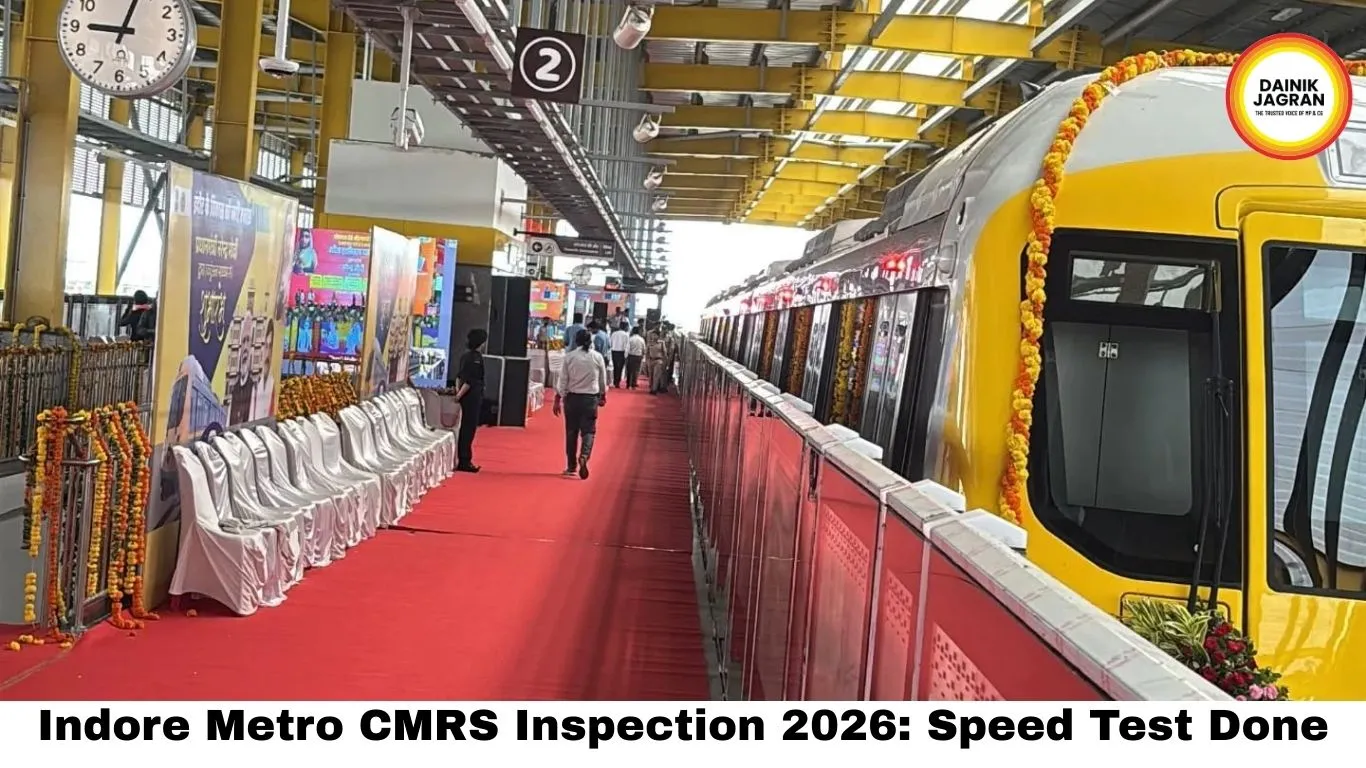
The inspection team physically boarded metro coaches to observe the train at operational speed — set at 80 kilometres per hour — and evaluated vibration levels, braking performance while stationary at platforms, and overall coach safety. Trolley-based inspections were also carried out along the elevated viaduct to examine track quality, alignment, and structural integrity from the ground up.
Passenger facilities at each station were scrutinised as well: lifts, escalators, platforms, electrical systems, ticketing infrastructure, and operational control rooms all came under the CMRS lens. This level of scrutiny was not incidental — it reflects the understanding that for a city of Indore's size and ambition, a metro system must be safe before it can be celebrated.
The Extended Route: What Indore Is About to Gain
The existing Indore Metro currently operates on its Super Priority Corridor, a 5.9-kilometre stretch between Gandhi Nagar and Super Corridor Station 3. The corridor that has just been inspected represents the extended Phase 2 network — an 11-kilometre route from Super Corridor Station 3 running all the way to the Malviya Nagar intersection near Radisson Hotel, passing through 11 new stations including Super Corridor 1, Bhorasla Square, MR 10 Road, ISBT, Chandragupt Square, Heera Nagar, Bapat Square, Meghdoot Garden, Vijay Nagar Square, and Malviya Nagar Square.
This is not a minor upgrade. Once this corridor becomes operational, Indore's metro network will stretch deep into the city's most densely trafficked zones — connecting the tech and commercial super corridor directly with the retail, residential, and institutional heart of the city at Vijay Nagar and beyond.
MPMRCL Managing Director S. Krishna Chaitanya has been visibly hands-on in the run-up to this inspection, personally conducting on-ground reviews, directing contractors to address any shortcomings flagged in preliminary rounds, and ensuring that civil and systems work across all 16 stations of the corridor are in synchronised completion shape before the CMRS team arrived.
What Happens Next: Safety Nod, Then Launch
The CMRS inspection completed this week is the final stage before a safety certificate can be issued. Once the Commissioner formally grants clearance — a process that follows review of the inspection reports — MPMRCL will be in a position to announce a commercial launch date for the extended corridor. All signs point to this happening before the end of March 2026.
This would be a significant milestone not just for Indore but for Madhya Pradesh as a whole. Indore Metro's first phase commercial operations, which began in May 2025, were already a landmark moment. An expanded, citywide network would cement Indore's position as one of India's fastest-growing smart cities — and ease the daily commute burden for hundreds of thousands of residents who currently navigate some of the country's most congested urban roads.
Indore Has Earned This Moment — Now Sustain It
The Indore Metro CMRS inspection of March 2026 represents the culmination of years of planning, revision, construction, and patience. There were missed deadlines. There were repeated announcements that failed to materialise. There was frustration, especially as Indore watched other cities race ahead with their metro networks.
But the discipline shown in the final stretch — the MPMRCL management's insistence on addressing every CMRS observation before seeking clearance, the Managing Director's personal supervision of construction quality, and the refusal to rush a safety process just to meet a political headline — deserves recognition.
A metro system is not a ribbon-cutting exercise. It is a commitment to millions of daily riders that the infrastructure they trust with their lives has been built, tested, and certified to the highest standards. Indore has done that work. The clearance, when it comes, will be well earned.
Now the task shifts: keep it running well, extend it further, integrate it with feeder buses and last-mile connectivity, and make it genuinely accessible to every income group across the city. The train is ready. Indore, get on board.
.jpg)




