MP Government to Prepare Scientific Betwa River Restoration Plan Under Namami Gange

Digital Desk

MP Government to Prepare Scientific Betwa River Restoration Plan Under Namami Gange

Madhya Pradesh will prepare a scientific DPR to restore the Betwa River under the Namami Gange Mission, focusing on sewage treatment, industrial pollution control and river rejuvenation across Bhopal, Raisen and Vidisha.

The Madhya Pradesh government is set to launch a comprehensive scientific conservation and rejuvenation plan for the Betwa River under the Centre's Namami Gange Mission, with a special focus on reducing pollution in Bhopal, Raisen and Vidisha districts.

Officials said the initiative will go beyond routine river-cleaning activities and focus on restoring the river ecosystem through a long-term, science-based approach. The project aims to curb untreated sewage, industrial effluents, riverbank degradation and declining environmental flow while ensuring sustainable river management.

To facilitate the project, engineers and officials are currently undergoing technical training in Bhopal to prepare a detailed and scientifically designed Detailed Project Report (DPR) for the Betwa River.

Conservation to begin from the most polluted stretches

According to officials associated with the Namami Gange Mission, the Betwa River originates from Jhiri village in the forests of Raisen district. However, soon after its origin, the river passes through Bhopal, Raisen and Vidisha, where increasing urbanisation and industrial activities have significantly affected water quality.

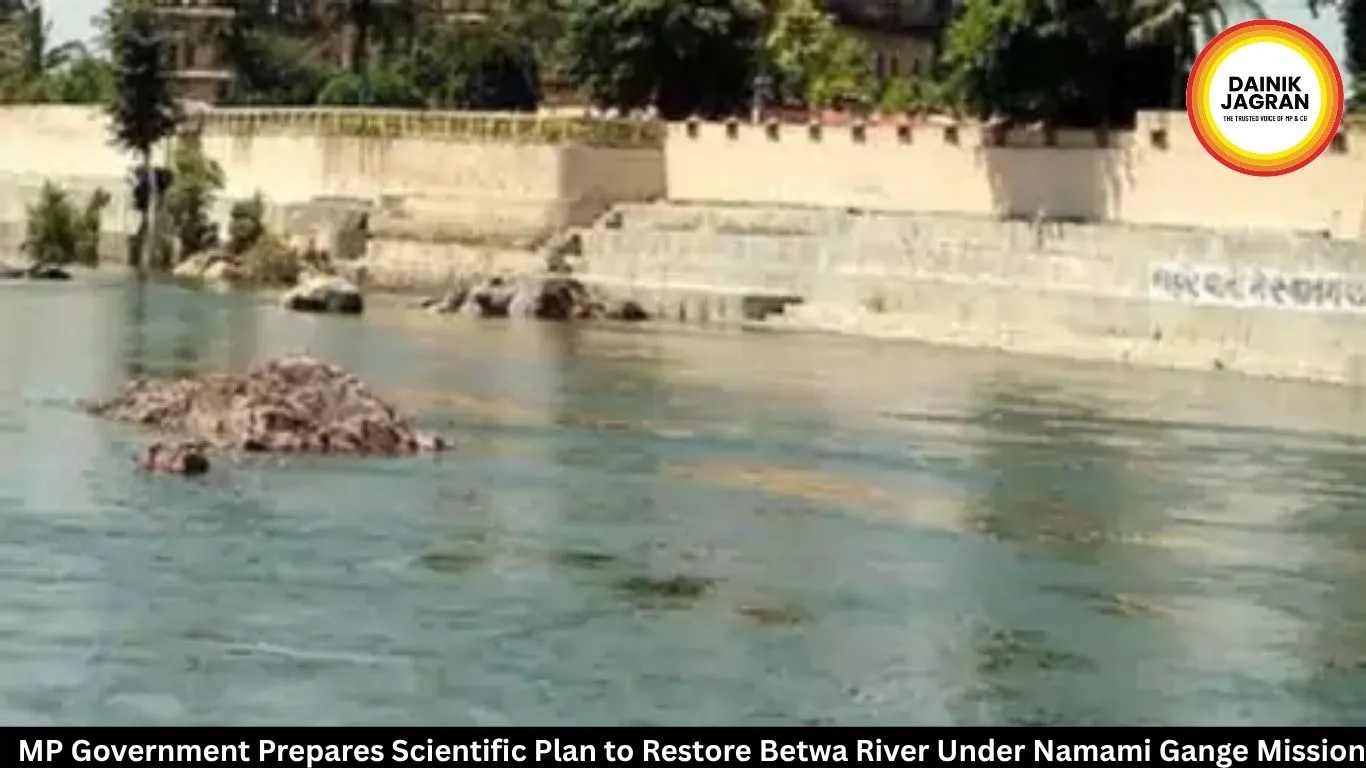
Authorities identified the stretch near Bhojpur, where the Kaliyasot River merges with the Betwa, as one of the most polluted sections. Similarly, the river near Mandideep has witnessed extensive growth of water hyacinth due to contamination and stagnant water conditions.

These pollution hotspots will receive priority under the proposed conservation programme.

Major focus on sewage treatment

One of the primary objectives of the project is to prevent untreated sewage from entering the Betwa River through the Kaliyasot River and other urban drains.

Engineers from urban local bodies in Bhopal, Raisen and Vidisha are receiving specialised training from technical experts on sewage management, wastewater treatment and pollution control measures to strengthen the implementation of the project.

The government believes that improving sewage infrastructure is essential for restoring the river's ecological health.

Industrial pollution in Mandideep under scrutiny

Officials noted that despite the establishment of a major industrial hub in Mandideep, a comprehensive sewage treatment system has yet to be developed.

As a result, untreated industrial wastewater continues to flow directly into the Betwa River, affecting both water quality and nearby agricultural land. The proposed DPR will recommend measures to stop industrial discharge and ensure proper treatment before wastewater enters the river.

The state government aims to restore the Betwa as a clean, uninterrupted and ecologically sustainable river system.

Scientific DPR to address multiple challenges

Officials said the DPR will cover far more than sewage management. It will include strategies for pollution control, wastewater and solid waste management, restoration of environmental flow, riverbank protection, biodiversity conservation, watershed management and greater public participation in river conservation.

The report will also address challenges such as untreated municipal sewage, industrial waste, riverbank erosion and shrinking ecological flow, which have emerged as major threats to the Betwa River.

Technical training for field officials

The government has identified district-level officers as key stakeholders in the success of the project.

Training programmes are being conducted to strengthen their capacity in data collection, inter-departmental coordination, stakeholder consultations and technical aspects of DPR preparation to ensure effective and time-bound implementation of the mission.

₹824.57 crore worth of Namami Gange projects already approved

Under the second phase of the Namami Gange Mission, the Central Government has already approved eight projects worth ₹824.57 crore for Madhya Pradesh, with 100 percent central funding.

These projects include sewage management works in Indore, Ujjain and Nagda, environmental improvement of the Shivna River in Mandsaur, rejuvenation and riverfront development of the Morar River in Gwalior, construction of ghats on the Mandakini River in Chitrakoot, and strengthening of laboratories operated by the Madhya Pradesh Pollution Control Board (MPPCB).

Among them, the Kanh and Saraswati River Pollution Control Project in Indore, with an approved cost of ₹511.15 crore, is the largest initiative under the programme.

The Namami Gange Mission was launched by the Government of India in 2014 to conserve and rejuvenate the Ganga River. In its second phase, the programme was expanded to include major tributaries across several states, including Madhya Pradesh, where multiple river conservation projects are now being implemented.

 

--------

🚨 Beat the News Rush – Join Now!

Get breaking alerts, hot exclusives, and game-changing stories instantly on your phone. No delays, no fluff – just the edge you need. ⚡

Tap to join: 

🟢 WhatsApp Channel: Dainik Jagran MP CG

Crave more?

🅕 Facebook: Dainik Jagran MP CG English

🅧 Twitter (X): Dainik Jagran MP CG

🅘 Instagram: Dainik Jagran MP CG

Share the fire – keep your crew ahead! 🗞️🔥

english.dainikjagranmpcg.com
01 Jul 2026 By Abhishek Joshi

MP Government to Prepare Scientific Betwa River Restoration Plan Under Namami Gange

Digital Desk

The Madhya Pradesh government is set to launch a comprehensive scientific conservation and rejuvenation plan for the Betwa River under the Centre's Namami Gange Mission, with a special focus on reducing pollution in Bhopal, Raisen and Vidisha districts.

Officials said the initiative will go beyond routine river-cleaning activities and focus on restoring the river ecosystem through a long-term, science-based approach. The project aims to curb untreated sewage, industrial effluents, riverbank degradation and declining environmental flow while ensuring sustainable river management.

To facilitate the project, engineers and officials are currently undergoing technical training in Bhopal to prepare a detailed and scientifically designed Detailed Project Report (DPR) for the Betwa River.

Conservation to begin from the most polluted stretches

According to officials associated with the Namami Gange Mission, the Betwa River originates from Jhiri village in the forests of Raisen district. However, soon after its origin, the river passes through Bhopal, Raisen and Vidisha, where increasing urbanisation and industrial activities have significantly affected water quality.

Authorities identified the stretch near Bhojpur, where the Kaliyasot River merges with the Betwa, as one of the most polluted sections. Similarly, the river near Mandideep has witnessed extensive growth of water hyacinth due to contamination and stagnant water conditions.

These pollution hotspots will receive priority under the proposed conservation programme.

Major focus on sewage treatment

One of the primary objectives of the project is to prevent untreated sewage from entering the Betwa River through the Kaliyasot River and other urban drains.

Engineers from urban local bodies in Bhopal, Raisen and Vidisha are receiving specialised training from technical experts on sewage management, wastewater treatment and pollution control measures to strengthen the implementation of the project.

The government believes that improving sewage infrastructure is essential for restoring the river's ecological health.

Industrial pollution in Mandideep under scrutiny

Officials noted that despite the establishment of a major industrial hub in Mandideep, a comprehensive sewage treatment system has yet to be developed.

As a result, untreated industrial wastewater continues to flow directly into the Betwa River, affecting both water quality and nearby agricultural land. The proposed DPR will recommend measures to stop industrial discharge and ensure proper treatment before wastewater enters the river.

The state government aims to restore the Betwa as a clean, uninterrupted and ecologically sustainable river system.

Scientific DPR to address multiple challenges

Officials said the DPR will cover far more than sewage management. It will include strategies for pollution control, wastewater and solid waste management, restoration of environmental flow, riverbank protection, biodiversity conservation, watershed management and greater public participation in river conservation.

The report will also address challenges such as untreated municipal sewage, industrial waste, riverbank erosion and shrinking ecological flow, which have emerged as major threats to the Betwa River.

Technical training for field officials

The government has identified district-level officers as key stakeholders in the success of the project.

Training programmes are being conducted to strengthen their capacity in data collection, inter-departmental coordination, stakeholder consultations and technical aspects of DPR preparation to ensure effective and time-bound implementation of the mission.

₹824.57 crore worth of Namami Gange projects already approved

Under the second phase of the Namami Gange Mission, the Central Government has already approved eight projects worth ₹824.57 crore for Madhya Pradesh, with 100 percent central funding.

These projects include sewage management works in Indore, Ujjain and Nagda, environmental improvement of the Shivna River in Mandsaur, rejuvenation and riverfront development of the Morar River in Gwalior, construction of ghats on the Mandakini River in Chitrakoot, and strengthening of laboratories operated by the Madhya Pradesh Pollution Control Board (MPPCB).

Among them, the Kanh and Saraswati River Pollution Control Project in Indore, with an approved cost of ₹511.15 crore, is the largest initiative under the programme.

The Namami Gange Mission was launched by the Government of India in 2014 to conserve and rejuvenate the Ganga River. In its second phase, the programme was expanded to include major tributaries across several states, including Madhya Pradesh, where multiple river conservation projects are now being implemented.

 

https://english.dainikjagranmpcg.com/states/madhya-pradesh/mp-government-to-prepare-scientific-betwa-river-restoration-plan-under/article-20872

Latest News