


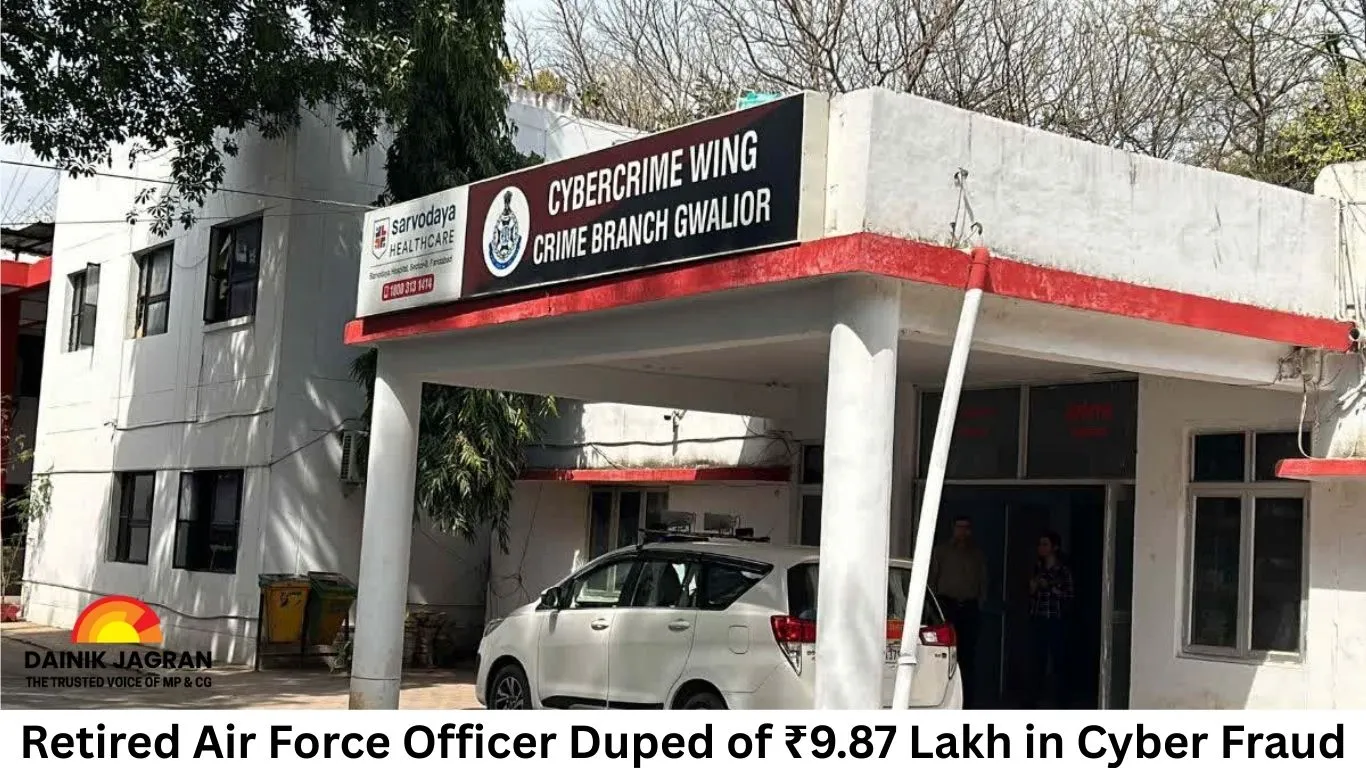
Retired Air Force Officer Duped of ₹9.87 Lakh in Cyber Fraud; Caller Posed as Bank Official
Digital Desk
According to investigators, the incident occurred on December 30, 2025, when the victim, identified as Ghanshyam Datt Shukla, received a call shortly after watching a reel on Facebook. The caller claimed he had been assigned to assist with generating the pensioner’s life certificate and convinced him to download a banking application. During the conversation, the fraudster gained his trust and persuaded him to reveal confidential credentials, including his PIN. Within minutes, ₹9.87 lakh was siphoned from his account in four transactions.
Officials said the victim initially suspected fraud and questioned the caller but was reassured that the process was routine and necessary for pension verification. Investigators believe the suspect used social engineering tactics to keep the victim engaged while completing unauthorized transactions.
The case took another turn when the victim’s mobile phone was reported stolen on January 1, 2026. He later visited his bank branch and discovered the unauthorized withdrawals. Following the bank’s advice, he lodged a complaint through the national cybercrime helpline 1930. Based on the complaint, police at Gola Ka Mandir Police Station registered a formal case on Wednesday and began tracing the digital trail of the transactions.
Police officials said an e-Zero FIR was initially recorded through the helpline before being transferred to the local police station for investigation. Authorities are examining call records, transaction routes, and linked accounts to identify those involved. They also warned citizens—especially senior citizens—to avoid sharing OTPs, PINs, or passwords with anyone claiming to be bank representatives.
Cybercrime experts note that fraudsters frequently exploit pension verification procedures and banking updates as pretexts to obtain sensitive information. Investigators say public awareness and prompt reporting remain crucial to preventing such scams and improving recovery chances.
.jpg)




