


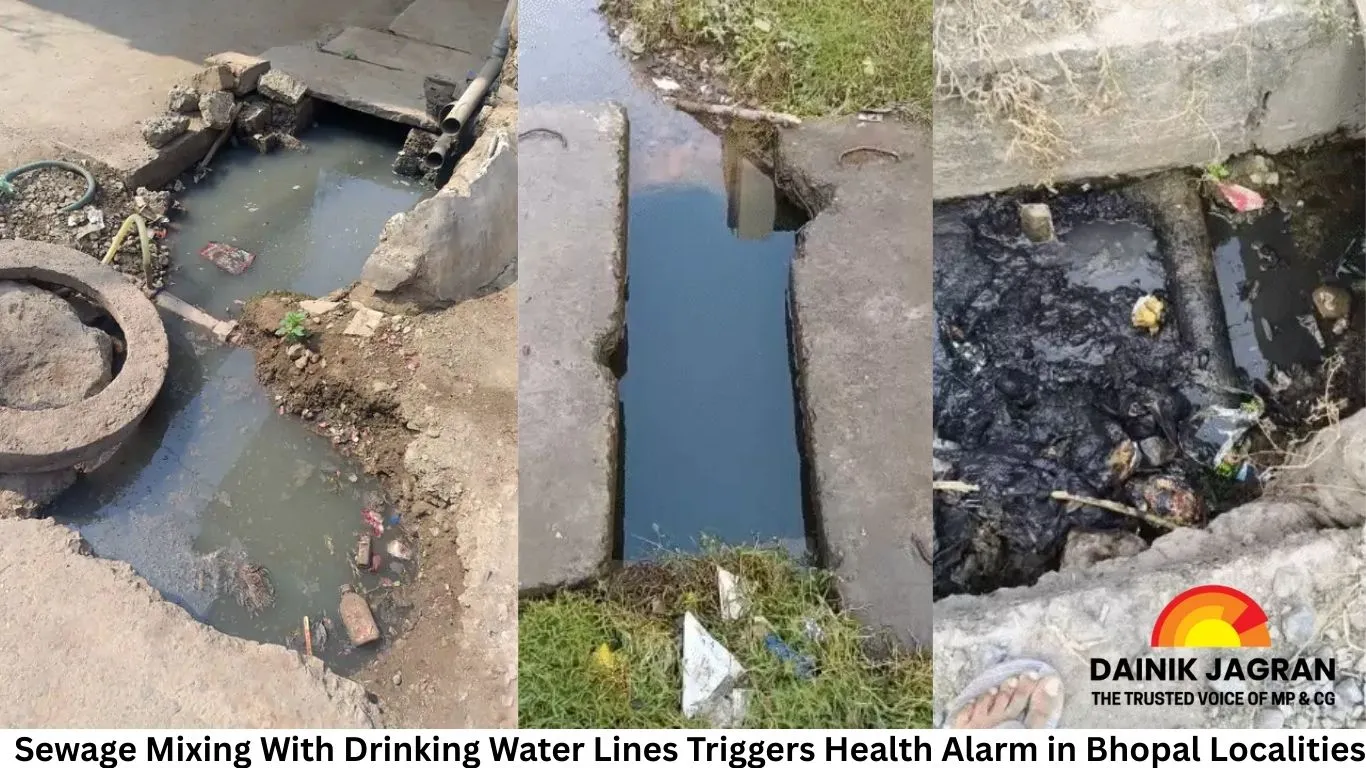
Sewage Mixing With Drinking Water Lines Triggers Health Alarm in Bhopal Localities
Digital Desk
The issue has surfaced prominently in areas such as Ayodhya Extension (Ward-86), Chandwadi in the old city, Oriya Basti and Udiya Basti, where residents allege that drinking water lines are submerged in drains filled with sludge. In Ayodhya Extension, the main water pipeline passes through a drain carrying nearly one foot of accumulated filth. A damaged joint at the same point is allowing contaminated water to enter the supply, residents said.
Complaints lodged repeatedly on the Bhopal Municipal Corporation (BMC) helpline have failed to yield lasting solutions. Locals claim that drains remain uncleared and ageing pipelines unrepaired. The underground water tank supplying the area has reportedly not been cleaned for over a year and a half. Situated near a slum cluster, the tank is surrounded by garbage, while peeling plaster at its base — noticed during a cleaning drive conducted by residents themselves — remains unattended.
In Oriya Basti and Udiya Basti, residents reported sewage overflowing from chambers and entering water supply points directly. Chandwadi residents on the main road face a similar threat, with water lines laid inside open drains, creating conditions ripe for contamination.
The crisis follows the deaths of over 30 people in Bhagirathpura, Indore, after consuming contaminated water, prompting statewide scrutiny of urban water systems. In Bhopal, the BMC conducted three “water hearings” on January 13, 20 and 27, and claims to have collected 7,341 water samples from 3,053 locations, tested across eight laboratories. Officials say most samples were found potable.
However, activists and residents question the sampling process, alleging inadequate chlorine testing and superficial checks. Four groundwater samples from Khanugaon, Adampur Cantonment and Vajpayee Nagar reportedly failed quality tests, with E-coli bacteria detected, leading authorities to ban their use.
More than 20 localities, including Ashoka Garden, Punjabi Bagh, Prem Nagar, JP Nagar, Aishbagh and Barkhedikala, continue to report dirty water supply. Civic officials acknowledge repairing 1,245 leakages and cleaning 3,694 sewage chambers but concede that pipeline replacement in several pockets is pending.
Gas-affected communities have raised additional concerns, citing groundwater contamination around the former Union Carbide site, making them entirely dependent on municipal supply. Residents and civil groups are now demanding immediate replacement of water lines passing through sewage, comprehensive tank cleaning, and transparent, ward-level water quality testing to avert a larger public health crisis.
.jpg)




