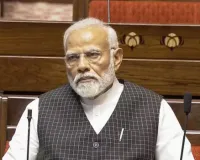
On Monday, National Security Adviser Ajit Doval heads to Beijing.
Officially, the agenda is familiar.
Doval and Chinese Foreign Minister Wang Yi will hold the 25th round of Special Representatives talks on the India-China boundary dispute — a mechanism created in 2003 to find a political solution to the frontier.
Twenty-four rounds have not settled it.
But perhaps the more interesting question this time isn't simply what Doval can achieve on the border.
It is:
Why does India want to stabilise relations with China now?
Because almost everywhere New Delhi looks, China remains a strategic challenge.
The boundary is unresolved.
China claims large parts of Arunachal Pradesh.
India claims Aksai Chin, which China controls.
Pakistan's military relationship with Beijing continues to deepen.
And despite years of attempts to reduce dependence on China, the economic relationship remains difficult to unwind.
Yet India and China are talking again.
That apparent contradiction may actually explain Doval's visit.
Problem 1: India and China still don't agree where India ends
This sounds extraordinary after decades of negotiations.
But the Line of Actual Control is not a mutually delineated international boundary across its entire length.
India officially describes the disputed boundary as approximately 3,488 km.
The disagreement is broadly divided into three sectors.
In the western sector, India claims Aksai Chin, which is controlled by China.
In the eastern sector, China disputes Indian sovereignty over large parts of Arunachal Pradesh.
Between them lie smaller disputes in the middle sector.
And this isn't merely history.
A fresh controversy erupted this month over claims of Chinese intrusion in Arunachal Pradesh.
Union Minister Kiren Rijiju rejected reports of a 60-km Chinese incursion but acknowledged the underlying problem — the border has not been clearly delineated, creating differing perceptions on the ground.
That goes to the heart of the dispute.
Two patrols can approach the same area believing they are on their own side of the LAC.
That ambiguity is one reason a local encounter can become a geopolitical crisis.
Problem 2: Galwan showed what happens when ambiguity explodes
The theoretical border problem became brutally real in 2020.
The Galwan clash killed soldiers and pushed India-China relations into their deepest crisis in decades.
Thousands of troops and heavy equipment were deployed along the frontier.
It took more than four years of military and diplomatic negotiations to unwind the confrontation.
An October 2024 patrolling agreement eventually led to disengagement from the remaining friction points created by the 2020 crisis.
That allowed Prime Minister Narendra Modi and President Xi Jinping to hold their first full bilateral meeting in nearly five years at Kazan.
India's Embassy in Beijing now describes relations as undergoing gradual normalisation following disengagement from the 2020 friction points.
But there is an important distinction.
Disengagement is not de-escalation.
And neither is a boundary settlement.
Soldiers stepping back from a confrontation point does not answer the fundamental question of where the border lies.
That is one of Doval's problems in Beijing.
But it isn't his only China problem.
Problem 3: China is also present on India's western front
Look in the opposite direction.
Pakistan's military relationship with China means India's China calculation doesn't stop at Ladakh or Arunachal Pradesh.
Chinese-origin aircraft, air-defence systems, artillery and other platforms form an important part of Pakistan's military inventory.
The experience of recent India-Pakistan hostilities has consequently reinforced a concern Indian strategists have discussed for years:
Can India still think about the Pakistan and China fronts separately?
That question becomes particularly important if India faces a confrontation with Pakistan while China provides Islamabad with equipment, technology, intelligence or diplomatic support.
It creates a different strategic problem from a conventional two-front war.
China doesn't necessarily have to open another front along the LAC for its military relationship with Pakistan to affect India's calculations.
So even if Doval succeeds in making the northern frontier quieter, India's China problem does not disappear.
It merely becomes more manageable.
Problem 4: India competes with China — but also does business with it
Then comes the economic contradiction.
India wants to become a manufacturing alternative to China.
It is trying to strengthen domestic electronics, semiconductor, pharmaceutical, critical-mineral and clean-energy supply chains.
Yet China remains deeply embedded in many of the supply chains Indian industry depends upon.
So India faces an unusual relationship.
Strategic competitor.
Territorial rival.
Major trading partner.
All at the same time.
And despite the border confrontation, economic links have proved much harder to sever than political rhetoric sometimes suggests.
The reset has therefore extended beyond soldiers.
In 2025, India and China agreed to work towards restoring direct flights, reopening border trade at designated points and facilitating greater business and people-to-people exchanges.
The objective increasingly appears less like reconciliation and more like risk management.
India may not need China to become a friend
This is perhaps the key to understanding Doval's visit.
India doesn't have to resolve every disagreement with China to benefit from a stable relationship.
It needs China to become more predictable.
Consider New Delhi's strategic calculation.
If the LAC remains quiet, India can concentrate on economic growth.
It can manage Pakistan without simultaneously worrying about a military crisis in Ladakh.
It can reduce critical economic dependencies on China gradually rather than during an emergency.
And it can compete with Beijing internationally without every disagreement threatening to become a border confrontation.
Seen this way, normalisation isn't necessarily trust.
It is insurance against too many crises occurring simultaneously.
Then what is Doval actually trying to achieve?
A final boundary settlement would be historic.
It is also unlikely to emerge suddenly from the 25th round.
The more realistic objectives are smaller.
Keep the border peaceful.
Move from disengagement towards de-escalation.
Create better mechanisms for handling patrol encounters.
Reduce ambiguity where possible.
And eventually explore whether less contentious stretches of the boundary can be settled before the hardest disputes.
The 24th round in 2025 already moved in that direction, with both sides discussing de-escalation and mechanisms for advancing boundary delimitation.
The 25th round will show whether that process has moved beyond diplomatic language.
Watch Arunachal carefully
This is why Arunachal Pradesh matters so much to Tuesday's talks.
The recent controversy demonstrates that even after disengagement in Ladakh, the underlying boundary problem can surface elsewhere.
China's territorial claims in Arunachal Pradesh remain unacceptable to India.
India administers the state, holds elections there and considers it an integral part of the country.
Beijing disputes Indian sovereignty over substantial territory there.
No amount of resumed flights or trade can make that disagreement disappear.
So when officials talk about "normalisation", there is a limit to how normal the relationship can become while both countries disagree over territory.
The real Doval mission
It is tempting to describe the Beijing talks as another attempt to solve the India-China border.
That may be too ambitious.
Doval's more immediate task may be to stop the unresolved border from overwhelming everything else.
India today faces several China challenges simultaneously:
China across the LAC.
China's claims over Arunachal Pradesh.
China's strategic relationship with Pakistan.
China inside supply chains Indian industry still depends upon.
India cannot solve all four in Beijing.
But it can try to prevent the first from becoming another military crisis while it deals with the other three.
That may explain why India is talking to China despite having so many reasons to distrust it.
New Delhi isn't necessarily betting that China has changed.
It may simply have concluded that competition becomes far more dangerous when it is also unpredictable.
Twenty-five rounds of boundary talks have still not produced an agreed border.
Perhaps Tuesday's meeting should therefore be judged against a more modest question.
Not:
Have India and China become friends?
But:
Can India make China predictable enough to compete with it without fighting it?
That may be the real objective of Doval's Beijing mission.

.jpg)