Trump Announces Up to 100% Tariff on Imported Drones, China Faces Major Impact

Digital desk

Trump Announces Up to 100% Tariff on Imported Drones, China Faces Major Impact

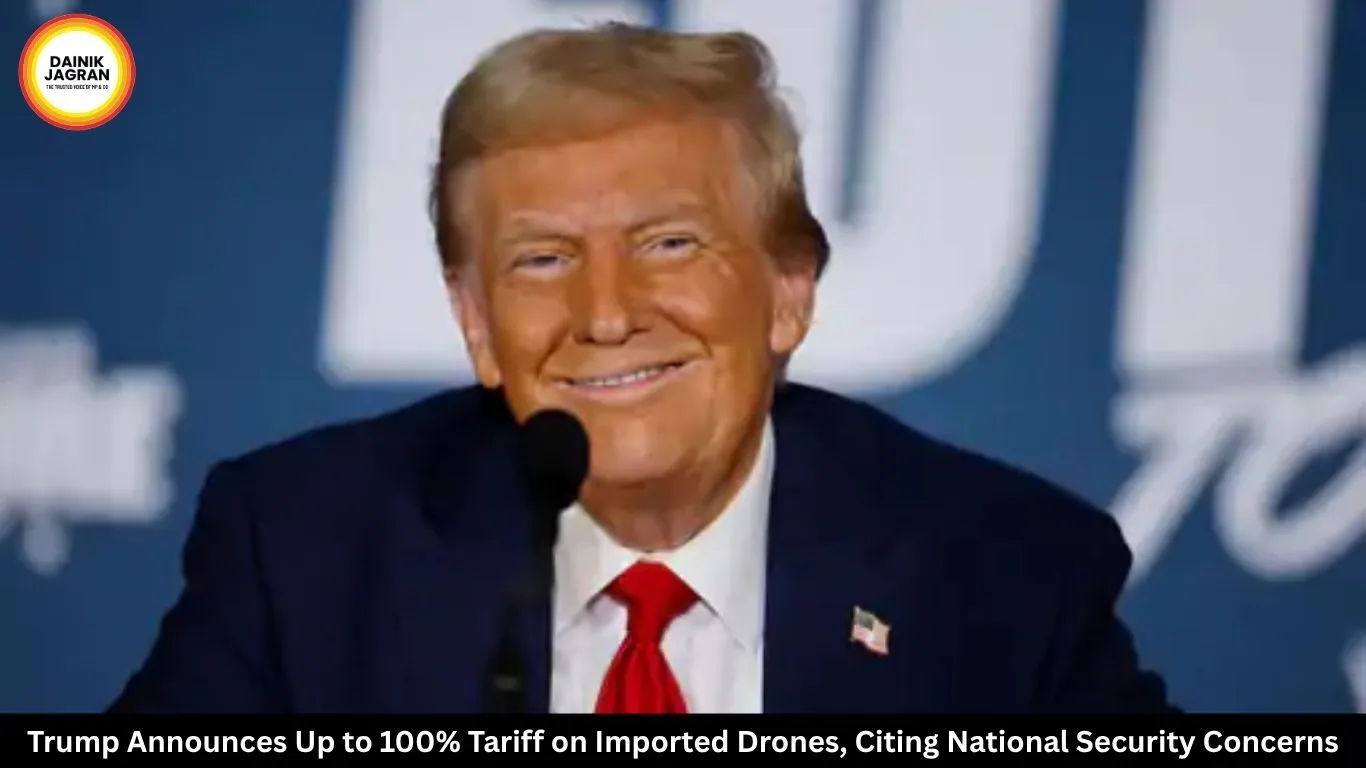
US President Donald Trump has announced tariffs of up to 100% on imported drones and components, citing national security and supply-chain concerns.


US President Donald Trump has announced new tariffs of up to 100 per cent on imported unmanned drones and related components, citing national security concerns and the need to reduce America's dependence on foreign supply chains.

The move is expected to put additional pressure on Chinese drone manufacturers, which have maintained a dominant position in the US commercial drone market. The White House said the new tariff structure is intended to encourage domestic manufacturing and strengthen the country's supply chain for unmanned aircraft systems.

Tariffs Linked to Drone Specifications

Under the new structure, the highest tariff will apply to drones considered particularly sensitive from a national security perspective.

Also Read... Trump Says US-Iran War Must End Soon as Middle East Tensions Continue

Drones weighing more than 25 kilograms or those equipped with thermal imaging capabilities will face a 100 per cent tariff.

Also Read... US Tightens Iran Blockade as Trump Shifts to Economic Pressure

Smaller drones with a take-off weight of 25 kilograms or less will face a 25 per cent tariff, according to the details released by the US administration.

Also Read... How Mohit Khanna Is Shaping Magnifia Into a Next-Generation ERP Consulting Firm

The different rates indicate that Washington is seeking to distinguish between smaller commercial drones and systems that could have greater surveillance, security or military applications.

New Rules to Take Effect in Stages

The tariff measures will not take effect for all categories at the same time.

Most of the new duties are expected to become effective 21 days after the order is signed. For certain drone components that are not classified as highly sensitive, the tariffs will take effect after 180 days.

There are also provisions for specific products and components that receive exemptions from the Federal Communications Commission's covered list under the conditions outlined by the administration. Such products will also be subject to the 180-day timeline under the stated exemption framework.

Allied Countries Also Face Duties

The new measures are not limited to imports from countries viewed by Washington as strategic competitors.

Drones and components imported from the European Union, Japan, Liechtenstein, South Korea, Switzerland and Taiwan will face a 15 per cent tariff, according to the announced structure.

Imports from the United Kingdom will face a 10 per cent duty, provided the products meet the specified origin requirements for their hardware, software and technology.

The inclusion of allied trading partners highlights Washington's broader effort to reorganise the drone supply chain rather than simply targeting Chinese manufacturers.

China Faces Greater Pressure

The announcement comes amid growing US scrutiny of Chinese drone technology.

Chinese manufacturer DJI, headquartered in Shenzhen, has held a dominant position in the US commercial drone market, accounting for a substantial share of sales in recent years.

The United States has already taken steps to restrict the use and approval of certain foreign-made communications and drone technologies. The latest tariff move could further increase costs for American companies and government agencies that currently rely on imported equipment.

China has also taken measures affecting drone exports and has responded to US trade restrictions with its own controls and sanctions against American entities.

Ukraine War Highlights Drone Risks

The increasing military use of drones has added another dimension to the debate over unmanned aircraft technology.

The Russia-Ukraine conflict has demonstrated how drones can be used for surveillance, battlefield reconnaissance, targeting and attacks. Their relatively low cost and ability to operate without putting pilots directly at risk have made them an increasingly important part of modern warfare.

The Trump administration has consequently linked the availability and security of unmanned aircraft systems to broader national and economic security considerations.

Industry Could Face Higher Costs

Technology and US-China trade experts have warned that the measures could significantly reshape the commercial drone market.

American commercial operators and government agencies that depend on foreign-made systems may have to look for suppliers based in the US or allied countries. That transition could involve higher procurement costs and require changes to existing equipment and supply chains.

The policy could therefore have consequences beyond Chinese manufacturers, particularly for businesses that use drones for surveying, infrastructure inspection, agriculture, photography, logistics and other commercial activities.

What Are Unmanned Aircraft Systems?

Unmanned Aircraft Systems (UAS), commonly known as drones, are aircraft that operate without a human pilot sitting inside the aircraft.

They can be remotely controlled or operate using automated software. Drones are now widely used for photography, mapping, agriculture, deliveries, infrastructure monitoring and emergency response, while military versions are used for surveillance, reconnaissance and combat operations.

The new US tariff policy reflects the growing strategic importance of the technology and Washington's attempt to build a more secure domestic and allied supply chain for unmanned aircraft systems.
 

english.dainikjagranmpcg.com
14 Aug 2026 By Abhishek Joshi

Trump Announces Up to 100% Tariff on Imported Drones, China Faces Major Impact

Digital desk

US President Donald Trump has announced new tariffs of up to 100 per cent on imported unmanned drones and related components, citing national security concerns and the need to reduce America's dependence on foreign supply chains.

The move is expected to put additional pressure on Chinese drone manufacturers, which have maintained a dominant position in the US commercial drone market. The White House said the new tariff structure is intended to encourage domestic manufacturing and strengthen the country's supply chain for unmanned aircraft systems.

Tariffs Linked to Drone Specifications

Under the new structure, the highest tariff will apply to drones considered particularly sensitive from a national security perspective.

Drones weighing more than 25 kilograms or those equipped with thermal imaging capabilities will face a 100 per cent tariff.

Smaller drones with a take-off weight of 25 kilograms or less will face a 25 per cent tariff, according to the details released by the US administration.

The different rates indicate that Washington is seeking to distinguish between smaller commercial drones and systems that could have greater surveillance, security or military applications.

New Rules to Take Effect in Stages

The tariff measures will not take effect for all categories at the same time.

Most of the new duties are expected to become effective 21 days after the order is signed. For certain drone components that are not classified as highly sensitive, the tariffs will take effect after 180 days.

There are also provisions for specific products and components that receive exemptions from the Federal Communications Commission's covered list under the conditions outlined by the administration. Such products will also be subject to the 180-day timeline under the stated exemption framework.

Allied Countries Also Face Duties

The new measures are not limited to imports from countries viewed by Washington as strategic competitors.

Drones and components imported from the European Union, Japan, Liechtenstein, South Korea, Switzerland and Taiwan will face a 15 per cent tariff, according to the announced structure.

Imports from the United Kingdom will face a 10 per cent duty, provided the products meet the specified origin requirements for their hardware, software and technology.

The inclusion of allied trading partners highlights Washington's broader effort to reorganise the drone supply chain rather than simply targeting Chinese manufacturers.

China Faces Greater Pressure

The announcement comes amid growing US scrutiny of Chinese drone technology.

Chinese manufacturer DJI, headquartered in Shenzhen, has held a dominant position in the US commercial drone market, accounting for a substantial share of sales in recent years.

The United States has already taken steps to restrict the use and approval of certain foreign-made communications and drone technologies. The latest tariff move could further increase costs for American companies and government agencies that currently rely on imported equipment.

China has also taken measures affecting drone exports and has responded to US trade restrictions with its own controls and sanctions against American entities.

Ukraine War Highlights Drone Risks

The increasing military use of drones has added another dimension to the debate over unmanned aircraft technology.

The Russia-Ukraine conflict has demonstrated how drones can be used for surveillance, battlefield reconnaissance, targeting and attacks. Their relatively low cost and ability to operate without putting pilots directly at risk have made them an increasingly important part of modern warfare.

The Trump administration has consequently linked the availability and security of unmanned aircraft systems to broader national and economic security considerations.

Industry Could Face Higher Costs

Technology and US-China trade experts have warned that the measures could significantly reshape the commercial drone market.

American commercial operators and government agencies that depend on foreign-made systems may have to look for suppliers based in the US or allied countries. That transition could involve higher procurement costs and require changes to existing equipment and supply chains.

The policy could therefore have consequences beyond Chinese manufacturers, particularly for businesses that use drones for surveying, infrastructure inspection, agriculture, photography, logistics and other commercial activities.

What Are Unmanned Aircraft Systems?

Unmanned Aircraft Systems (UAS), commonly known as drones, are aircraft that operate without a human pilot sitting inside the aircraft.

They can be remotely controlled or operate using automated software. Drones are now widely used for photography, mapping, agriculture, deliveries, infrastructure monitoring and emergency response, while military versions are used for surveillance, reconnaissance and combat operations.

The new US tariff policy reflects the growing strategic importance of the technology and Washington's attempt to build a more secure domestic and allied supply chain for unmanned aircraft systems.

 

https://english.dainikjagranmpcg.com/top-stories/trump-announces-up-to-100-tariff-on-imported-drones-china/article-26106

--------

🚨 Beat the News Rush – Join Now!

Get breaking alerts, hot exclusives, and game-changing stories instantly on your phone. No delays, no fluff – just the edge you need. ⚡

Tap to join: 

🟢 WhatsApp Channel: Dainik Jagran MP CG

Crave more?

🅕 Facebook: Dainik Jagran MP CG English

🅧 Twitter (X): Dainik Jagran MP CG

🅘 Instagram: Dainik Jagran MP CG

Share the fire – keep your crew ahead! 🗞️🔥

Trending News