US Approves Sale of 5,250 Patriot Missiles to Gulf Nations Amid Shortage

Digital desk

US Approves Sale of 5,250 Patriot Missiles to Gulf Nations Amid Shortage

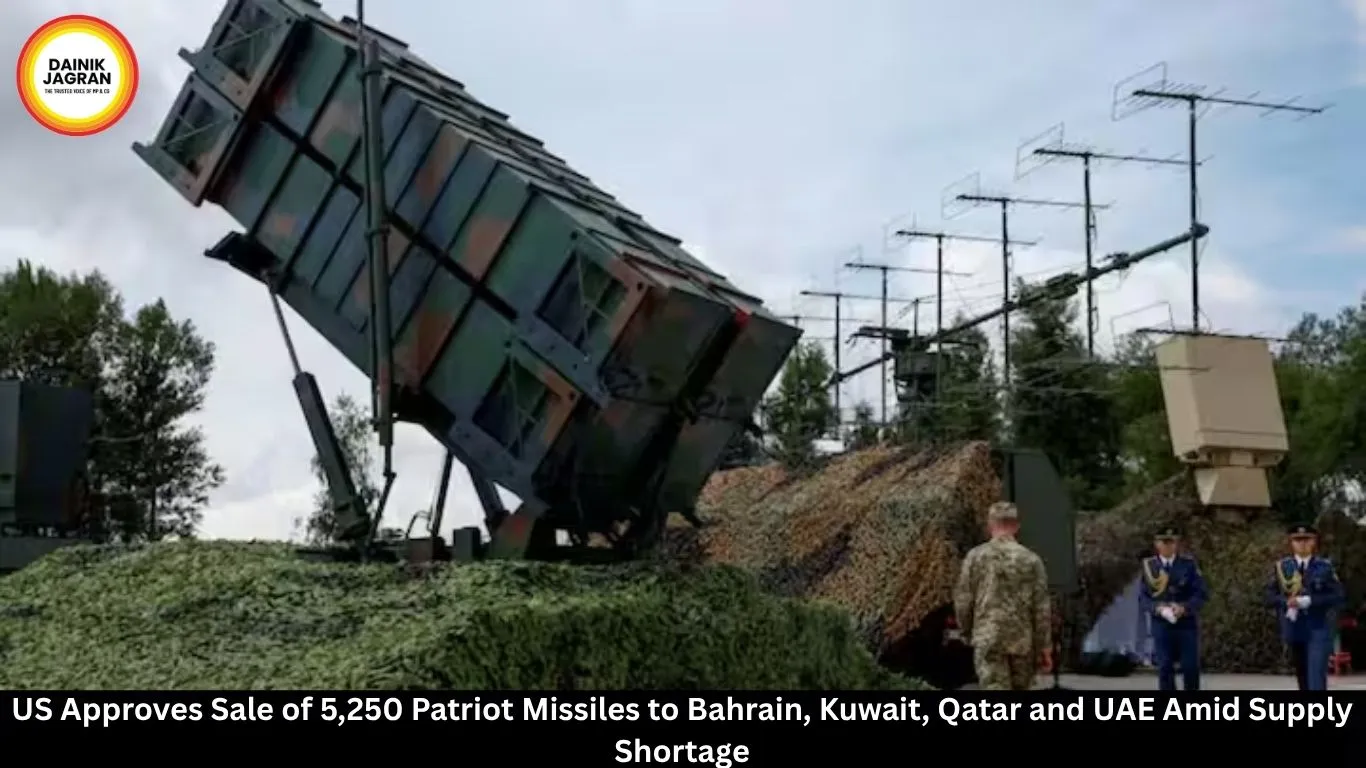
The US has approved the sale of 5,250 Patriot missile interceptors to Bahrain, Kuwait, Qatar and UAE as global demand for air-defence missiles rises amid conflicts in West Asia and Ukraine.

The United States has approved the sale of 5,250 Patriot missile interceptors to Bahrain, Kuwait, Qatar and the United Arab Emirates as demand for the advanced air-defence system rises amid escalating tensions in West Asia and a global shortage of interceptors.

The proposed sales are aimed at replenishing and strengthening the missile stockpiles of the four Gulf countries at a time when Patriot interceptors are in high demand because of conflicts in the Middle East and Europe.

According to sources cited by Reuters, the United States is also holding discussions on allowing Ukraine to manufacture some Patriot interceptor components, despite President Donald Trump previously saying that he had not approved such an arrangement.

Also Read... Netanyahu Thanks PM Modi After West Asia Talks, India-Israel Partnership Discussed

Gulf States Seek More Missiles

The planned sale comes as Gulf countries seek to reinforce their air-defence capabilities amid heightened regional tensions. Bahrain, Kuwait, Qatar and the UAE are among the countries that rely on US-made Patriot systems to defend against ballistic missiles, aircraft and other aerial threats.

Also Read... Turkey-Saudi Arabia-Pakistan Defence Pact: What the Mecca Agreement Means

The demand for interceptors has increased significantly this year, putting additional pressure on global supplies.

Also Read... Why Pakistan’s Saudi-Türkiye Defence Pact Anthem Is Facing Online Ridicule

The United States has also been trying to expand production capacity. Last month, the US Army awarded Lockheed Martin a contract worth up to $58.6 billion for the production of Patriot interceptor missiles.

The Patriot system, first used operationally during the 1991 Gulf War, has since become one of the most widely deployed advanced air-defence platforms in the world.

Ukraine Adds to Global Demand

Ukraine remains one of the biggest sources of demand for Patriot interceptors. Kyiv has been seeking additional missiles to defend against Russian ballistic missile attacks, which have intensified during the ongoing Russia-Ukraine war.

The conflict involving Iran has also placed pressure on US and Gulf inventories, while some European countries have been reluctant to release missiles from their own reserves because of concerns about maintaining adequate stocks for national defence.

The resulting supply constraints have made additional production and international procurement increasingly important for countries operating the Patriot system.

How Patriot Interceptors Work

The Patriot system can use different types of interceptors depending on the threat being addressed.

The earlier PAC-2 interceptor uses a blast-fragmentation warhead designed to destroy or disable a target through an explosive blast and fragments.

The PAC-3 family uses a different approach known as hit-to-kill technology, in which the interceptor directly collides with an incoming target to destroy it.

The system is capable of engaging a range of threats, including short-range ballistic missiles, aircraft and cruise missiles.

New PAC-3 ACE Interceptor

Lockheed Martin introduced the PAC-3 Missile Segment Enhancement Adapted Capability Effector (PAC-3 MSE ACE) in July, describing it as a lower-cost interceptor designed to maintain significant defensive capabilities.

The company has said the new interceptor could cost roughly half as much as existing alternatives while retaining the ability to engage short-range ballistic missiles, aircraft and cruise missiles.

The Patriot system's radar is also designed to track multiple potential threats simultaneously. NATO has previously stated that the system's radar can have a range of more than 150 kilometres and track up to 100 potential targets.

Patriot Comes at High Cost

Patriot air-defence systems are among the most expensive conventional defence platforms.

According to estimates cited by the Center for Strategic and International Studies (CSIS), a newly produced Patriot battery can cost more than $1 billion, including approximately $400 million for the system itself and around $690 million for its missiles.

Individual PAC-3 interceptors are estimated to cost approximately $4 million to $5 million each, making large-scale stockpile replenishment a major financial commitment.

The latest US approval therefore highlights not only the growing demand for advanced air defence in West Asia but also the increasing pressure on global Patriot missile supplies as conflicts in multiple regions continue to drive procurement.

english.dainikjagranmpcg.com
08 Aug 2026 By Abhishek Joshi

US Approves Sale of 5,250 Patriot Missiles to Gulf Nations Amid Shortage

Digital desk

The United States has approved the sale of 5,250 Patriot missile interceptors to Bahrain, Kuwait, Qatar and the United Arab Emirates as demand for the advanced air-defence system rises amid escalating tensions in West Asia and a global shortage of interceptors.

The proposed sales are aimed at replenishing and strengthening the missile stockpiles of the four Gulf countries at a time when Patriot interceptors are in high demand because of conflicts in the Middle East and Europe.

According to sources cited by Reuters, the United States is also holding discussions on allowing Ukraine to manufacture some Patriot interceptor components, despite President Donald Trump previously saying that he had not approved such an arrangement.

Gulf States Seek More Missiles

The planned sale comes as Gulf countries seek to reinforce their air-defence capabilities amid heightened regional tensions. Bahrain, Kuwait, Qatar and the UAE are among the countries that rely on US-made Patriot systems to defend against ballistic missiles, aircraft and other aerial threats.

The demand for interceptors has increased significantly this year, putting additional pressure on global supplies.

The United States has also been trying to expand production capacity. Last month, the US Army awarded Lockheed Martin a contract worth up to $58.6 billion for the production of Patriot interceptor missiles.

The Patriot system, first used operationally during the 1991 Gulf War, has since become one of the most widely deployed advanced air-defence platforms in the world.

Ukraine Adds to Global Demand

Ukraine remains one of the biggest sources of demand for Patriot interceptors. Kyiv has been seeking additional missiles to defend against Russian ballistic missile attacks, which have intensified during the ongoing Russia-Ukraine war.

The conflict involving Iran has also placed pressure on US and Gulf inventories, while some European countries have been reluctant to release missiles from their own reserves because of concerns about maintaining adequate stocks for national defence.

The resulting supply constraints have made additional production and international procurement increasingly important for countries operating the Patriot system.

How Patriot Interceptors Work

The Patriot system can use different types of interceptors depending on the threat being addressed.

The earlier PAC-2 interceptor uses a blast-fragmentation warhead designed to destroy or disable a target through an explosive blast and fragments.

The PAC-3 family uses a different approach known as hit-to-kill technology, in which the interceptor directly collides with an incoming target to destroy it.

The system is capable of engaging a range of threats, including short-range ballistic missiles, aircraft and cruise missiles.

New PAC-3 ACE Interceptor

Lockheed Martin introduced the PAC-3 Missile Segment Enhancement Adapted Capability Effector (PAC-3 MSE ACE) in July, describing it as a lower-cost interceptor designed to maintain significant defensive capabilities.

The company has said the new interceptor could cost roughly half as much as existing alternatives while retaining the ability to engage short-range ballistic missiles, aircraft and cruise missiles.

The Patriot system's radar is also designed to track multiple potential threats simultaneously. NATO has previously stated that the system's radar can have a range of more than 150 kilometres and track up to 100 potential targets.

Patriot Comes at High Cost

Patriot air-defence systems are among the most expensive conventional defence platforms.

According to estimates cited by the Center for Strategic and International Studies (CSIS), a newly produced Patriot battery can cost more than $1 billion, including approximately $400 million for the system itself and around $690 million for its missiles.

Individual PAC-3 interceptors are estimated to cost approximately $4 million to $5 million each, making large-scale stockpile replenishment a major financial commitment.

The latest US approval therefore highlights not only the growing demand for advanced air defence in West Asia but also the increasing pressure on global Patriot missile supplies as conflicts in multiple regions continue to drive procurement.

https://english.dainikjagranmpcg.com/top-stories/us-approves-sale-of-5250-patriot-missiles-to-gulf-nations/article-25213

--------

🚨 Beat the News Rush – Join Now!

Get breaking alerts, hot exclusives, and game-changing stories instantly on your phone. No delays, no fluff – just the edge you need. ⚡

Tap to join: 

🟢 WhatsApp Channel: Dainik Jagran MP CG

Crave more?

🅕 Facebook: Dainik Jagran MP CG English

🅧 Twitter (X): Dainik Jagran MP CG

🅘 Instagram: Dainik Jagran MP CG

Share the fire – keep your crew ahead! 🗞️🔥

Trending News