NEET-UG Paper Leak: CBI Alleges Three NTA Experts Were Part of Multi-State Syndicate
Digital desk
The charge sheet describes encrypted chats, leaked question papers, coaching operators and alleged payments running into lakhs; all 13 accused remain unconvicted
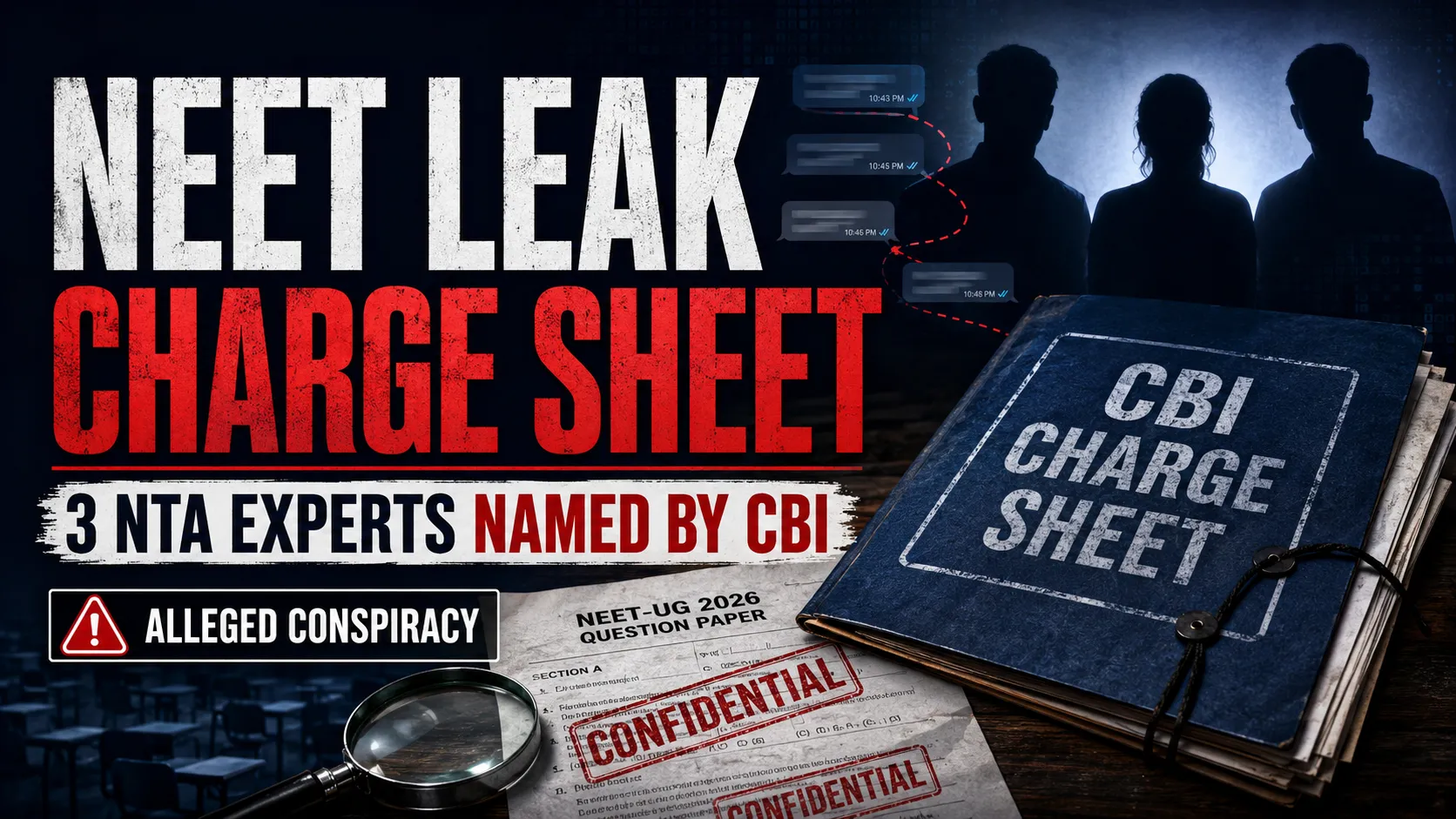
The Central Bureau of Investigation has alleged that the NEET-UG 2026 paper leak originated inside the National Testing Agency’s confidential examination-preparation system, with three NTA-appointed subject experts accused of sharing questions before the examination.
Details emerging from the CBI charge sheet describe what the agency calls an organised, multi-state conspiracy involving subject experts, coaching operators, intermediaries and candidates.
The agency has charged 13 people before a Special CBI Court at Delhi’s Rouse Avenue Courts. The accused face allegations including criminal conspiracy, cheating, breach of trust, destruction of evidence and offences under anti-corruption and public-examination laws.
The charge sheet contains allegations, not judicial findings. All accused are entitled to the presumption of innocence unless convicted by the court.
Three NTA Experts Named
The three NTA-appointed experts accused of being at the beginning of the alleged leak chain are:
| Accused | Subject assigned by NTA | CBI’s allegation |
|---|---|---|
| Manisha Gurunath Mandhare | Botany/Biology | Allegedly obtained unauthorised access to confidential questions and shared them |
| Prahlad Vithalrao Kulkarni | Chemistry | Allegedly accessed and supplied questions while working on the examination paper |
| Manisha Sanjay Havaldar | Physics | Allegedly shared confidential Physics questions with members of the network |
According to the charge sheet, the experts had signed confidentiality undertakings requiring them to protect the examination material.
The CBI alleges that they abused their positions and passed questions to people connected with coaching centres and intermediaries. The questions were subsequently offered to candidates in return for money.
The three experts have not been convicted, and the court will determine whether the evidence establishes the allegations.
How the Alleged Leak Worked
The investigation claims that NEET questions were circulated in PDF and image formats through WhatsApp and Telegram before the examination.
According to a detailed report based on the charge sheet by The New Indian Express, the alleged distribution network included coaching operators, brokers, middlemen and beneficiary candidates across multiple states.
The CBI has cited several alleged transactions and digital trails:
- A payment agreement of approximately ₹25 lakh allegedly formed part of one stage of the distribution chain.
- One intermediary reportedly handed over original Class 10 and Class 12 certificates and a signed blank cheque as security.
- A candidate and her father were allegedly offered access to questions for ₹4 lakh, together with coaching and revision support.
- Investigators reportedly recovered a WhatsApp group titled “NEET 2026” from a seized phone.
- Chats with contacts identified as brokers allegedly helped investigators reconstruct the movement of the questions.
The agency says the material collected includes forensic examination of mobile phones, pen drives, digital conversations and recovered documents.
CBI Cites 360 Witnesses and Digital Evidence
The CBI’s charge sheet is reported to run into approximately 20,000 pages. It relies on statements from 360 witnesses, 422 documents and 43 material objects.
The evidence reportedly includes:
- Digital-forensic reports.
- Handwriting-expert opinions.
- Assessments by academic experts.
- Mobile-phone and messaging records.
- Documents recovered during searches.
- Financial and communication trails connecting the accused.
The agency filed charges against 13 people, including three NTA experts, middlemen, candidates and two people associated with coaching institutes. All were in custody when the charge sheet was filed, according to Reuters.
What Happens in Court Now?
The Special CBI Court will examine the charge sheet and decide whether sufficient grounds exist to formally take cognisance of the alleged offences and frame charges.
Framing charges would allow a trial to begin; it would not mean that the accused had been found guilty.
The investigation may also continue beyond the first charge sheet. If the CBI finds evidence involving additional people or transactions, it can file supplementary charge sheets.
In another development, a fast-track court has reserved its decision on a request by three accused to undergo polygraph, lie-detector and brain-mapping tests.
Supreme Court Sends OMR Dispute to High Court
Separately, six NEET candidates approached the Supreme Court alleging that the answers displayed on the OMR sheets uploaded by the NTA differed from those they had originally marked.
The Supreme Court declined to examine their individual factual claims and asked them to approach the appropriate High Court.
This order does not amount to a finding that the OMR sheets were manipulated. The candidates will have to present their evidence before the High Court.
What Does the Update Mean for Students?
The CBI charge sheet does not result in another NEET examination or automatically alter candidates’ ranks and admissions.
The original May 3 examination was cancelled after the leak controversy, and a fresh examination was conducted on June 21. No new nationwide re-examination has been announced.
For students, the principal issues to watch are:
- Whether the court takes cognisance of the CBI charge sheet.
- Whether charges are framed against all 13 accused.
- Whether the investigation identifies additional NTA officials or beneficiaries.
- Whether the NTA announces structural changes to its confidential question-paper system.
- What the High Court decides in the separate OMR-sheet dispute.
The most significant finding at this stage is that the alleged breach was not limited to an examination centre or an external gang. The CBI claims individuals entrusted with preparing and protecting confidential questions were themselves part of the conspiracy.
If proved in court, that allegation would expose a serious institutional failure at the heart of India’s largest medical entrance examination.
NEET-UG Paper Leak: CBI Alleges Three NTA Experts Were Part of Multi-State Syndicate
Digital desk
The Central Bureau of Investigation has alleged that the NEET-UG 2026 paper leak originated inside the National Testing Agency’s confidential examination-preparation system, with three NTA-appointed subject experts accused of sharing questions before the examination.
Details emerging from the CBI charge sheet describe what the agency calls an organised, multi-state conspiracy involving subject experts, coaching operators, intermediaries and candidates.
The agency has charged 13 people before a Special CBI Court at Delhi’s Rouse Avenue Courts. The accused face allegations including criminal conspiracy, cheating, breach of trust, destruction of evidence and offences under anti-corruption and public-examination laws.
The charge sheet contains allegations, not judicial findings. All accused are entitled to the presumption of innocence unless convicted by the court.
Three NTA Experts Named
The three NTA-appointed experts accused of being at the beginning of the alleged leak chain are:
| Accused | Subject assigned by NTA | CBI’s allegation |
|---|---|---|
| Manisha Gurunath Mandhare | Botany/Biology | Allegedly obtained unauthorised access to confidential questions and shared them |
| Prahlad Vithalrao Kulkarni | Chemistry | Allegedly accessed and supplied questions while working on the examination paper |
| Manisha Sanjay Havaldar | Physics | Allegedly shared confidential Physics questions with members of the network |
According to the charge sheet, the experts had signed confidentiality undertakings requiring them to protect the examination material.
The CBI alleges that they abused their positions and passed questions to people connected with coaching centres and intermediaries. The questions were subsequently offered to candidates in return for money.
The three experts have not been convicted, and the court will determine whether the evidence establishes the allegations.
How the Alleged Leak Worked
The investigation claims that NEET questions were circulated in PDF and image formats through WhatsApp and Telegram before the examination.
According to a detailed report based on the charge sheet by The New Indian Express, the alleged distribution network included coaching operators, brokers, middlemen and beneficiary candidates across multiple states.
The CBI has cited several alleged transactions and digital trails:
- A payment agreement of approximately ₹25 lakh allegedly formed part of one stage of the distribution chain.
- One intermediary reportedly handed over original Class 10 and Class 12 certificates and a signed blank cheque as security.
- A candidate and her father were allegedly offered access to questions for ₹4 lakh, together with coaching and revision support.
- Investigators reportedly recovered a WhatsApp group titled “NEET 2026” from a seized phone.
- Chats with contacts identified as brokers allegedly helped investigators reconstruct the movement of the questions.
The agency says the material collected includes forensic examination of mobile phones, pen drives, digital conversations and recovered documents.
CBI Cites 360 Witnesses and Digital Evidence
The CBI’s charge sheet is reported to run into approximately 20,000 pages. It relies on statements from 360 witnesses, 422 documents and 43 material objects.
The evidence reportedly includes:
- Digital-forensic reports.
- Handwriting-expert opinions.
- Assessments by academic experts.
- Mobile-phone and messaging records.
- Documents recovered during searches.
- Financial and communication trails connecting the accused.
The agency filed charges against 13 people, including three NTA experts, middlemen, candidates and two people associated with coaching institutes. All were in custody when the charge sheet was filed, according to Reuters.
What Happens in Court Now?
The Special CBI Court will examine the charge sheet and decide whether sufficient grounds exist to formally take cognisance of the alleged offences and frame charges.
Framing charges would allow a trial to begin; it would not mean that the accused had been found guilty.
The investigation may also continue beyond the first charge sheet. If the CBI finds evidence involving additional people or transactions, it can file supplementary charge sheets.
In another development, a fast-track court has reserved its decision on a request by three accused to undergo polygraph, lie-detector and brain-mapping tests.
Supreme Court Sends OMR Dispute to High Court
Separately, six NEET candidates approached the Supreme Court alleging that the answers displayed on the OMR sheets uploaded by the NTA differed from those they had originally marked.
The Supreme Court declined to examine their individual factual claims and asked them to approach the appropriate High Court.
This order does not amount to a finding that the OMR sheets were manipulated. The candidates will have to present their evidence before the High Court.
What Does the Update Mean for Students?
The CBI charge sheet does not result in another NEET examination or automatically alter candidates’ ranks and admissions.
The original May 3 examination was cancelled after the leak controversy, and a fresh examination was conducted on June 21. No new nationwide re-examination has been announced.
For students, the principal issues to watch are:
- Whether the court takes cognisance of the CBI charge sheet.
- Whether charges are framed against all 13 accused.
- Whether the investigation identifies additional NTA officials or beneficiaries.
- Whether the NTA announces structural changes to its confidential question-paper system.
- What the High Court decides in the separate OMR-sheet dispute.
The most significant finding at this stage is that the alleged breach was not limited to an examination centre or an external gang. The CBI claims individuals entrusted with preparing and protecting confidential questions were themselves part of the conspiracy.
If proved in court, that allegation would expose a serious institutional failure at the heart of India’s largest medical entrance examination.
Recommended For You
--------
🚨 Beat the News Rush – Join Now!
Get breaking alerts, hot exclusives, and game-changing stories instantly on your phone. No delays, no fluff – just the edge you need. ⚡
Tap to join:
🟢 WhatsApp Channel: Dainik Jagran MP CG
Crave more?
🅕 Facebook: Dainik Jagran MP CG English
🅧 Twitter (X): Dainik Jagran MP CG
🅘 Instagram: Dainik Jagran MP CG
Share the fire – keep your crew ahead! 🗞️🔥