Venezuela Frees 131 Political Prisoners as Transition Talks Progress
Digital desk
Venezuela releases 131 political prisoners as government and opposition representatives continue US-brokered reconciliation talks following Nicolas Maduro's removal.
Venezuela has released another 131 people considered political prisoners, in what authorities and international observers see as a significant development in the country’s ongoing reconciliation process following the removal of former President Nicolas Maduro by US forces.
The interim Venezuelan government said on Friday that the 131 people had been granted “alternative measures from incarceration” under its Program for Peace and Democratic Coexistence.
The releases came as government and opposition representatives continue talks aimed at managing Venezuela’s political transition and addressing longstanding concerns over political detentions.
Families Reunite Outside Prison
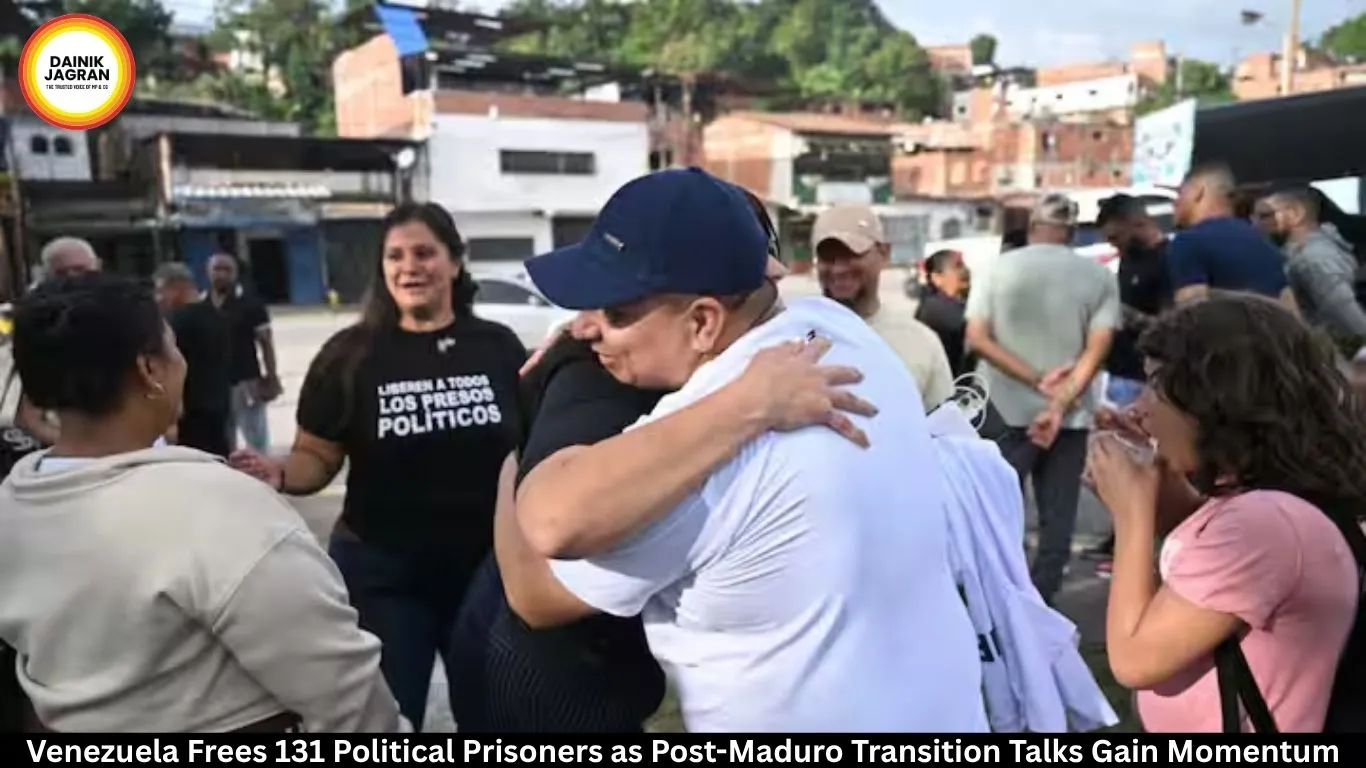
Emotional scenes were reported outside El Rodeo I prison in Guatire, around 50 kilometres east of Caracas, where several released prisoners were reunited with their families.
The releases brought renewed attention to the issue of political prisoners in Venezuela, which has remained one of the most contentious issues between the interim government and opposition groups.
US Secretary of State Marco Rubio welcomed the development, calling the release of more than 130 political prisoners an important step in Venezuela’s reconciliation process.
Rubio said that 1,046 Venezuelans had been released since January 3, according to the latest US government figures.
Rights Group Confirms Releases
Venezuelan human rights organisation Foro Penal, which has campaigned for the release of people it considers political prisoners, said six women were among those released.
The organisation later said that the release of at least 40 political prisoners had been independently confirmed.
However, opposition figures have stressed that the latest releases do not represent the end of the political prisoner issue.
Opposition leader Dinorah Figuera said that not everyone had been released and called for continued efforts until all political prisoners were freed.
Talks Focus on Reconciliation
The latest releases came a day after Figuera pledged to continue pushing for the release of political prisoners during formal negotiations with Venezuela’s interim government.
The first round of US-brokered talks began last week and concluded on Wednesday. Government and opposition representatives subsequently agreed to cooperate on several issues related to Venezuela’s recovery.
A joint statement said the two sides would work on recovering Venezuelan funds frozen overseas to support reconstruction following devastating June earthquakes that killed more than 6,300 people.
The parties also agreed to discuss reforms to Venezuela’s judicial system. However, the joint statement did not specifically address political prisoners.
Maduro Era Left Detention Legacy
Nicolas Maduro ruled Venezuela from 2013 until his removal earlier this year. His government faced years of accusations from opposition groups and human rights organisations over the detention of political opponents and activists.
Following Maduro’s removal by US forces in January, the interim government began releasing groups of prisoners under pressure from Washington.
Interim President Delcy Rodriguez also supported an amnesty law passed in February, which paved the way for further releases.
Despite the recent developments, Foro Penal said earlier this week that 391 political prisoners remained behind bars.
High-Profile Release
Among those released was Emirlendris Benitez, whose case has attracted international attention.
Benitez was arrested following a 2018 incident in which two drones carrying explosives flew towards Maduro while he was addressing a military parade in Caracas. The drones exploded, injuring seven soldiers.
Benitez, who was four months pregnant at the time of her arrest, denied involvement in the alleged assassination plot. She and her partner, Yolmer Escalona, were eventually sentenced to 30 years in prison.
Human rights organisations have alleged that Benitez was tortured while in detention and that the abuse resulted in a miscarriage and partial paralysis.
Opposition Seeks Democratic Elections
The reconciliation process is being led by Figuera and Jorge Rodriguez, the head of Venezuela’s National Assembly and brother of interim President Delcy Rodriguez.
Opposition leader Maria Corina Machado, who is currently in exile and is a Nobel Peace Prize laureate, has not participated directly in the negotiations. She has, however, said she would not obstruct the process.
Many Venezuelans are hoping that the talks will eventually pave the way for free and democratic elections.
Maduro's victories in the 2018 and 2024 presidential elections were rejected by Venezuela's opposition and several foreign governments, which questioned the credibility of the electoral process.
The latest prisoner releases therefore represent an important but incomplete step in Venezuela's broader political transition, with pressure remaining on the interim government to address the status of those still detained and establish a credible path towards democratic governance.
Venezuela Frees 131 Political Prisoners as Transition Talks Progress
Digital desk
Venezuela has released another 131 people considered political prisoners, in what authorities and international observers see as a significant development in the country’s ongoing reconciliation process following the removal of former President Nicolas Maduro by US forces.
The interim Venezuelan government said on Friday that the 131 people had been granted “alternative measures from incarceration” under its Program for Peace and Democratic Coexistence.
The releases came as government and opposition representatives continue talks aimed at managing Venezuela’s political transition and addressing longstanding concerns over political detentions.
Families Reunite Outside Prison
Emotional scenes were reported outside El Rodeo I prison in Guatire, around 50 kilometres east of Caracas, where several released prisoners were reunited with their families.
The releases brought renewed attention to the issue of political prisoners in Venezuela, which has remained one of the most contentious issues between the interim government and opposition groups.
US Secretary of State Marco Rubio welcomed the development, calling the release of more than 130 political prisoners an important step in Venezuela’s reconciliation process.
Rubio said that 1,046 Venezuelans had been released since January 3, according to the latest US government figures.
Rights Group Confirms Releases
Venezuelan human rights organisation Foro Penal, which has campaigned for the release of people it considers political prisoners, said six women were among those released.
The organisation later said that the release of at least 40 political prisoners had been independently confirmed.
However, opposition figures have stressed that the latest releases do not represent the end of the political prisoner issue.
Opposition leader Dinorah Figuera said that not everyone had been released and called for continued efforts until all political prisoners were freed.
Talks Focus on Reconciliation
The latest releases came a day after Figuera pledged to continue pushing for the release of political prisoners during formal negotiations with Venezuela’s interim government.
The first round of US-brokered talks began last week and concluded on Wednesday. Government and opposition representatives subsequently agreed to cooperate on several issues related to Venezuela’s recovery.
A joint statement said the two sides would work on recovering Venezuelan funds frozen overseas to support reconstruction following devastating June earthquakes that killed more than 6,300 people.
The parties also agreed to discuss reforms to Venezuela’s judicial system. However, the joint statement did not specifically address political prisoners.
Maduro Era Left Detention Legacy
Nicolas Maduro ruled Venezuela from 2013 until his removal earlier this year. His government faced years of accusations from opposition groups and human rights organisations over the detention of political opponents and activists.
Following Maduro’s removal by US forces in January, the interim government began releasing groups of prisoners under pressure from Washington.
Interim President Delcy Rodriguez also supported an amnesty law passed in February, which paved the way for further releases.
Despite the recent developments, Foro Penal said earlier this week that 391 political prisoners remained behind bars.
High-Profile Release
Among those released was Emirlendris Benitez, whose case has attracted international attention.
Benitez was arrested following a 2018 incident in which two drones carrying explosives flew towards Maduro while he was addressing a military parade in Caracas. The drones exploded, injuring seven soldiers.
Benitez, who was four months pregnant at the time of her arrest, denied involvement in the alleged assassination plot. She and her partner, Yolmer Escalona, were eventually sentenced to 30 years in prison.
Human rights organisations have alleged that Benitez was tortured while in detention and that the abuse resulted in a miscarriage and partial paralysis.
Opposition Seeks Democratic Elections
The reconciliation process is being led by Figuera and Jorge Rodriguez, the head of Venezuela’s National Assembly and brother of interim President Delcy Rodriguez.
Opposition leader Maria Corina Machado, who is currently in exile and is a Nobel Peace Prize laureate, has not participated directly in the negotiations. She has, however, said she would not obstruct the process.
Many Venezuelans are hoping that the talks will eventually pave the way for free and democratic elections.
Maduro's victories in the 2018 and 2024 presidential elections were rejected by Venezuela's opposition and several foreign governments, which questioned the credibility of the electoral process.
The latest prisoner releases therefore represent an important but incomplete step in Venezuela's broader political transition, with pressure remaining on the interim government to address the status of those still detained and establish a credible path towards democratic governance.

Recommended For You
--------
🚨 Beat the News Rush – Join Now!
Get breaking alerts, hot exclusives, and game-changing stories instantly on your phone. No delays, no fluff – just the edge you need. ⚡
Tap to join:
🟢 WhatsApp Channel: Dainik Jagran MP CG
Crave more?
🅕 Facebook: Dainik Jagran MP CG English
🅧 Twitter (X): Dainik Jagran MP CG
🅘 Instagram: Dainik Jagran MP CG
Share the fire – keep your crew ahead! 🗞️🔥