


Trump’s Greenland Push at Davos: Why His NATO and Global Security Claims Are Shaking World Politics
Digital Desk
A Davos Speech That Sparked Global Debate
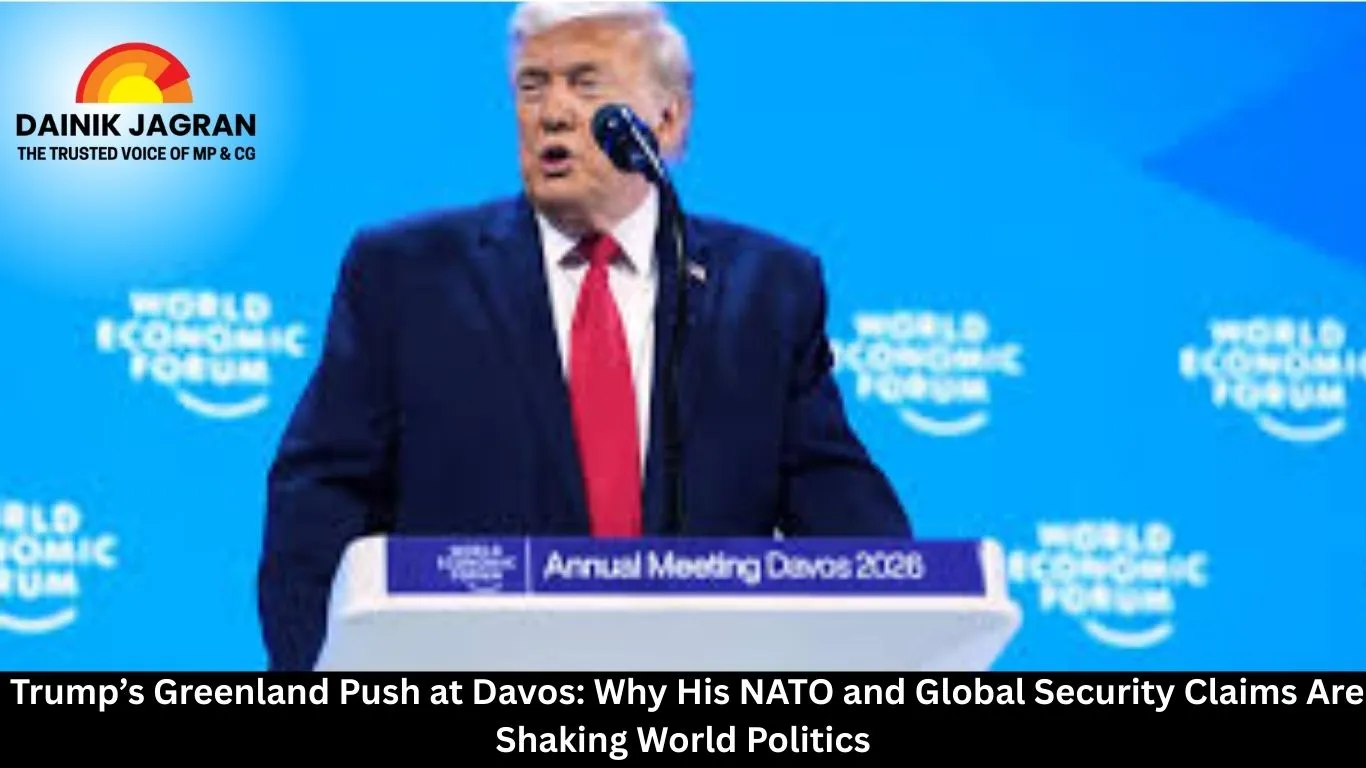
US President Donald Trump once again grabbed global attention at the World Economic Forum (WEF) in Davos with bold remarks on Greenland, NATO, and America’s role in world conflicts. Speaking before world leaders and business elites, Trump claimed that only the United States can protect Greenland, insisted that US control of the territory would not threaten NATO, and declared, “I stopped many wars, including India-Pakistan.”
The Trump Greenland NATO narrative has returned at a time when geopolitical tensions, Arctic security, and strained transatlantic relations dominate global discussions.
Trump on Greenland: ‘Only the US Can Protect It’
At Davos, Trump defended his controversial plan to bring Greenland under US control, stating that America had protected the island during World War II and that returning it to Denmark was a “serious mistake.”
For the first time, however, Trump clearly said he would not use force to take Greenland. Still, his tone remained confrontational. He criticised Denmark for opposing the move, calling the country “ungrateful” despite US wartime support.
“You can say yes, and we’ll be appreciative. Say no, and we will remember,” Trump warned, underlining the pressure behind his diplomacy.
NATO and Europe: Allies or Free Riders?
Trump strongly rejected claims that a Greenland takeover would weaken NATO. Instead, he argued that a strong America means a strong NATO, while questioning whether the alliance would support the US in return.
He accused European nations of benefiting disproportionately from American military and economic support, adding that Europe is “moving in the wrong direction” due to failed immigration and economic policies.
This rhetoric has immediate consequences. Shortly after Trump’s speech, the European Parliament delayed a vote on the EU-US trade deal, highlighting growing unease in Europe over Washington’s direction.
Claims of Peace-Making and Global Power
Trump also claimed credit for stopping several conflicts, including the India-Pakistan war, Armenia-Azerbaijan tensions, and efforts to end the Ukraine conflict. While these claims are disputed by experts, they reinforce Trump’s image as a leader who sees economic pressure and hard bargaining as tools for peace.
He reiterated that Europe should take greater responsibility for Ukraine, noting that the US has already spent billions while being geographically distant from the conflict.
Why This Matters Now
The Trump Greenland NATO debate comes at a critical moment:
The Arctic is becoming a key strategic and military zone
NATO unity is under pressure amid trade and security disputes
US-Europe relations are being reshaped by tariffs and defence demands
Foreign policy analysts say Trump’s Davos remarks signal a more transactional, America-first approach that could redefine alliances in 2026.
Diplomacy by Pressure
Trump’s Davos speech made one thing clear—his foreign policy blends diplomacy with direct pressure. While he insists he won’t use force over Greenland, his warnings to allies suggest consequences for those who resist US demands.
As global leaders digest his remarks, the world watches closely to see whether Trump’s bold claims translate into stability—or deeper divisions within NATO and beyond.

.jpg)




