Students Face FIR Over NEET Paper Leak Protests: What It Actually Means for Their Career and Job Prospects

Digital desk

Students Face FIR Over NEET Paper Leak Protests: What It Actually Means for Their Career and Job Prospects

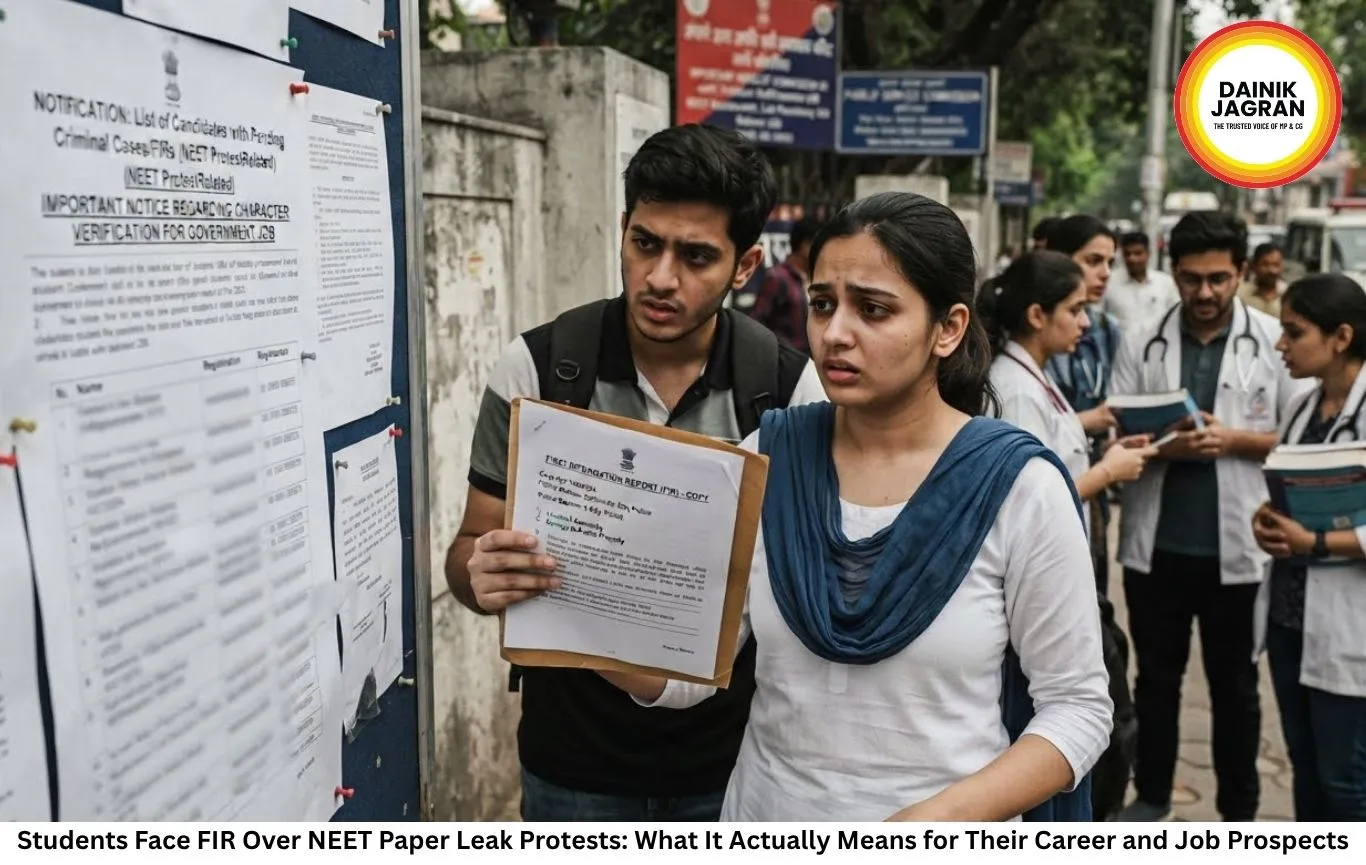
As protests over the alleged NEET paper leak have spread across university campuses and public spaces like Delhi's Jantar Mantar, a growing number of students have found themselves named in FIRs filed by police or institutional administrations. For many, the immediate anxiety isn't just about the case itself — it's about what an FIR on record could mean years down the line, when they're applying for government jobs, passports, or further studies.

What an FIR actually is — and isn't
An FIR (First Information Report) is simply the starting point of a police investigation, not proof of guilt or a conviction. Being named in one means police have recorded a complaint and begun looking into the allegations — it doesn't establish wrongdoing on its own, and a person named in an FIR remains legally innocent unless and until convicted in court.

Where an FIR can genuinely cause trouble: police verification
The real practical impact shows up later, during the character and antecedent verification process that's mandatory for government jobs, passport applications, and various sensitive private-sector roles. This police verification pulls up any FIRs, pending cases, or past convictions tied to an applicant's name, and a serious or unresolved case can affect that verification — though it doesn't automatically disqualify someone.

Not all FIRs carry equal weight
Legal experts consistently point to one key distinction: minor, bailable offences (the kind typically associated with protest-related charges like unlawful assembly or blocking a road) tend to have limited practical impact on job prospects, especially once resolved. Serious or non-bailable offences are a different matter, and are far more likely to raise red flags during verification. A case that's been resolved, quashed, or ended in acquittal generally clears the way for a clean verification report, whereas a case still pending in court at the time of verification can complicate matters.

What students facing protest-related FIRs can do

  • Track the case status closely. Knowing whether a case is active, referred, or closed matters enormously for future verification.
  • Consider legal remedies where appropriate. In cases involving relatively minor charges tied to peaceful protest activity, students have successfully sought quashing of FIRs through the High Court, particularly where the charges appear disproportionate to the actual conduct involved.
  • Be honest on future applications. Legal advice consistently stresses that concealing a known FIR on a government job or passport application creates a far bigger problem than the original case itself — disclosure, even of a pending matter, is treated far more favourably than getting caught omitting it later.
  • Resolve pending matters before major life milestones. Wherever possible, students are advised to get pending cases resolved — whether through court proceedings, compounding of minor offences, or quashing — before appearing for police verification tied to a government appointment.

The bigger picture
This isn't a new phenomenon tied only to the NEET protests — FIRs against student protesters have been a recurring feature of campus movements over the years, from JNU to TISS to Banaras Hindu University, often followed by disputes over whether the FIR itself was proportionate to the protest activity involved. For NEET protesters specifically, most FIRs reported so far appear tied to public-order provisions around assembly and road-blocking rather than more serious charges — offences that, based on established legal patterns, are less likely to derail a career long-term, provided they're properly resolved rather than left hanging.

The takeaway
An FIR is a serious matter worth taking seriously — but it is not a career-ending event by default. What matters most for a student's future job or higher education prospects is how the case is eventually resolved, and whether it's handled transparently rather than concealed, when the moment for police verification eventually arrives.


--------

๐Ÿšจ Beat the News Rush โ€“ Join Now!

Get breaking alerts, hot exclusives, and game-changing stories instantly on your phone. No delays, no fluff โ€“ just the edge you need. โšก

Tap to join:ย 

๐ŸŸข WhatsApp Channel: Dainik Jagran MP CG

Crave more?

๐Ÿ…• Facebook: Dainik Jagran MP CG English

๐Ÿ…ง Twitter (X): Dainik Jagran MP CG

๐Ÿ…˜ Instagram: Dainik Jagran MP CG

Share the fire โ€“ keep your crew ahead! ๐Ÿ—ž๏ธ๐Ÿ”ฅ

english.dainikjagranmpcg.com
28 Jul 2026 By Priyanshu.Jha

Students Face FIR Over NEET Paper Leak Protests: What It Actually Means for Their Career and Job Prospects

Digital desk

What an FIR actually is — and isn't
An FIR (First Information Report) is simply the starting point of a police investigation, not proof of guilt or a conviction. Being named in one means police have recorded a complaint and begun looking into the allegations — it doesn't establish wrongdoing on its own, and a person named in an FIR remains legally innocent unless and until convicted in court.

Where an FIR can genuinely cause trouble: police verification
The real practical impact shows up later, during the character and antecedent verification process that's mandatory for government jobs, passport applications, and various sensitive private-sector roles. This police verification pulls up any FIRs, pending cases, or past convictions tied to an applicant's name, and a serious or unresolved case can affect that verification — though it doesn't automatically disqualify someone.

Not all FIRs carry equal weight
Legal experts consistently point to one key distinction: minor, bailable offences (the kind typically associated with protest-related charges like unlawful assembly or blocking a road) tend to have limited practical impact on job prospects, especially once resolved. Serious or non-bailable offences are a different matter, and are far more likely to raise red flags during verification. A case that's been resolved, quashed, or ended in acquittal generally clears the way for a clean verification report, whereas a case still pending in court at the time of verification can complicate matters.

What students facing protest-related FIRs can do

  • Track the case status closely. Knowing whether a case is active, referred, or closed matters enormously for future verification.
  • Consider legal remedies where appropriate. In cases involving relatively minor charges tied to peaceful protest activity, students have successfully sought quashing of FIRs through the High Court, particularly where the charges appear disproportionate to the actual conduct involved.
  • Be honest on future applications. Legal advice consistently stresses that concealing a known FIR on a government job or passport application creates a far bigger problem than the original case itself — disclosure, even of a pending matter, is treated far more favourably than getting caught omitting it later.
  • Resolve pending matters before major life milestones. Wherever possible, students are advised to get pending cases resolved — whether through court proceedings, compounding of minor offences, or quashing — before appearing for police verification tied to a government appointment.

The bigger picture
This isn't a new phenomenon tied only to the NEET protests — FIRs against student protesters have been a recurring feature of campus movements over the years, from JNU to TISS to Banaras Hindu University, often followed by disputes over whether the FIR itself was proportionate to the protest activity involved. For NEET protesters specifically, most FIRs reported so far appear tied to public-order provisions around assembly and road-blocking rather than more serious charges — offences that, based on established legal patterns, are less likely to derail a career long-term, provided they're properly resolved rather than left hanging.

The takeaway
An FIR is a serious matter worth taking seriously — but it is not a career-ending event by default. What matters most for a student's future job or higher education prospects is how the case is eventually resolved, and whether it's handled transparently rather than concealed, when the moment for police verification eventually arrives.

https://english.dainikjagranmpcg.com/education/students-face-fir-over-neet-paper-leak-protests-what-it/article-23903

Trending News