

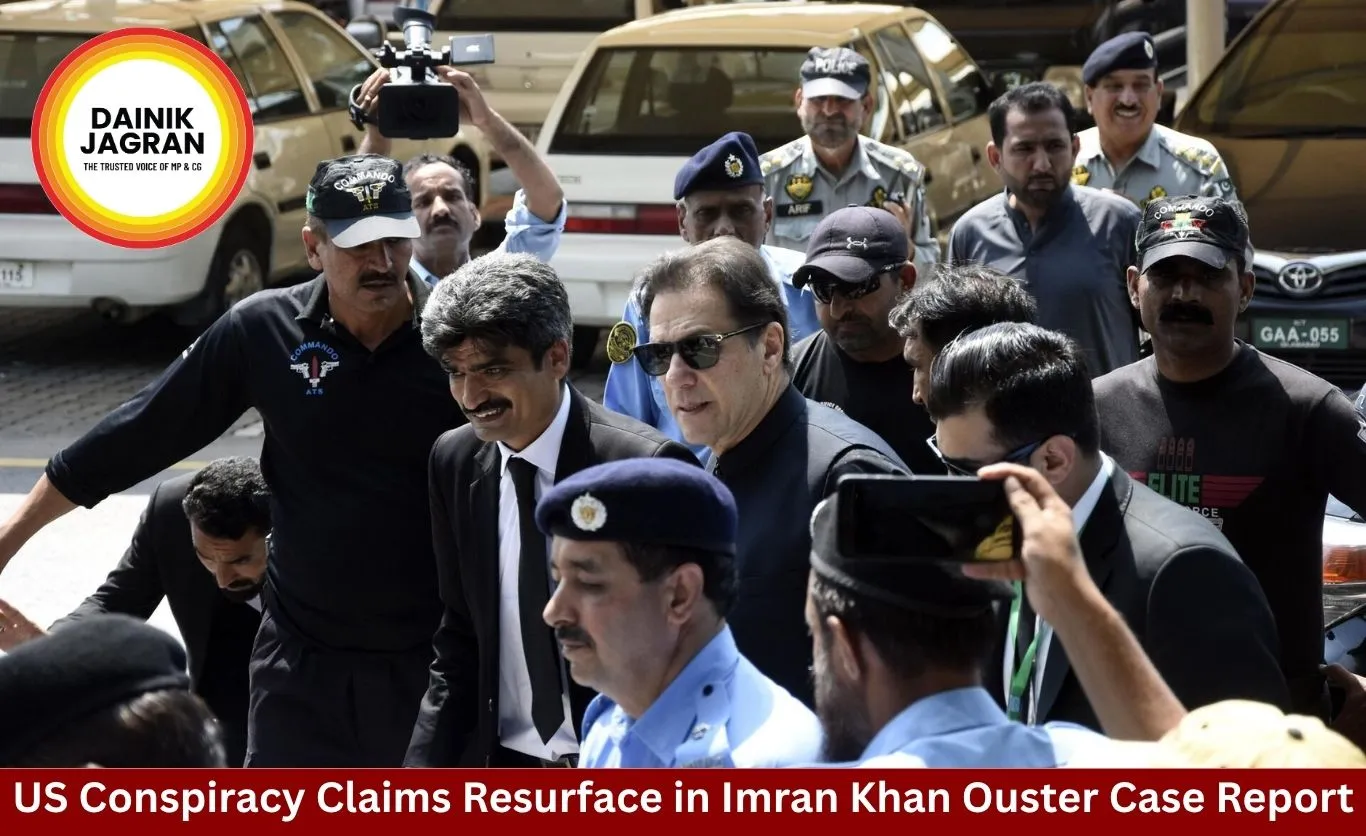
Imran Khan Ouster Was Part of US Conspiracy with Pakistan Army Support, Claims Report

Digital Desk

Imran Khan Ouster Was Part of US Conspiracy with Pakistan Army Support, Claims Report

New Allegations Suggest 2022 Government Collapse Was Driven by Geopolitical Pressure After Russia Visit

A fresh controversy has emerged in Pakistan’s political discourse after a media report alleged that the removal of former Prime Minister Imran Khan in 2022 was not merely the result of a parliamentary no-confidence motion, but part of a broader geopolitical strategy involving the United States and the Pakistan military establishment.

The report, published by an international media outlet, claims that tensions between Washington and Islamabad escalated after Imran Khan’s visit to Moscow on 24 February 2022, the same day Russia launched its military operation in Ukraine. According to the report, the visit angered the United States, which expected Pakistan to take a clear anti-Russia stance on the conflict. Imran Khan’s government, however, maintained a neutral position on the Russia-Ukraine war, refusing to directly condemn Moscow. This, according to the report, marked a turning point in US-Pakistan diplomatic relations.

The allegations further claim that on 7 March 2022, a key meeting took place in Washington between Pakistan’s then ambassador Asad Majeed Khan and US Assistant Secretary of State Donald Lu. During this interaction, Lu reportedly conveyed that if Imran Khan were removed through a no-confidence vote, the United States would “forgive everything” and restore normal relations. This alleged communication later became central to Pakistan’s domestic political debate and formed the basis of the so-called “Cypher case,” which Imran Khan repeatedly cited as evidence of foreign interference in his removal.

According to the report, a lunch meeting in Washington further intensified pressure, where concerns were raised about Pakistan’s foreign policy direction under Imran Khan. The US side reportedly expressed dissatisfaction with Pakistan’s stance on Russia and warned of diplomatic isolation if policy alignment did not change. The timeline presented in the report suggests that just 33 days after the alleged diplomatic exchange, on 9 April 2022, Imran Khan lost power following a successful no-confidence motion in Pakistan’s parliament. Shortly after, Shehbaz Sharif became the new Prime Minister.

The report also highlights subsequent political developments in Pakistan, suggesting that the country’s internal power structure underwent significant changes after Imran Khan’s removal. These include leadership transitions within the military establishment and increased political instability, including mass protests and legal cases against PTI leadership. In November 2022, Pakistan’s army leadership changed when General Asim Munir replaced General Qamar Javed Bajwa as Chief of Army Staff. Imran Khan has previously alleged that this appointment was politically influenced, though no official confirmation has supported the claim.

In May 2023, Imran Khan was arrested in a corruption case, triggering widespread protests and unrest across the country. The political situation further intensified when his party, Pakistan Tehreek-e-Insaf (PTI), faced restrictions and internal fragmentation ahead of the 2024 general elections. Despite electoral setbacks, PTI-backed independent candidates reportedly performed strongly in the polls, but a coalition government was eventually formed by rival parties Pakistan Muslim League-Nawaz (PML-N) and Pakistan Peoples Party (PPP).

The report also suggests that Pakistan’s relations with the United States improved significantly after Imran Khan’s removal. Bilateral cooperation reportedly expanded into strategic, economic and defense-related areas, marking a shift from the earlier strained ties. However, these claims remain politically sensitive and highly contested. The United States has consistently denied allegations of orchestrating regime change in Pakistan, maintaining that the 2022 political transition was an internal constitutional process.

Imran Khan, on his part, has repeatedly maintained that his government was removed due to a foreign-backed conspiracy. He has linked the alleged “Cypher” diplomatic communication to his claim that external pressure played a decisive role in the no-confidence vote. The new report has reignited debate within Pakistan’s political landscape, particularly among supporters of PTI, who argue that the allegations validate long-standing claims of foreign interference. PTI leaders have described the report as further proof supporting their stance on the Cypher controversy.

Imran Khan, who has been in prison since August 2023, continues to face multiple legal cases. He has been convicted in several cases, including the Al-Qadir Trust case and earlier Cypher-related charges, though some convictions have been overturned or suspended by higher courts. As political tensions continue, the narrative surrounding Imran Khan’s ouster remains deeply polarised, reflecting broader divisions within Pakistan’s politics and its complex relationship with global powers.

--------

🚨 Beat the News Rush – Join Now!

Get breaking alerts, hot exclusives, and game-changing stories instantly on your phone. No delays, no fluff – just the edge you need. ⚡

Tap to join: 

🟢 WhatsApp Channel: Dainik Jagran MP CG

Crave more?

🅕 Facebook: Dainik Jagran MP CG English

🅧 Twitter (X): Dainik Jagran MP CG

🅘 Instagram: Dainik Jagran MP CG

Share the fire – keep your crew ahead! 🗞️🔥

english.dainikjagranmpcg.com
19 May 2026 By Vaishnavi

Imran Khan Ouster Was Part of US Conspiracy with Pakistan Army Support, Claims Report

Digital Desk

A fresh controversy has emerged in Pakistan’s political discourse after a media report alleged that the removal of former Prime Minister Imran Khan in 2022 was not merely the result of a parliamentary no-confidence motion, but part of a broader geopolitical strategy involving the United States and the Pakistan military establishment.

The report, published by an international media outlet, claims that tensions between Washington and Islamabad escalated after Imran Khan’s visit to Moscow on 24 February 2022, the same day Russia launched its military operation in Ukraine. According to the report, the visit angered the United States, which expected Pakistan to take a clear anti-Russia stance on the conflict. Imran Khan’s government, however, maintained a neutral position on the Russia-Ukraine war, refusing to directly condemn Moscow. This, according to the report, marked a turning point in US-Pakistan diplomatic relations.

The allegations further claim that on 7 March 2022, a key meeting took place in Washington between Pakistan’s then ambassador Asad Majeed Khan and US Assistant Secretary of State Donald Lu. During this interaction, Lu reportedly conveyed that if Imran Khan were removed through a no-confidence vote, the United States would “forgive everything” and restore normal relations. This alleged communication later became central to Pakistan’s domestic political debate and formed the basis of the so-called “Cypher case,” which Imran Khan repeatedly cited as evidence of foreign interference in his removal.

According to the report, a lunch meeting in Washington further intensified pressure, where concerns were raised about Pakistan’s foreign policy direction under Imran Khan. The US side reportedly expressed dissatisfaction with Pakistan’s stance on Russia and warned of diplomatic isolation if policy alignment did not change. The timeline presented in the report suggests that just 33 days after the alleged diplomatic exchange, on 9 April 2022, Imran Khan lost power following a successful no-confidence motion in Pakistan’s parliament. Shortly after, Shehbaz Sharif became the new Prime Minister.

The report also highlights subsequent political developments in Pakistan, suggesting that the country’s internal power structure underwent significant changes after Imran Khan’s removal. These include leadership transitions within the military establishment and increased political instability, including mass protests and legal cases against PTI leadership. In November 2022, Pakistan’s army leadership changed when General Asim Munir replaced General Qamar Javed Bajwa as Chief of Army Staff. Imran Khan has previously alleged that this appointment was politically influenced, though no official confirmation has supported the claim.

In May 2023, Imran Khan was arrested in a corruption case, triggering widespread protests and unrest across the country. The political situation further intensified when his party, Pakistan Tehreek-e-Insaf (PTI), faced restrictions and internal fragmentation ahead of the 2024 general elections. Despite electoral setbacks, PTI-backed independent candidates reportedly performed strongly in the polls, but a coalition government was eventually formed by rival parties Pakistan Muslim League-Nawaz (PML-N) and Pakistan Peoples Party (PPP).

The report also suggests that Pakistan’s relations with the United States improved significantly after Imran Khan’s removal. Bilateral cooperation reportedly expanded into strategic, economic and defense-related areas, marking a shift from the earlier strained ties. However, these claims remain politically sensitive and highly contested. The United States has consistently denied allegations of orchestrating regime change in Pakistan, maintaining that the 2022 political transition was an internal constitutional process.

Imran Khan, on his part, has repeatedly maintained that his government was removed due to a foreign-backed conspiracy. He has linked the alleged “Cypher” diplomatic communication to his claim that external pressure played a decisive role in the no-confidence vote. The new report has reignited debate within Pakistan’s political landscape, particularly among supporters of PTI, who argue that the allegations validate long-standing claims of foreign interference. PTI leaders have described the report as further proof supporting their stance on the Cypher controversy.

Imran Khan, who has been in prison since August 2023, continues to face multiple legal cases. He has been convicted in several cases, including the Al-Qadir Trust case and earlier Cypher-related charges, though some convictions have been overturned or suspended by higher courts. As political tensions continue, the narrative surrounding Imran Khan’s ouster remains deeply polarised, reflecting broader divisions within Pakistan’s politics and its complex relationship with global powers.

https://english.dainikjagranmpcg.com/international/6a0c1a6d9577c/article-18806

Latest News


