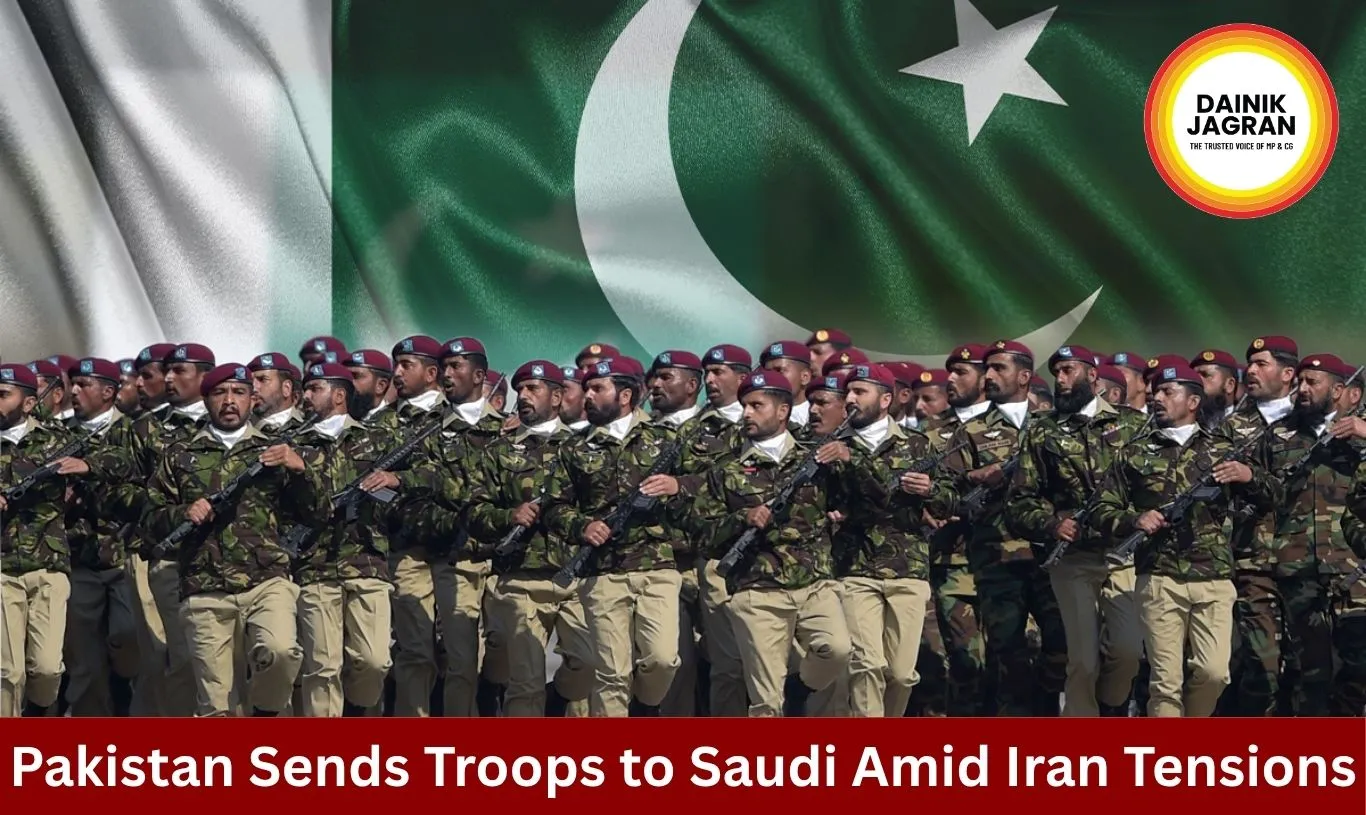
Pakistan Deploys Troops and Fighter Jets to Saudi Arabia Amid Rising Iran Tensions
Digital Desk
Reports Claim Islamabad Sent 8,000 Soldiers, JF-17 Jets and Air Defence Systems as Gulf Region Faces Growing Security Concerns
Amid rapidly escalating tensions in the Middle East, reports have emerged claiming that Pakistan has deployed nearly 8,000 troops along with fighter jets and advanced air defence systems to Saudi Arabia under a long-standing defence cooperation agreement. The development comes at a time when the region is witnessing heightened military activity due to the ongoing confrontation involving Iran, Israel and the United States.
According to international media reports, Pakistan has reportedly sent around 16 JF-17 Thunder fighter aircraft, drone squadrons and Chinese-origin HQ-9 air defence missile systems to Saudi Arabia. The report further stated that Pakistani military personnel are currently operating these systems, while the Saudi government is bearing the deployment expenses.
Though neither Pakistan nor Saudi Arabia has officially confirmed the deployment, the reports have triggered fresh debate over Islamabad’s strategic role in the evolving Gulf crisis. The alleged deployment is being viewed as a significant move considering the fragile geopolitical situation in the Middle East. Iran’s growing tensions with the United States and Israel have already pushed Gulf nations to strengthen their military preparedness. Saudi Arabia, which has historically maintained close defence ties with Pakistan, is reportedly taking precautionary steps amid fears of wider regional instability.
Military analysts believe the presence of Pakistani troops and fighter jets could be aimed at protecting key Saudi installations, including oil facilities, strategic ports and airbases. Saudi Arabia has previously relied on Pakistani military support during periods of regional uncertainty. Meanwhile, tensions surrounding the Strait of Hormuz continue to intensify. Iran has reportedly warned the United States against interfering in the region and demanded an end to pressure tactics related to maritime routes. Iranian officials also issued strong statements threatening retaliation if military pressure increases further.
The Strait of Hormuz remains one of the world’s most critical shipping routes, handling a significant portion of global oil and gas transportation. Any disruption in the area could severely impact international energy markets, including India’s fuel imports. In another major development, reports claimed that a drone attack took place near the Barakah nuclear power facility in the United Arab Emirates. A fire reportedly broke out outside the plant premises after the incident. Though no official confirmation has been issued regarding responsibility for the attack, preliminary suspicions reportedly point toward Iran-backed elements.
The incident has added to fears that Gulf countries could increasingly become targets as regional hostilities grow sharper. At the same time, commercial shipping through the Strait of Hormuz remains under pressure. Despite security concerns, multiple LPG tankers have continued to reach India through the route. Reports suggest that at least 15 LPG ships have arrived safely in Indian ports since the recent escalation began.
One of the vessels, identified as “Simi,” reportedly carried nearly 20,000 tonnes of LPG to Kandla Port. Indian authorities are closely monitoring developments in the Gulf region due to concerns that any prolonged disruption could lead to sharp increases in fuel prices and supply chain instability. India has also expressed concern at the international level regarding the security of maritime trade routes. India’s Permanent Representative to the United Nations reportedly stated that halting commercial shipping in the Strait of Hormuz would be unacceptable and could create serious consequences for global trade and energy security.
The United States has also continued diplomatic and military consultations regarding Iran. Former US President Donald Trump reportedly proposed a new arrangement under which Iran would suspend its nuclear programme for 20 years instead of permanently dismantling it. Trump also warned Tehran that time for negotiations was running out. His remarks came amid reports that Gulf countries, including Qatar, Saudi Arabia and the UAE, requested Washington to delay any direct military action against Iran in order to give diplomacy another chance.
Meanwhile, Israel’s military operations in southern Lebanon have reportedly continued despite ongoing ceasefire discussions. Reports indicate that dozens of strikes were carried out in border areas, forcing thousands of civilians to flee their homes. The continued violence has raised fears that the conflict may spread further across the region. Security experts believe Pakistan’s reported military deployment reflects the broader anxiety among Gulf allies over the possibility of a wider regional war. Pakistan and Saudi Arabia have maintained deep military cooperation for decades, including training programmes, intelligence sharing and joint security arrangements.
In the past, Pakistan has also deployed troops in Saudi Arabia for defensive purposes, particularly during periods of heightened tension involving Iran or regional militant threats. However, Islamabad has traditionally tried to maintain balanced relations with both Saudi Arabia and Iran due to geographical, political and sectarian considerations. The latest developments are expected to have global economic and diplomatic implications, especially for countries dependent on Middle East energy supplies. Rising tensions have already affected crude oil prices in international markets, creating concerns about inflation and fuel costs worldwide.
As diplomatic efforts continue alongside military preparations, the situation in the Gulf remains highly volatile. Global powers are closely watching the developments, while countries across Asia and Europe remain concerned about the possibility of disruptions in energy supplies and international trade routes. With military deployments increasing and diplomatic tensions deepening, the coming days are likely to play a crucial role in determining whether the region moves toward de-escalation or a broader conflict.
--------
🚨 Beat the News Rush – Join Now!
Get breaking alerts, hot exclusives, and game-changing stories instantly on your phone. No delays, no fluff – just the edge you need. ⚡
Tap to join:
🟢 WhatsApp Channel: Dainik Jagran MP CG
Crave more?
🅕 Facebook: Dainik Jagran MP CG English
🅧 Twitter (X): Dainik Jagran MP CG
🅘 Instagram: Dainik Jagran MP CG
Share the fire – keep your crew ahead! 🗞️🔥
Pakistan Deploys Troops and Fighter Jets to Saudi Arabia Amid Rising Iran Tensions
Digital Desk
Amid rapidly escalating tensions in the Middle East, reports have emerged claiming that Pakistan has deployed nearly 8,000 troops along with fighter jets and advanced air defence systems to Saudi Arabia under a long-standing defence cooperation agreement. The development comes at a time when the region is witnessing heightened military activity due to the ongoing confrontation involving Iran, Israel and the United States.
According to international media reports, Pakistan has reportedly sent around 16 JF-17 Thunder fighter aircraft, drone squadrons and Chinese-origin HQ-9 air defence missile systems to Saudi Arabia. The report further stated that Pakistani military personnel are currently operating these systems, while the Saudi government is bearing the deployment expenses.
Though neither Pakistan nor Saudi Arabia has officially confirmed the deployment, the reports have triggered fresh debate over Islamabad’s strategic role in the evolving Gulf crisis. The alleged deployment is being viewed as a significant move considering the fragile geopolitical situation in the Middle East. Iran’s growing tensions with the United States and Israel have already pushed Gulf nations to strengthen their military preparedness. Saudi Arabia, which has historically maintained close defence ties with Pakistan, is reportedly taking precautionary steps amid fears of wider regional instability.
Military analysts believe the presence of Pakistani troops and fighter jets could be aimed at protecting key Saudi installations, including oil facilities, strategic ports and airbases. Saudi Arabia has previously relied on Pakistani military support during periods of regional uncertainty. Meanwhile, tensions surrounding the Strait of Hormuz continue to intensify. Iran has reportedly warned the United States against interfering in the region and demanded an end to pressure tactics related to maritime routes. Iranian officials also issued strong statements threatening retaliation if military pressure increases further.
The Strait of Hormuz remains one of the world’s most critical shipping routes, handling a significant portion of global oil and gas transportation. Any disruption in the area could severely impact international energy markets, including India’s fuel imports. In another major development, reports claimed that a drone attack took place near the Barakah nuclear power facility in the United Arab Emirates. A fire reportedly broke out outside the plant premises after the incident. Though no official confirmation has been issued regarding responsibility for the attack, preliminary suspicions reportedly point toward Iran-backed elements.
The incident has added to fears that Gulf countries could increasingly become targets as regional hostilities grow sharper. At the same time, commercial shipping through the Strait of Hormuz remains under pressure. Despite security concerns, multiple LPG tankers have continued to reach India through the route. Reports suggest that at least 15 LPG ships have arrived safely in Indian ports since the recent escalation began.
One of the vessels, identified as “Simi,” reportedly carried nearly 20,000 tonnes of LPG to Kandla Port. Indian authorities are closely monitoring developments in the Gulf region due to concerns that any prolonged disruption could lead to sharp increases in fuel prices and supply chain instability. India has also expressed concern at the international level regarding the security of maritime trade routes. India’s Permanent Representative to the United Nations reportedly stated that halting commercial shipping in the Strait of Hormuz would be unacceptable and could create serious consequences for global trade and energy security.
The United States has also continued diplomatic and military consultations regarding Iran. Former US President Donald Trump reportedly proposed a new arrangement under which Iran would suspend its nuclear programme for 20 years instead of permanently dismantling it. Trump also warned Tehran that time for negotiations was running out. His remarks came amid reports that Gulf countries, including Qatar, Saudi Arabia and the UAE, requested Washington to delay any direct military action against Iran in order to give diplomacy another chance.
Meanwhile, Israel’s military operations in southern Lebanon have reportedly continued despite ongoing ceasefire discussions. Reports indicate that dozens of strikes were carried out in border areas, forcing thousands of civilians to flee their homes. The continued violence has raised fears that the conflict may spread further across the region. Security experts believe Pakistan’s reported military deployment reflects the broader anxiety among Gulf allies over the possibility of a wider regional war. Pakistan and Saudi Arabia have maintained deep military cooperation for decades, including training programmes, intelligence sharing and joint security arrangements.
In the past, Pakistan has also deployed troops in Saudi Arabia for defensive purposes, particularly during periods of heightened tension involving Iran or regional militant threats. However, Islamabad has traditionally tried to maintain balanced relations with both Saudi Arabia and Iran due to geographical, political and sectarian considerations. The latest developments are expected to have global economic and diplomatic implications, especially for countries dependent on Middle East energy supplies. Rising tensions have already affected crude oil prices in international markets, creating concerns about inflation and fuel costs worldwide.
As diplomatic efforts continue alongside military preparations, the situation in the Gulf remains highly volatile. Global powers are closely watching the developments, while countries across Asia and Europe remain concerned about the possibility of disruptions in energy supplies and international trade routes. With military deployments increasing and diplomatic tensions deepening, the coming days are likely to play a crucial role in determining whether the region moves toward de-escalation or a broader conflict.