US Plans Major Global Funding Push to Counter China's Growing Influence
Digital Desk
The Trump administration has proposed major new funding to counter China's global influence through secure telecom infrastructure, cybersecurity and strategic partnerships across Latin America, Africa and Asia.
The administration of US President Donald Trump is preparing a significant increase in funding for programmes aimed at countering China's growing global influence, marking a renewed strategic push after budget reductions last year slowed several anti-China initiatives.
According to reports, the US administration has informed Congress of its proposal to allocate $175.8 million for replacing ageing undersea telecommunications cables across the Caribbean and Central America, with the objective of strengthening secure communications infrastructure and limiting China's role in the region.
The proposal forms part of a broader strategy to expand American influence across Latin America, Africa and Asia while reducing Beijing's footprint in critical infrastructure and emerging technologies.
Undersea Cable Project at Centre of Strategy
The proposed funding includes a programme titled "Countering CCP Control of Caribbean and Central America Undersea Cables Project."
The initiative aims to finance the installation of secure telecommunications infrastructure while encouraging regional governments to partner with trusted private-sector companies instead of Chinese technology providers.
According to US officials, the programme seeks to modernise ageing communication networks and strengthen digital security across the region.
Countries expected to benefit include El Salvador, Guatemala, Honduras, Haiti and Nicaragua, although US officials indicated that Washington would not directly engage with Nicaragua's government despite infrastructure extending into the country.
Growing Concerns Over Chinese Investments
US officials argue that China's increasing investments in ports, telecommunications, transport infrastructure and digital connectivity across the Americas pose long-term strategic and national security challenges.
According to the proposal, while Chinese infrastructure projects may initially appear more economical, US officials claim they often involve hidden maintenance costs, implementation delays and operational concerns.
Washington has increasingly expressed concern over Beijing's expanding economic presence in developing nations through infrastructure financing and technology partnerships.
Broader Global Investment Planned
Beyond the undersea cable programme, the US State Department is reportedly considering nearly $500 million in additional funding for projects aimed at countering China's diplomatic, technological and economic influence worldwide.
According to internal documents cited in media reports, more than 50 projects valued at over $340 million are under consideration across Latin America, Africa and Asia.
Several of these initiatives had previously been approved but were delayed following budget reductions and restructuring within US foreign assistance programmes.
Cybersecurity and Critical Infrastructure Prioritised
The proposed initiatives extend beyond telecommunications.
Plans reportedly include establishing cybersecurity operations centres in Argentina and Belize to monitor cyber threats and protect critical infrastructure.
Additional projects focus on strengthening cooperation with countries including Ecuador, Jamaica, Mexico, Paraguay, Peru and Uruguay to safeguard ports, maritime activities and critical mineral supply chains from what Washington describes as growing Chinese influence.
Other proposed initiatives include expanding secure communications technology, countering surveillance technology exports and supporting strategic digital infrastructure in partner countries.
Strategic Competition Continues
The renewed funding push comes despite ongoing diplomatic engagement between Washington and Beijing.
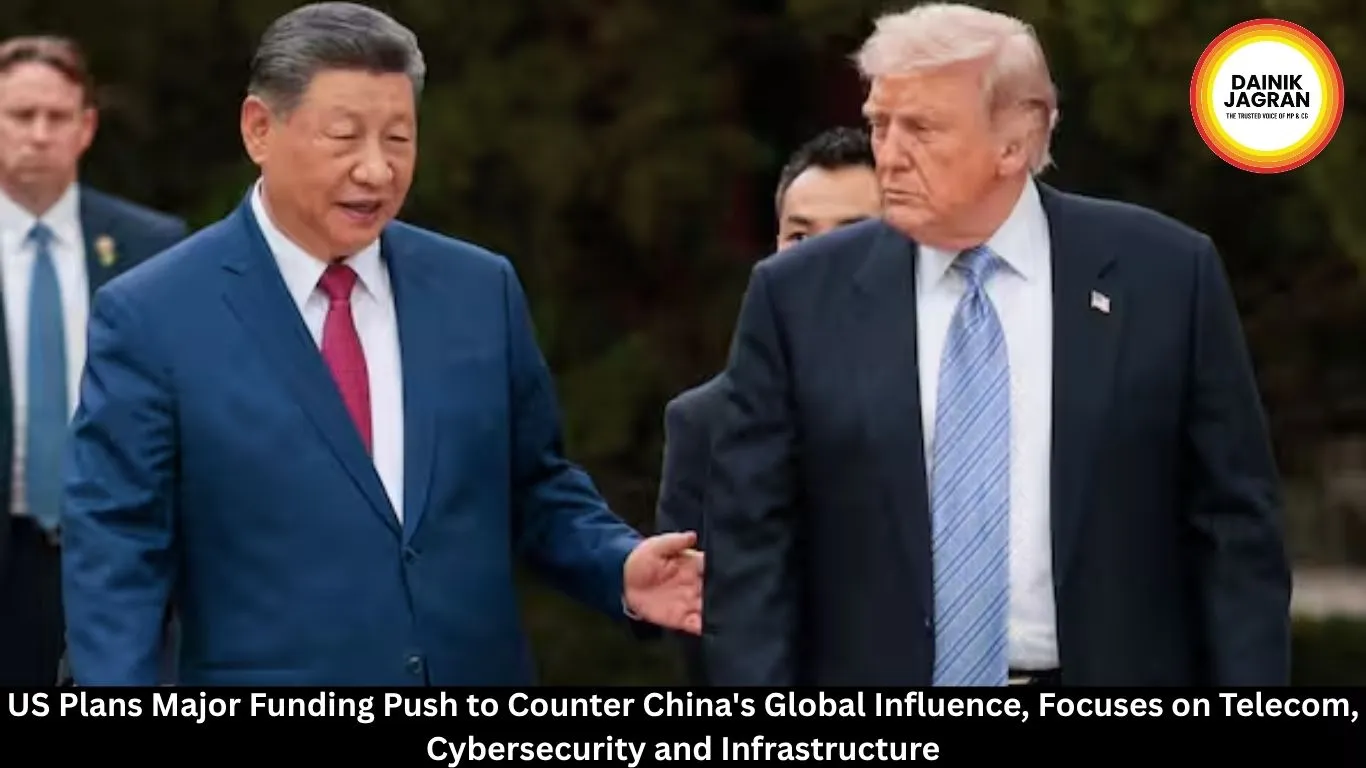
President Donald Trump is expected to meet Chinese President Xi Jinping later this year in the United States, while senior officials from both countries have recently held high-level diplomatic discussions aimed at stabilising bilateral relations.
However, analysts note that the latest proposals demonstrate that strategic competition between the world's two largest economies continues to remain a central element of US foreign policy.
The proposed funding package is expected to be considered by the US Congress in the coming months.

--------
🚨 Beat the News Rush – Join Now!
Get breaking alerts, hot exclusives, and game-changing stories instantly on your phone. No delays, no fluff – just the edge you need. ⚡
Tap to join:
🟢 WhatsApp Channel: Dainik Jagran MP CG
Crave more?
🅕 Facebook: Dainik Jagran MP CG English
🅧 Twitter (X): Dainik Jagran MP CG
🅘 Instagram: Dainik Jagran MP CG
Share the fire – keep your crew ahead! 🗞️🔥
US Plans Major Global Funding Push to Counter China's Growing Influence
Digital Desk
The administration of US President Donald Trump is preparing a significant increase in funding for programmes aimed at countering China's growing global influence, marking a renewed strategic push after budget reductions last year slowed several anti-China initiatives.
According to reports, the US administration has informed Congress of its proposal to allocate $175.8 million for replacing ageing undersea telecommunications cables across the Caribbean and Central America, with the objective of strengthening secure communications infrastructure and limiting China's role in the region.
The proposal forms part of a broader strategy to expand American influence across Latin America, Africa and Asia while reducing Beijing's footprint in critical infrastructure and emerging technologies.
Undersea Cable Project at Centre of Strategy
The proposed funding includes a programme titled "Countering CCP Control of Caribbean and Central America Undersea Cables Project."
The initiative aims to finance the installation of secure telecommunications infrastructure while encouraging regional governments to partner with trusted private-sector companies instead of Chinese technology providers.
According to US officials, the programme seeks to modernise ageing communication networks and strengthen digital security across the region.
Countries expected to benefit include El Salvador, Guatemala, Honduras, Haiti and Nicaragua, although US officials indicated that Washington would not directly engage with Nicaragua's government despite infrastructure extending into the country.
Growing Concerns Over Chinese Investments
US officials argue that China's increasing investments in ports, telecommunications, transport infrastructure and digital connectivity across the Americas pose long-term strategic and national security challenges.
According to the proposal, while Chinese infrastructure projects may initially appear more economical, US officials claim they often involve hidden maintenance costs, implementation delays and operational concerns.
Washington has increasingly expressed concern over Beijing's expanding economic presence in developing nations through infrastructure financing and technology partnerships.
Broader Global Investment Planned
Beyond the undersea cable programme, the US State Department is reportedly considering nearly $500 million in additional funding for projects aimed at countering China's diplomatic, technological and economic influence worldwide.
According to internal documents cited in media reports, more than 50 projects valued at over $340 million are under consideration across Latin America, Africa and Asia.
Several of these initiatives had previously been approved but were delayed following budget reductions and restructuring within US foreign assistance programmes.
Cybersecurity and Critical Infrastructure Prioritised
The proposed initiatives extend beyond telecommunications.
Plans reportedly include establishing cybersecurity operations centres in Argentina and Belize to monitor cyber threats and protect critical infrastructure.
Additional projects focus on strengthening cooperation with countries including Ecuador, Jamaica, Mexico, Paraguay, Peru and Uruguay to safeguard ports, maritime activities and critical mineral supply chains from what Washington describes as growing Chinese influence.
Other proposed initiatives include expanding secure communications technology, countering surveillance technology exports and supporting strategic digital infrastructure in partner countries.
Strategic Competition Continues
The renewed funding push comes despite ongoing diplomatic engagement between Washington and Beijing.
President Donald Trump is expected to meet Chinese President Xi Jinping later this year in the United States, while senior officials from both countries have recently held high-level diplomatic discussions aimed at stabilising bilateral relations.
However, analysts note that the latest proposals demonstrate that strategic competition between the world's two largest economies continues to remain a central element of US foreign policy.
The proposed funding package is expected to be considered by the US Congress in the coming months.