Iran Targets Gulf Region After US Strikes; Jordan Intercepts Missiles as US Urges Tehran to Return to Talks
Digital Desk
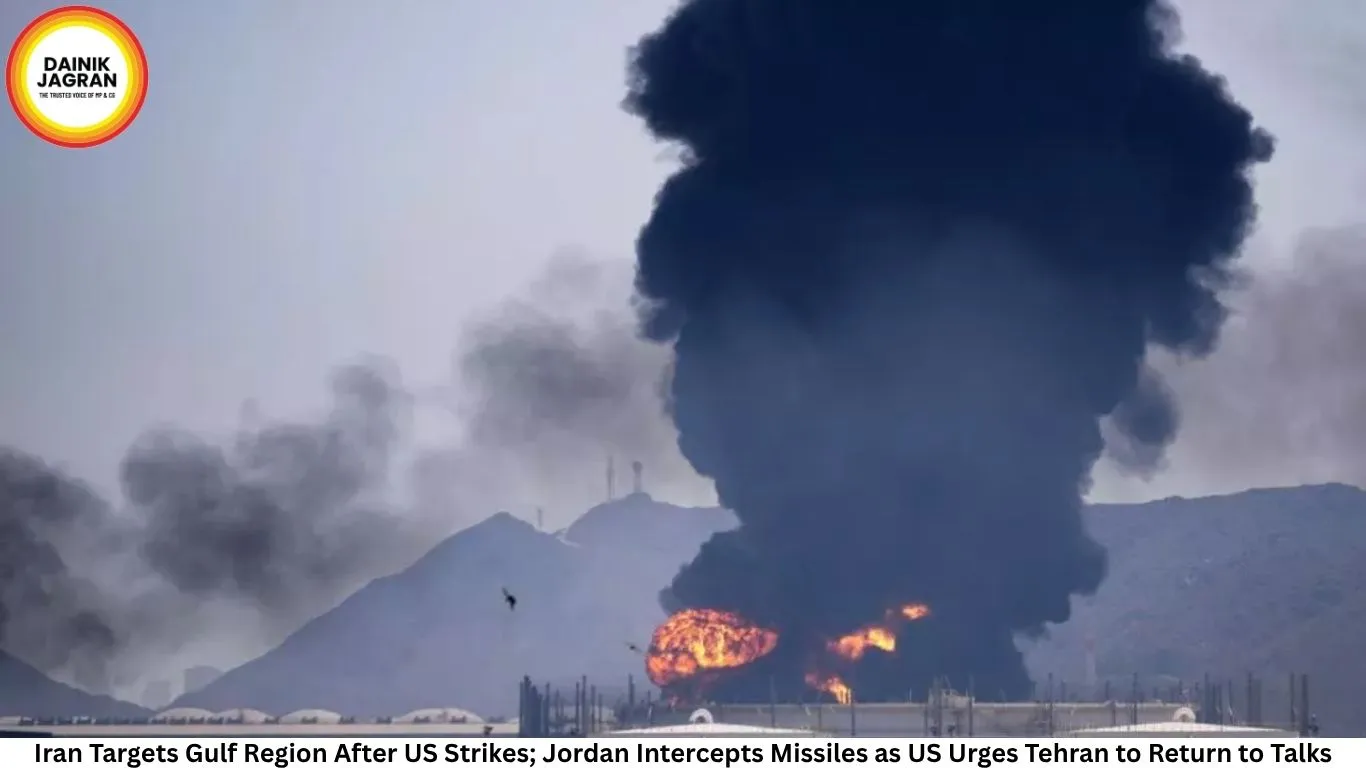
Tensions in the Middle East escalated after Iran launched missiles toward Jordan, Bahrain, and Kuwait following recent US strikes. Jordan intercepted four missiles, while US Secretary of State Marco Rubio said Washington remains open to negotiations but accused Tehran of lacking serious intent.
Regional tensions intensified on Wednesday after Iran launched missiles toward Jordan, Bahrain, and Kuwait in the aftermath of recent US military strikes. Jordan's armed forces said their air defence systems successfully intercepted several incoming missiles, preventing casualties and damage, as the United States reiterated its willingness to pursue diplomacy while warning that it would continue to defend its interests and allies.
According to Jordan's state-run Petra News Agency, the country's air defence systems detected six missiles launched from Iranian territory. Military officials said four missiles were intercepted after entering Jordanian airspace, while the remaining two landed in remote, uninhabited areas without causing injuries or property damage.
Jordan's military confirmed that no casualties or material losses were reported and stated that security agencies continue to monitor the situation closely.
Regional Security Concerns Rise
The missile launches came amid heightened tensions across the Middle East following recent US strikes targeting Iranian-linked facilities. Although authorities in Bahrain and Kuwait have not immediately reported any direct damage, regional security agencies remain on high alert amid fears of further escalation.
The latest developments have prompted concerns about the potential for a broader regional conflict, with Gulf nations closely monitoring the evolving security situation.
Rubio: US Ready for Diplomacy
Speaking during the ASEAN Foreign Ministers' Meeting in Manila, Philippines, US Secretary of State Marco Rubio said Washington remains prepared to engage in diplomatic talks with Tehran but questioned Iran's willingness to negotiate.
"Our biggest problem right now is that they're not serious about negotiating. If they are serious, we will be too. If not, we will do whatever is necessary to protect our interests and the interests of our allies," Rubio said.
His remarks underscored the Biden administration's position that diplomacy remains the preferred path, provided Iran demonstrates a genuine commitment to negotiations.
Diplomatic Window Remains Open
Despite the exchange of military actions, US officials continue to maintain that diplomatic engagement remains possible. However, Washington has also indicated that it will respond decisively to threats against American personnel, military assets, and allied nations in the region.
The latest missile incident highlights the fragile security environment in the Gulf, where any further escalation could have significant implications for regional stability, global energy markets, and international diplomacy.
International Community Watching Closely
The growing confrontation between the United States and Iran has drawn international attention, with several countries urging restraint and calling for renewed diplomatic efforts to prevent a wider conflict.
Security analysts note that continued military exchanges risk increasing instability across the Middle East, making diplomatic engagement increasingly critical in the coming days.
--------
🚨 Beat the News Rush – Join Now!
Get breaking alerts, hot exclusives, and game-changing stories instantly on your phone. No delays, no fluff – just the edge you need. ⚡
Tap to join:
🟢 WhatsApp Channel: Dainik Jagran MP CG
Crave more?
🅕 Facebook: Dainik Jagran MP CG English
🅧 Twitter (X): Dainik Jagran MP CG
🅘 Instagram: Dainik Jagran MP CG
Share the fire – keep your crew ahead! 🗞️🔥
Iran Targets Gulf Region After US Strikes; Jordan Intercepts Missiles as US Urges Tehran to Return to Talks
Digital Desk
Regional tensions intensified on Wednesday after Iran launched missiles toward Jordan, Bahrain, and Kuwait in the aftermath of recent US military strikes. Jordan's armed forces said their air defence systems successfully intercepted several incoming missiles, preventing casualties and damage, as the United States reiterated its willingness to pursue diplomacy while warning that it would continue to defend its interests and allies.
According to Jordan's state-run Petra News Agency, the country's air defence systems detected six missiles launched from Iranian territory. Military officials said four missiles were intercepted after entering Jordanian airspace, while the remaining two landed in remote, uninhabited areas without causing injuries or property damage.
Jordan's military confirmed that no casualties or material losses were reported and stated that security agencies continue to monitor the situation closely.
Regional Security Concerns Rise
The missile launches came amid heightened tensions across the Middle East following recent US strikes targeting Iranian-linked facilities. Although authorities in Bahrain and Kuwait have not immediately reported any direct damage, regional security agencies remain on high alert amid fears of further escalation.
The latest developments have prompted concerns about the potential for a broader regional conflict, with Gulf nations closely monitoring the evolving security situation.
Rubio: US Ready for Diplomacy
Speaking during the ASEAN Foreign Ministers' Meeting in Manila, Philippines, US Secretary of State Marco Rubio said Washington remains prepared to engage in diplomatic talks with Tehran but questioned Iran's willingness to negotiate.
"Our biggest problem right now is that they're not serious about negotiating. If they are serious, we will be too. If not, we will do whatever is necessary to protect our interests and the interests of our allies," Rubio said.
His remarks underscored the Biden administration's position that diplomacy remains the preferred path, provided Iran demonstrates a genuine commitment to negotiations.
Diplomatic Window Remains Open
Despite the exchange of military actions, US officials continue to maintain that diplomatic engagement remains possible. However, Washington has also indicated that it will respond decisively to threats against American personnel, military assets, and allied nations in the region.
The latest missile incident highlights the fragile security environment in the Gulf, where any further escalation could have significant implications for regional stability, global energy markets, and international diplomacy.
International Community Watching Closely
The growing confrontation between the United States and Iran has drawn international attention, with several countries urging restraint and calling for renewed diplomatic efforts to prevent a wider conflict.
Security analysts note that continued military exchanges risk increasing instability across the Middle East, making diplomatic engagement increasingly critical in the coming days.