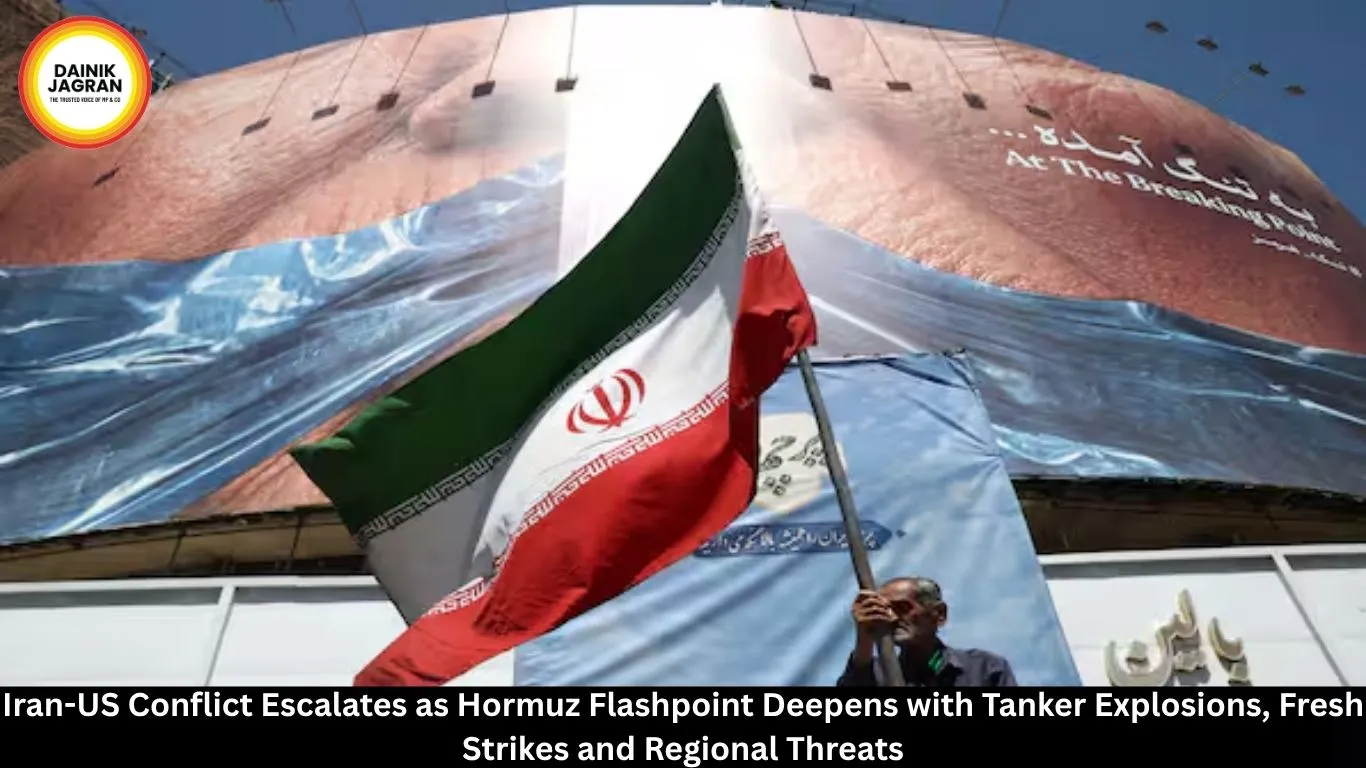
Iran-US Conflict Deepens as Hormuz Tanker Explosions and Fresh Strikes Raise Regional Tensions

Digital Desk

Iran-US Conflict Deepens as Hormuz Tanker Explosions and Fresh Strikes Raise Regional Tensions

The Iran-US conflict intensified after fresh US strikes, reported tanker explosions in the Strait of Hormuz and renewed military threats from Tehran, raising concerns over regional security and global oil supplies.

Tensions in the Middle East escalated further on Saturday as the ongoing conflict between Iran and the United States intensified with fresh military strikes, reported explosions involving oil tankers in the Strait of Hormuz, and renewed threats of wider regional retaliation from Tehran.

The latest developments have heightened concerns over regional stability and global energy security, as the Strait of Hormuz remains one of the world's most strategically important oil shipping routes.

Fresh Strikes Continue for Seventh Consecutive Night

The US Central Command (CENTCOM) said American forces carried out a seventh consecutive night of military strikes against Iranian targets, describing the operation as part of efforts to further degrade Iran's military capabilities.

Iranian state media reported that at least three people were killed and eight others injured in southern Iran following the latest attacks. Tehran also accused the United States of targeting civilian infrastructure, including an airport, railway station and bridges, although Washington has not confirmed those claims.

Explosions Reported Near Strait of Hormuz

Iran's Islamic Revolutionary Guard Corps (IRGC) claimed that two oil tankers caught fire after hitting naval mines while attempting to transit the Strait of Hormuz.

According to statements carried by Iranian state media, the Revolutionary Guards alleged the vessels entered a mined area with support from "American intelligence agencies." The identities and ownership of the tankers have not been independently verified.

The IRGC also claimed it halted four ships attempting to pass through the strategic waterway during what it described as a combined missile and drone operation.

Separately, Iran's semi-official Tasnim News Agency reported that Iranian forces intercepted a Thai-flagged vessel in the Strait, while local officials in Bushehr alleged that a US strike targeted an Iranian oil tanker docked at Kharg Island, a major oil export terminal.

Trump Administration Reportedly Reviewing Broader Military Options

Amid the escalating conflict, reports indicate that the Trump administration is evaluating options for expanding military operations inside Iran.

According to reports, Washington has deployed additional aerial refuelling aircraft to the region while reviewing possible strikes on key military, nuclear and energy-related infrastructure if hostilities continue.

No official decision on broader military action has been publicly announced.

Iran Warns of Wider Offensive

Senior Iranian military officials warned that Tehran could significantly expand its military response if US operations continue.

Major General Mohsen Rezaei, a senior adviser to Iran's Supreme Leader, said Iran would move beyond proportional retaliation and begin targeting US military assets outside the immediate conflict zone if attacks persist.

Separately, IRGC Aerospace Force commander Majid Mousavi said missile and drone operations against US targets would continue until attacks on Iranian coastal infrastructure ceased.

Conflict Expands Across the Gulf

The conflict has increasingly spread beyond Iran's borders.

Iran reportedly launched attacks targeting Kuwait, Qatar and Bahrain after Washington expanded its bombing campaign to include bridges, ports and energy infrastructure inside Iran.

Authorities in Kuwait reported damage to a power and water facility, while military officials confirmed several personnel were injured after drone attacks on military installations.

Qatar stated that its air defence systems intercepted incoming missiles, while Iranian officials claimed responsibility for targeting US military assets stationed in the Gulf.

Global Oil Markets Remain on Edge

The Strait of Hormuz handles a substantial share of the world's crude oil exports, making any disruption a major concern for international energy markets.

With military activity intensifying around the strategic waterway and shipping operations facing growing risks, analysts warn that prolonged instability could further increase crude oil prices, disrupt global supply chains and heighten geopolitical uncertainty.

As diplomatic efforts remain stalled and military operations continue on both sides, international attention is focused on whether the conflict can be contained before expanding into a broader regional confrontation.

 

--------

🚨 Beat the News Rush – Join Now!

Get breaking alerts, hot exclusives, and game-changing stories instantly on your phone. No delays, no fluff – just the edge you need. ⚡

Tap to join: 

🟢 WhatsApp Channel: Dainik Jagran MP CG

Crave more?

🅕 Facebook: Dainik Jagran MP CG English

🅧 Twitter (X): Dainik Jagran MP CG

🅘 Instagram: Dainik Jagran MP CG

Share the fire – keep your crew ahead! 🗞️🔥

english.dainikjagranmpcg.com
18 Jul 2026 By Abhishek Joshi

Iran-US Conflict Deepens as Hormuz Tanker Explosions and Fresh Strikes Raise Regional Tensions

Digital Desk

Tensions in the Middle East escalated further on Saturday as the ongoing conflict between Iran and the United States intensified with fresh military strikes, reported explosions involving oil tankers in the Strait of Hormuz, and renewed threats of wider regional retaliation from Tehran.

The latest developments have heightened concerns over regional stability and global energy security, as the Strait of Hormuz remains one of the world's most strategically important oil shipping routes.

Fresh Strikes Continue for Seventh Consecutive Night

The US Central Command (CENTCOM) said American forces carried out a seventh consecutive night of military strikes against Iranian targets, describing the operation as part of efforts to further degrade Iran's military capabilities.

Iranian state media reported that at least three people were killed and eight others injured in southern Iran following the latest attacks. Tehran also accused the United States of targeting civilian infrastructure, including an airport, railway station and bridges, although Washington has not confirmed those claims.

Explosions Reported Near Strait of Hormuz

Iran's Islamic Revolutionary Guard Corps (IRGC) claimed that two oil tankers caught fire after hitting naval mines while attempting to transit the Strait of Hormuz.

According to statements carried by Iranian state media, the Revolutionary Guards alleged the vessels entered a mined area with support from "American intelligence agencies." The identities and ownership of the tankers have not been independently verified.

The IRGC also claimed it halted four ships attempting to pass through the strategic waterway during what it described as a combined missile and drone operation.

Separately, Iran's semi-official Tasnim News Agency reported that Iranian forces intercepted a Thai-flagged vessel in the Strait, while local officials in Bushehr alleged that a US strike targeted an Iranian oil tanker docked at Kharg Island, a major oil export terminal.

Trump Administration Reportedly Reviewing Broader Military Options

Amid the escalating conflict, reports indicate that the Trump administration is evaluating options for expanding military operations inside Iran.

According to reports, Washington has deployed additional aerial refuelling aircraft to the region while reviewing possible strikes on key military, nuclear and energy-related infrastructure if hostilities continue.

No official decision on broader military action has been publicly announced.

Iran Warns of Wider Offensive

Senior Iranian military officials warned that Tehran could significantly expand its military response if US operations continue.

Major General Mohsen Rezaei, a senior adviser to Iran's Supreme Leader, said Iran would move beyond proportional retaliation and begin targeting US military assets outside the immediate conflict zone if attacks persist.

Separately, IRGC Aerospace Force commander Majid Mousavi said missile and drone operations against US targets would continue until attacks on Iranian coastal infrastructure ceased.

Conflict Expands Across the Gulf

The conflict has increasingly spread beyond Iran's borders.

Iran reportedly launched attacks targeting Kuwait, Qatar and Bahrain after Washington expanded its bombing campaign to include bridges, ports and energy infrastructure inside Iran.

Authorities in Kuwait reported damage to a power and water facility, while military officials confirmed several personnel were injured after drone attacks on military installations.

Qatar stated that its air defence systems intercepted incoming missiles, while Iranian officials claimed responsibility for targeting US military assets stationed in the Gulf.

Global Oil Markets Remain on Edge

The Strait of Hormuz handles a substantial share of the world's crude oil exports, making any disruption a major concern for international energy markets.

With military activity intensifying around the strategic waterway and shipping operations facing growing risks, analysts warn that prolonged instability could further increase crude oil prices, disrupt global supply chains and heighten geopolitical uncertainty.

As diplomatic efforts remain stalled and military operations continue on both sides, international attention is focused on whether the conflict can be contained before expanding into a broader regional confrontation.
 

https://english.dainikjagranmpcg.com/special-news/iran-us-conflict-deepens-as-hormuz-tanker-explosions-and-fresh-strikes/article-22696

Trending News