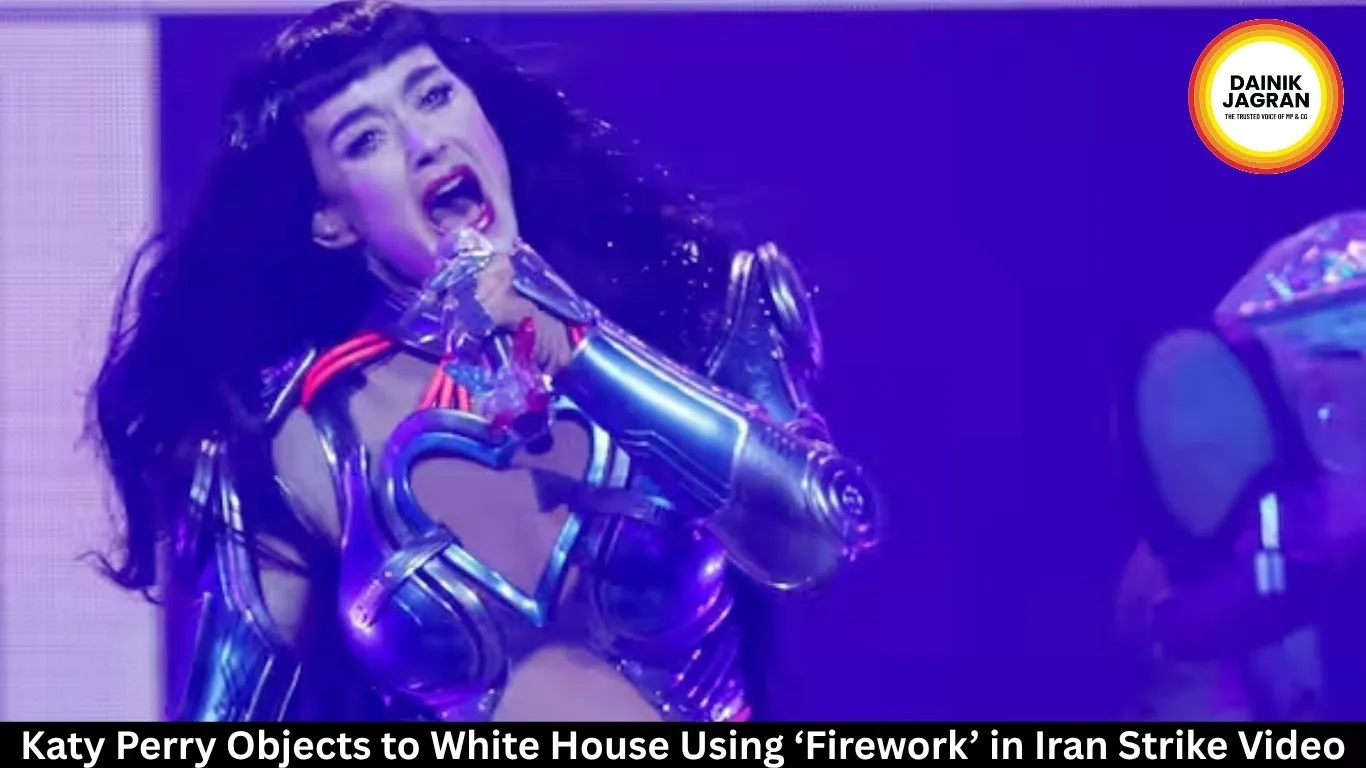
Katy Perry Slams White House Over Use of 'Firework' in Iran Strike Video
Digital Desk
Katy Perry says she did not approve the White House's use of her hit song 'Firework' in a TikTok video showing US military strikes on Iran, calling the move inappropriate.
American pop star Katy Perry has criticised the Trump administration after the official White House TikTok account used her hit song "Firework" in a video featuring footage of US military strikes on Iran, saying she neither approved nor supported its use in that context.
Taking to social media platform X, Perry said she was "deeply appalled and angry" that her 2010 chart-topping anthem had been paired with images of military action.
"I did not approve this," the singer wrote, adding that she had not been contacted for permission before the video was published.
Song Used With Strike Footage
The controversy began after the White House shared a short black-and-white video showing US airstrikes targeting locations in Iran amid escalating tensions in West Asia.
The clip featured a segment of Perry's song "Firework", including the lyrics, "Boom, boom, boom, even brighter than the moon," synchronised with scenes of explosions. The post was accompanied by the caption, "Iran has been warned," along with a firework emoji.
Perry said the song was written as a message of hope, resilience and personal empowerment, arguing that linking it to scenes of warfare distorted its original meaning.
"I wrote this song to be an anthem of hope, healing and inner strength," she said.
Debate Over Music Licensing
The incident has reignited discussion over the use of copyrighted music by political organisations and government agencies on social media platforms.
Although platforms such as TikTok maintain licensing agreements that allow verified accounts to use commercially released music, artists have increasingly objected when their songs are used in political messaging or government campaigns without their endorsement.
Perry sold the rights to her music catalogue to Litmus Music in a multi-million-dollar deal, meaning licensing decisions may not always require her direct approval. However, artists can still publicly distance themselves from how their work is used.
Growing Pushback From Artists
Katy Perry is among several musicians who have criticised the Trump administration over the use of their music in official social media content.
Earlier, Ariana Grande objected after her song "Bye" was used in a White House video related to immigration enforcement, prompting the audio to be removed. Sabrina Carpenter also criticised the use of her music in a video concerning border operations.
Other artists, including Olivia Rodrigo, Kesha, and The Rolling Stones, have previously raised similar concerns over the political use of their songs.
White House Yet to Respond
The White House has not issued an official response to Perry's criticism or indicated whether the video will be removed.
The episode highlights the growing tension between digital political communication and artists seeking greater control over how their creative work is associated with government messaging and public policy.
--------
🚨 Beat the News Rush – Join Now!
Get breaking alerts, hot exclusives, and game-changing stories instantly on your phone. No delays, no fluff – just the edge you need. ⚡
Tap to join:
🟢 WhatsApp Channel: Dainik Jagran MP CG
Crave more?
🅕 Facebook: Dainik Jagran MP CG English
🅧 Twitter (X): Dainik Jagran MP CG
🅘 Instagram: Dainik Jagran MP CG
Share the fire – keep your crew ahead! 🗞️🔥
Katy Perry Slams White House Over Use of 'Firework' in Iran Strike Video
Digital Desk
American pop star Katy Perry has criticised the Trump administration after the official White House TikTok account used her hit song "Firework" in a video featuring footage of US military strikes on Iran, saying she neither approved nor supported its use in that context.
Taking to social media platform X, Perry said she was "deeply appalled and angry" that her 2010 chart-topping anthem had been paired with images of military action.
"I did not approve this," the singer wrote, adding that she had not been contacted for permission before the video was published.
Song Used With Strike Footage
The controversy began after the White House shared a short black-and-white video showing US airstrikes targeting locations in Iran amid escalating tensions in West Asia.
The clip featured a segment of Perry's song "Firework", including the lyrics, "Boom, boom, boom, even brighter than the moon," synchronised with scenes of explosions. The post was accompanied by the caption, "Iran has been warned," along with a firework emoji.
Perry said the song was written as a message of hope, resilience and personal empowerment, arguing that linking it to scenes of warfare distorted its original meaning.
"I wrote this song to be an anthem of hope, healing and inner strength," she said.
Debate Over Music Licensing
The incident has reignited discussion over the use of copyrighted music by political organisations and government agencies on social media platforms.
Although platforms such as TikTok maintain licensing agreements that allow verified accounts to use commercially released music, artists have increasingly objected when their songs are used in political messaging or government campaigns without their endorsement.
Perry sold the rights to her music catalogue to Litmus Music in a multi-million-dollar deal, meaning licensing decisions may not always require her direct approval. However, artists can still publicly distance themselves from how their work is used.
Growing Pushback From Artists
Katy Perry is among several musicians who have criticised the Trump administration over the use of their music in official social media content.
Earlier, Ariana Grande objected after her song "Bye" was used in a White House video related to immigration enforcement, prompting the audio to be removed. Sabrina Carpenter also criticised the use of her music in a video concerning border operations.
Other artists, including Olivia Rodrigo, Kesha, and The Rolling Stones, have previously raised similar concerns over the political use of their songs.
White House Yet to Respond
The White House has not issued an official response to Perry's criticism or indicated whether the video will be removed.
The episode highlights the growing tension between digital political communication and artists seeking greater control over how their creative work is associated with government messaging and public policy.