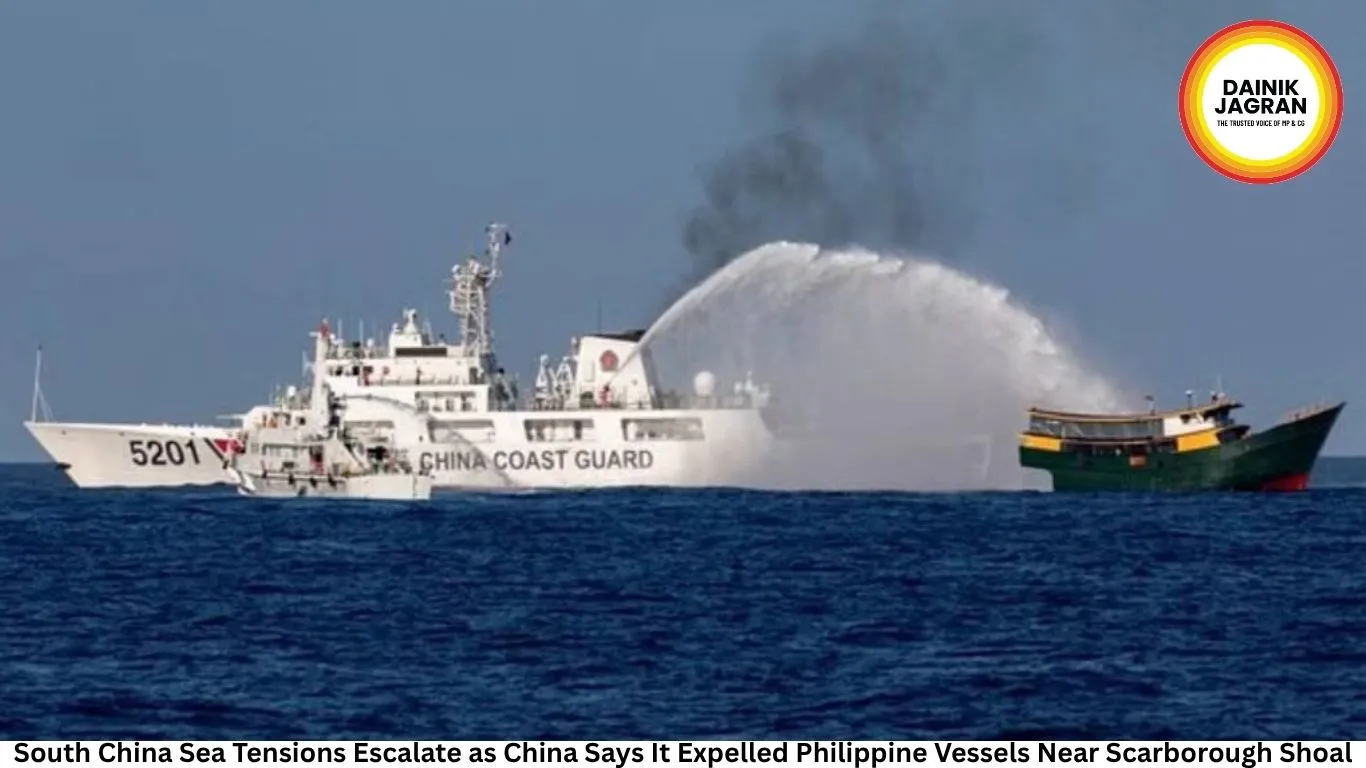
South China Sea Tensions Escalate as China Says It Expelled Philippine Vessels Near Scarborough Shoal
Digital Desk
Tensions in the South China Sea have intensified after China claimed it drove away two Philippine vessels near the disputed Scarborough Shoal. The incident comes days after another confrontation between the two countries, highlighting growing maritime disputes in one of the world's most strategically important waterways.
Tensions between China and the Philippines have risen once again after Beijing claimed it tracked, intercepted, and expelled two Philippine vessels that it alleged had entered waters near the disputed Scarborough Shoal without authorization.
The incident, announced by China's Coast Guard on Thursday, marks the second reported maritime confrontation between the two countries this week, underscoring the fragile security situation in the South China Sea.
Scarborough Shoal remains one of the region's most sensitive flashpoints, with both Beijing and Manila asserting sovereignty over the strategically located reef.
China Alleges Unauthorized Entry
In a statement, the China Coast Guard said the two Philippine vessels had "intruded" into waters surrounding Scarborough Shoal despite repeated warnings.
Chinese authorities stated that coast guard personnel carried out what they described as tracking, monitoring, interception, and expulsion operations, calling the measures "standard, professional, and lawful."
Beijing reiterated its claim of sovereignty over the disputed feature, known in China as Huangyan Dao, and urged the Philippines to cease what it described as "infringing and provocative actions."
Philippines Yet to Respond
As of Thursday, neither the Philippine Coast Guard nor the Philippine Embassy in Beijing had publicly responded to China's latest claims.
The absence of an immediate official response leaves differing accounts of the incident unresolved, a common feature of disputes in the South China Sea where rival claimants often issue conflicting statements after maritime encounters.
Second Confrontation This Week
The latest development follows another confrontation earlier this week near the Second Thomas Shoal, another disputed feature in the South China Sea where tensions between Chinese and Philippine vessels have repeatedly flared.
Both governments lodged diplomatic protests following that encounter, reflecting the increasingly strained relationship over competing territorial claims.
The recurring incidents have raised concerns about the risk of miscalculation in one of the world's busiest maritime trade routes.
ASEAN Meeting Highlights Dispute
The maritime dispute also featured prominently during meetings on the sidelines of the Association of Southeast Asian Nations (ASEAN) gathering this week.
Foreign ministers from China and the Philippines exchanged diplomatic protests regarding the earlier confrontation, illustrating how the territorial dispute continues to shape regional diplomacy.
Chinese Foreign Minister Wang Yi warned that Manila could face "bitter consequences of its own making" if it continued what Beijing views as provocative actions supported by outside powers.
Strategic Importance of Scarborough Shoal
Scarborough Shoal is located in the northeastern part of the South China Sea and is regarded as one of the region's most strategically significant maritime features.
Although it lies within the Philippines' exclusive economic zone under the 2016 Permanent Court of Arbitration ruling, China rejects that decision and continues to maintain effective control over the area.
The South China Sea is a vital global shipping corridor through which trillions of dollars in international trade pass annually. It is also believed to contain significant reserves of oil, natural gas, and rich fishing grounds, making competing territorial claims particularly sensitive.
Regional Concerns Continue
The latest incident adds to a series of confrontations involving coast guard and naval vessels in disputed waters over the past several years.
Regional analysts warn that repeated encounters between rival maritime forces increase the possibility of accidental escalation, while diplomatic efforts continue to seek mechanisms for preventing conflict.
Despite ongoing dialogue through regional forums, sovereignty disputes in the South China Sea remain among the most challenging security issues in the Indo-Pacific region.

--------
๐จ Beat the News Rush โ Join Now!
Get breaking alerts, hot exclusives, and game-changing stories instantly on your phone. No delays, no fluff โ just the edge you need. โก
Tap to join:ย
๐ข WhatsApp Channel: Dainik Jagran MP CG
Crave more?
๐ Facebook: Dainik Jagran MP CG English
๐ ง Twitter (X): Dainik Jagran MP CG
๐ Instagram: Dainik Jagran MP CG
Share the fire โ keep your crew ahead! ๐๏ธ๐ฅ
South China Sea Tensions Escalate as China Says It Expelled Philippine Vessels Near Scarborough Shoal
Digital Desk
Tensions between China and the Philippines have risen once again after Beijing claimed it tracked, intercepted, and expelled two Philippine vessels that it alleged had entered waters near the disputed Scarborough Shoal without authorization.
The incident, announced by China's Coast Guard on Thursday, marks the second reported maritime confrontation between the two countries this week, underscoring the fragile security situation in the South China Sea.
Scarborough Shoal remains one of the region's most sensitive flashpoints, with both Beijing and Manila asserting sovereignty over the strategically located reef.
China Alleges Unauthorized Entry
In a statement, the China Coast Guard said the two Philippine vessels had "intruded" into waters surrounding Scarborough Shoal despite repeated warnings.
Chinese authorities stated that coast guard personnel carried out what they described as tracking, monitoring, interception, and expulsion operations, calling the measures "standard, professional, and lawful."
Beijing reiterated its claim of sovereignty over the disputed feature, known in China as Huangyan Dao, and urged the Philippines to cease what it described as "infringing and provocative actions."
Philippines Yet to Respond
As of Thursday, neither the Philippine Coast Guard nor the Philippine Embassy in Beijing had publicly responded to China's latest claims.
The absence of an immediate official response leaves differing accounts of the incident unresolved, a common feature of disputes in the South China Sea where rival claimants often issue conflicting statements after maritime encounters.
Second Confrontation This Week
The latest development follows another confrontation earlier this week near the Second Thomas Shoal, another disputed feature in the South China Sea where tensions between Chinese and Philippine vessels have repeatedly flared.
Both governments lodged diplomatic protests following that encounter, reflecting the increasingly strained relationship over competing territorial claims.
The recurring incidents have raised concerns about the risk of miscalculation in one of the world's busiest maritime trade routes.
ASEAN Meeting Highlights Dispute
The maritime dispute also featured prominently during meetings on the sidelines of the Association of Southeast Asian Nations (ASEAN) gathering this week.
Foreign ministers from China and the Philippines exchanged diplomatic protests regarding the earlier confrontation, illustrating how the territorial dispute continues to shape regional diplomacy.
Chinese Foreign Minister Wang Yi warned that Manila could face "bitter consequences of its own making" if it continued what Beijing views as provocative actions supported by outside powers.
Strategic Importance of Scarborough Shoal
Scarborough Shoal is located in the northeastern part of the South China Sea and is regarded as one of the region's most strategically significant maritime features.
Although it lies within the Philippines' exclusive economic zone under the 2016 Permanent Court of Arbitration ruling, China rejects that decision and continues to maintain effective control over the area.
The South China Sea is a vital global shipping corridor through which trillions of dollars in international trade pass annually. It is also believed to contain significant reserves of oil, natural gas, and rich fishing grounds, making competing territorial claims particularly sensitive.
Regional Concerns Continue
The latest incident adds to a series of confrontations involving coast guard and naval vessels in disputed waters over the past several years.
Regional analysts warn that repeated encounters between rival maritime forces increase the possibility of accidental escalation, while diplomatic efforts continue to seek mechanisms for preventing conflict.
Despite ongoing dialogue through regional forums, sovereignty disputes in the South China Sea remain among the most challenging security issues in the Indo-Pacific region.