Trump Celebrates America’s 250th Independence with Patriotic Speech and Anti-Communism Message
Digital Desk
US President Donald Trump marked America's 250th Independence Day with a speech honouring veterans, celebrating US history, criticising communism and outlining his vision for the nation's future.
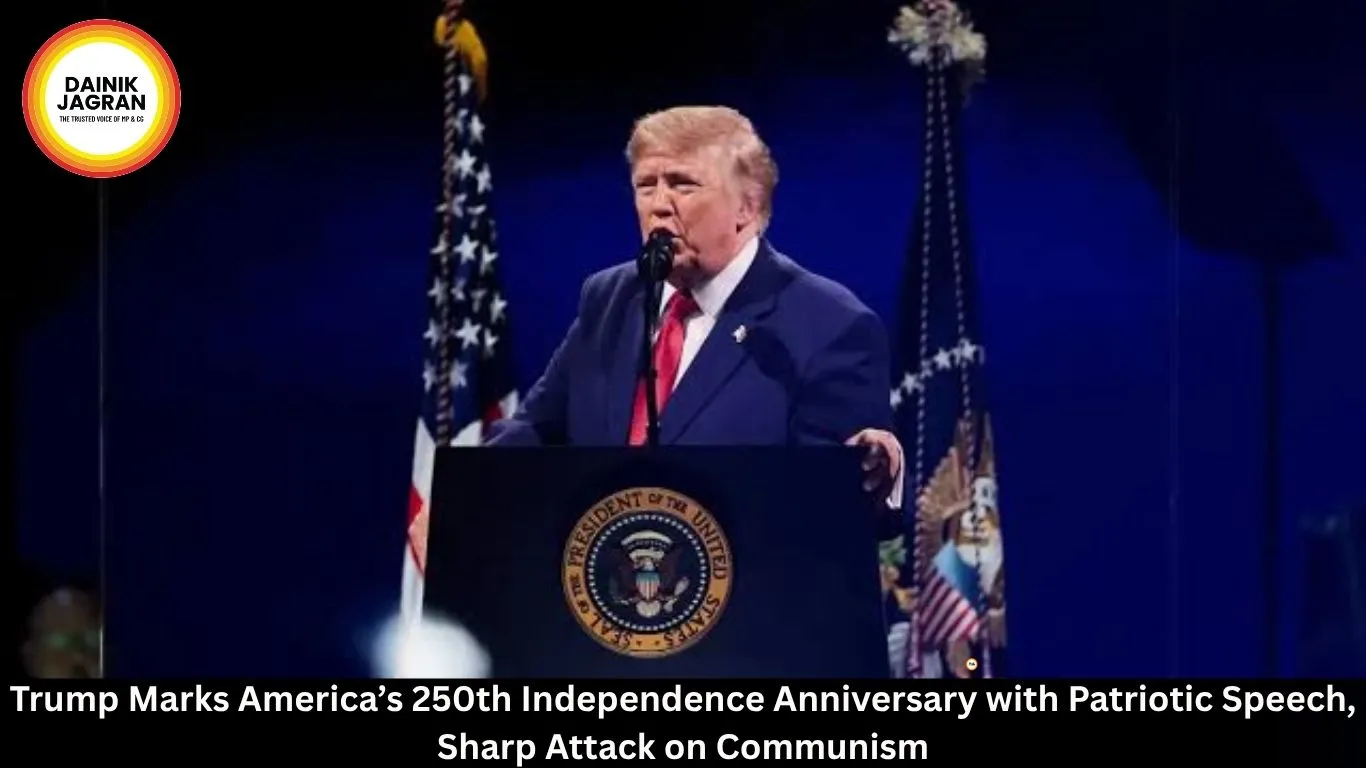
US President Donald Trump used the nation’s 250th Independence Day celebrations to deliver a strongly patriotic address that celebrated America’s history, honoured military veterans and renewed his criticism of communism, while outlining his vision for the country’s future.
Speaking at the "Salute to America" event on the National Mall in Washington, Trump addressed thousands of attendees despite severe weather that had temporarily disrupted the programme earlier in the day. Thunderstorms and lightning forced officials to evacuate parts of the venue before the ceremony resumed later in the evening.
Opening his nearly 40-minute speech, Trump thanked the crowd for returning after the weather interruption, saying the celebration would continue "rain or shine."
"I want to thank everybody because they did the right thing," Trump said, adding that the difficult weather had made the occasion even more memorable.
Throughout the address, Trump repeatedly praised American history, democracy and constitutional freedoms, describing the country's 250-year journey as a story of resilience and achievement.
A major theme of the speech was his criticism of communism. Trump argued that communist ideology was fundamentally incompatible with American values and warned against what he described as efforts to reshape the nation's historical narrative.
"You can be a communist, or you can be a patriot. You cannot be both," Trump said, while accusing supporters of Marxist ideas of undermining America's heritage and future.
He further described communism as "a cancer" that should be stopped before it spreads, asserting that the ideology had consistently failed wherever it had been implemented.
Trump contrasted what he called America's constitutional freedoms—including freedom of speech, freedom of religion and equal justice under the law—with authoritarian political systems, saying these principles remain central to the country's identity.
The President also used the occasion to promote his domestic political agenda. Referring to election reforms, he reiterated support for legislation requiring proof of citizenship for voting and stricter rules governing mail-in ballots. Trump argued that such measures would strengthen election integrity.
On foreign policy, Trump briefly highlighted recent US actions overseas, mentioning operations involving Venezuela and military strikes targeting Iranian naval assets as examples of his administration's approach to national security.
Military service and American history featured prominently throughout the celebration. Trump honoured veterans from World War II, the Korean War and the Vietnam War, recognising their contributions before a cheering audience.
Several historic American flags were displayed during the event, including flags associated with the Revolutionary War, the Civil War, Theodore Roosevelt's military service and the USS Arizona, which was sunk during the Japanese attack on Pearl Harbor in 1941.
Calling them "the real deal," Trump said the historic flags symbolised the courage and determination that shaped the United States.
The event also highlighted America's achievements in space exploration. Members of the Artemis II mission, which recently completed a lunar flyby, appeared alongside former Apollo 17 astronaut Harrison "Jack" Schmitt, the last surviving astronaut to have walked on the Moon.
As the ceremony concluded, Trump declared that America was entering what he described as a new "golden age," expressing confidence about the country's future.
The Independence Day celebrations ended with an elaborate fireworks display over the National Mall, accompanied by music and patriotic performances. Despite the earlier thunderstorms, large crowds remained until the conclusion of the event, marking one of the centrepiece celebrations of America's 250th anniversary.
The address reflected themes that have remained central to Trump's political messaging, combining patriotic symbolism, tributes to military service, criticism of ideological opponents and calls for preserving what he described as traditional American values.
--------
🚨 Beat the News Rush – Join Now!
Get breaking alerts, hot exclusives, and game-changing stories instantly on your phone. No delays, no fluff – just the edge you need. ⚡
Tap to join:
🟢 WhatsApp Channel: Dainik Jagran MP CG
Crave more?
🅕 Facebook: Dainik Jagran MP CG English
🅧 Twitter (X): Dainik Jagran MP CG
🅘 Instagram: Dainik Jagran MP CG
Share the fire – keep your crew ahead! 🗞️🔥
Trump Celebrates America’s 250th Independence with Patriotic Speech and Anti-Communism Message
Digital Desk
US President Donald Trump used the nation’s 250th Independence Day celebrations to deliver a strongly patriotic address that celebrated America’s history, honoured military veterans and renewed his criticism of communism, while outlining his vision for the country’s future.
Speaking at the "Salute to America" event on the National Mall in Washington, Trump addressed thousands of attendees despite severe weather that had temporarily disrupted the programme earlier in the day. Thunderstorms and lightning forced officials to evacuate parts of the venue before the ceremony resumed later in the evening.
Opening his nearly 40-minute speech, Trump thanked the crowd for returning after the weather interruption, saying the celebration would continue "rain or shine."
"I want to thank everybody because they did the right thing," Trump said, adding that the difficult weather had made the occasion even more memorable.
Throughout the address, Trump repeatedly praised American history, democracy and constitutional freedoms, describing the country's 250-year journey as a story of resilience and achievement.
A major theme of the speech was his criticism of communism. Trump argued that communist ideology was fundamentally incompatible with American values and warned against what he described as efforts to reshape the nation's historical narrative.
"You can be a communist, or you can be a patriot. You cannot be both," Trump said, while accusing supporters of Marxist ideas of undermining America's heritage and future.
He further described communism as "a cancer" that should be stopped before it spreads, asserting that the ideology had consistently failed wherever it had been implemented.
Trump contrasted what he called America's constitutional freedoms—including freedom of speech, freedom of religion and equal justice under the law—with authoritarian political systems, saying these principles remain central to the country's identity.
The President also used the occasion to promote his domestic political agenda. Referring to election reforms, he reiterated support for legislation requiring proof of citizenship for voting and stricter rules governing mail-in ballots. Trump argued that such measures would strengthen election integrity.
On foreign policy, Trump briefly highlighted recent US actions overseas, mentioning operations involving Venezuela and military strikes targeting Iranian naval assets as examples of his administration's approach to national security.
Military service and American history featured prominently throughout the celebration. Trump honoured veterans from World War II, the Korean War and the Vietnam War, recognising their contributions before a cheering audience.
Several historic American flags were displayed during the event, including flags associated with the Revolutionary War, the Civil War, Theodore Roosevelt's military service and the USS Arizona, which was sunk during the Japanese attack on Pearl Harbor in 1941.
Calling them "the real deal," Trump said the historic flags symbolised the courage and determination that shaped the United States.
The event also highlighted America's achievements in space exploration. Members of the Artemis II mission, which recently completed a lunar flyby, appeared alongside former Apollo 17 astronaut Harrison "Jack" Schmitt, the last surviving astronaut to have walked on the Moon.
As the ceremony concluded, Trump declared that America was entering what he described as a new "golden age," expressing confidence about the country's future.
The Independence Day celebrations ended with an elaborate fireworks display over the National Mall, accompanied by music and patriotic performances. Despite the earlier thunderstorms, large crowds remained until the conclusion of the event, marking one of the centrepiece celebrations of America's 250th anniversary.
The address reflected themes that have remained central to Trump's political messaging, combining patriotic symbolism, tributes to military service, criticism of ideological opponents and calls for preserving what he described as traditional American values.