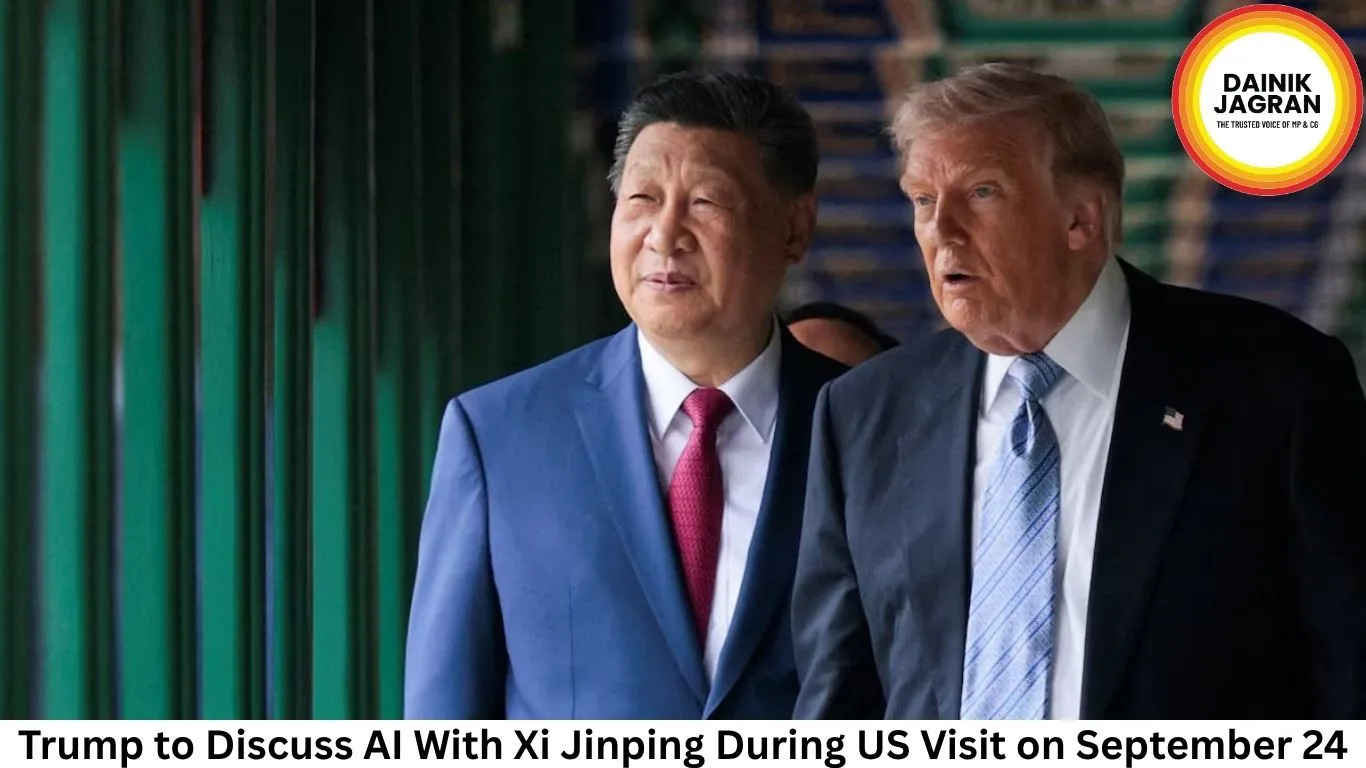
Trump to Discuss AI With Xi Jinping During US Visit on September 24
Digital Desk
US President Donald Trump has confirmed that artificial intelligence will be a key topic during Chinese President Xi Jinping's visit to the United States on September 24. The meeting comes amid improving US-China ties despite fresh tariffs on Chinese imports.
US President Donald Trump has announced that artificial intelligence (AI) will be one of the central topics of discussion when Chinese President Xi Jinping visits the United States on September 24.
The meeting follows Trump's visit to Beijing earlier this year, where the two leaders held talks and Trump extended an invitation for Xi to visit the White House.
Speaking on Thursday, Trump said the issue of AI had already been discussed during his China visit and would remain high on the agenda.
"President Xi is coming over on September 24, and we talked about it when I was over in Beijing, and we'll be talking about it again," Trump said.
AI Expected to Be a Major Agenda Item
Artificial intelligence has emerged as one of the most strategically important areas in US-China relations, with both countries competing for global leadership in advanced technologies.
The upcoming summit is expected to cover issues related to AI development, technological cooperation, security concerns, and regulatory frameworks, although neither side has released a detailed agenda.
The announcement came a day after US Secretary of State Marco Rubio and Chinese Foreign Minister Wang Yi held discussions aimed at preparing for what officials described as a "very positive visit."
According to statements from both governments, the two diplomats emphasized the importance of identifying areas of cooperation while managing ongoing differences.
Fresh Tariffs Ahead of the Summit
Trump's announcement also came shortly after his administration imposed an additional 12.5% tariff on Chinese imports as part of a broader trade action affecting several countries.
The new tariffs, introduced over concerns related to forced labour, raise the effective US tariff burden on many Chinese goods, adding another layer of complexity to bilateral economic ties.
Despite the latest trade measures, both Washington and Beijing have continued diplomatic engagement, signaling a willingness to prevent trade disputes from escalating further.
Trade Relations Showing Signs of Improvement
The planned summit takes place amid gradual improvement in US-China relations following last year's intense tariff confrontation.
At one stage, US tariffs on Chinese products had climbed to as high as 145%, significantly disrupting trade between the world's two largest economies.
However, a one-year trade understanding, reached after a previous Trump-Xi meeting in South Korea, helped ease tensions by suspending some tariffs, relaxing restrictions on rare-earth exports, and pausing certain investigations involving Chinese industries.
That agreement is scheduled to expire in November 2026, making the September summit particularly significant for both governments.
Xi Likely to Push for Tariff Relief
Analysts believe President Xi is expected to seek further easing of US trade restrictions during his visit.
China has consistently called for greater stability in bilateral economic relations, while the United States continues to press Beijing on trade practices, technology, market access, and national security concerns.
Whether the two sides can reach new agreements remains uncertain, but the meeting is expected to shape the future direction of US-China relations.
Why the Meeting Matters
The Trump-Xi summit is likely to be one of the most closely watched diplomatic events of the year, given the importance of the US-China relationship to the global economy.
Beyond trade, discussions are expected to cover:
- Artificial intelligence and emerging technologies
- Bilateral trade and tariffs
- Supply chain resilience
- National security concerns
- Global economic stability
- Areas of future cooperation
The outcome of the meeting could influence international technology policies, global trade flows, and strategic competition between the world's two largest economies.

--------
๐จ Beat the News Rush โ Join Now!
Get breaking alerts, hot exclusives, and game-changing stories instantly on your phone. No delays, no fluff โ just the edge you need. โก
Tap to join:ย
๐ข WhatsApp Channel: Dainik Jagran MP CG
Crave more?
๐ Facebook: Dainik Jagran MP CG English
๐ ง Twitter (X): Dainik Jagran MP CG
๐ Instagram: Dainik Jagran MP CG
Share the fire โ keep your crew ahead! ๐๏ธ๐ฅ
Trump to Discuss AI With Xi Jinping During US Visit on September 24
Digital Desk
US President Donald Trump has announced that artificial intelligence (AI) will be one of the central topics of discussion when Chinese President Xi Jinping visits the United States on September 24.
The meeting follows Trump's visit to Beijing earlier this year, where the two leaders held talks and Trump extended an invitation for Xi to visit the White House.
Speaking on Thursday, Trump said the issue of AI had already been discussed during his China visit and would remain high on the agenda.
"President Xi is coming over on September 24, and we talked about it when I was over in Beijing, and we'll be talking about it again," Trump said.
AI Expected to Be a Major Agenda Item
Artificial intelligence has emerged as one of the most strategically important areas in US-China relations, with both countries competing for global leadership in advanced technologies.
The upcoming summit is expected to cover issues related to AI development, technological cooperation, security concerns, and regulatory frameworks, although neither side has released a detailed agenda.
The announcement came a day after US Secretary of State Marco Rubio and Chinese Foreign Minister Wang Yi held discussions aimed at preparing for what officials described as a "very positive visit."
According to statements from both governments, the two diplomats emphasized the importance of identifying areas of cooperation while managing ongoing differences.
Fresh Tariffs Ahead of the Summit
Trump's announcement also came shortly after his administration imposed an additional 12.5% tariff on Chinese imports as part of a broader trade action affecting several countries.
The new tariffs, introduced over concerns related to forced labour, raise the effective US tariff burden on many Chinese goods, adding another layer of complexity to bilateral economic ties.
Despite the latest trade measures, both Washington and Beijing have continued diplomatic engagement, signaling a willingness to prevent trade disputes from escalating further.
Trade Relations Showing Signs of Improvement
The planned summit takes place amid gradual improvement in US-China relations following last year's intense tariff confrontation.
At one stage, US tariffs on Chinese products had climbed to as high as 145%, significantly disrupting trade between the world's two largest economies.
However, a one-year trade understanding, reached after a previous Trump-Xi meeting in South Korea, helped ease tensions by suspending some tariffs, relaxing restrictions on rare-earth exports, and pausing certain investigations involving Chinese industries.
That agreement is scheduled to expire in November 2026, making the September summit particularly significant for both governments.
Xi Likely to Push for Tariff Relief
Analysts believe President Xi is expected to seek further easing of US trade restrictions during his visit.
China has consistently called for greater stability in bilateral economic relations, while the United States continues to press Beijing on trade practices, technology, market access, and national security concerns.
Whether the two sides can reach new agreements remains uncertain, but the meeting is expected to shape the future direction of US-China relations.
Why the Meeting Matters
The Trump-Xi summit is likely to be one of the most closely watched diplomatic events of the year, given the importance of the US-China relationship to the global economy.
Beyond trade, discussions are expected to cover:
- Artificial intelligence and emerging technologies
- Bilateral trade and tariffs
- Supply chain resilience
- National security concerns
- Global economic stability
- Areas of future cooperation
The outcome of the meeting could influence international technology policies, global trade flows, and strategic competition between the world's two largest economies.