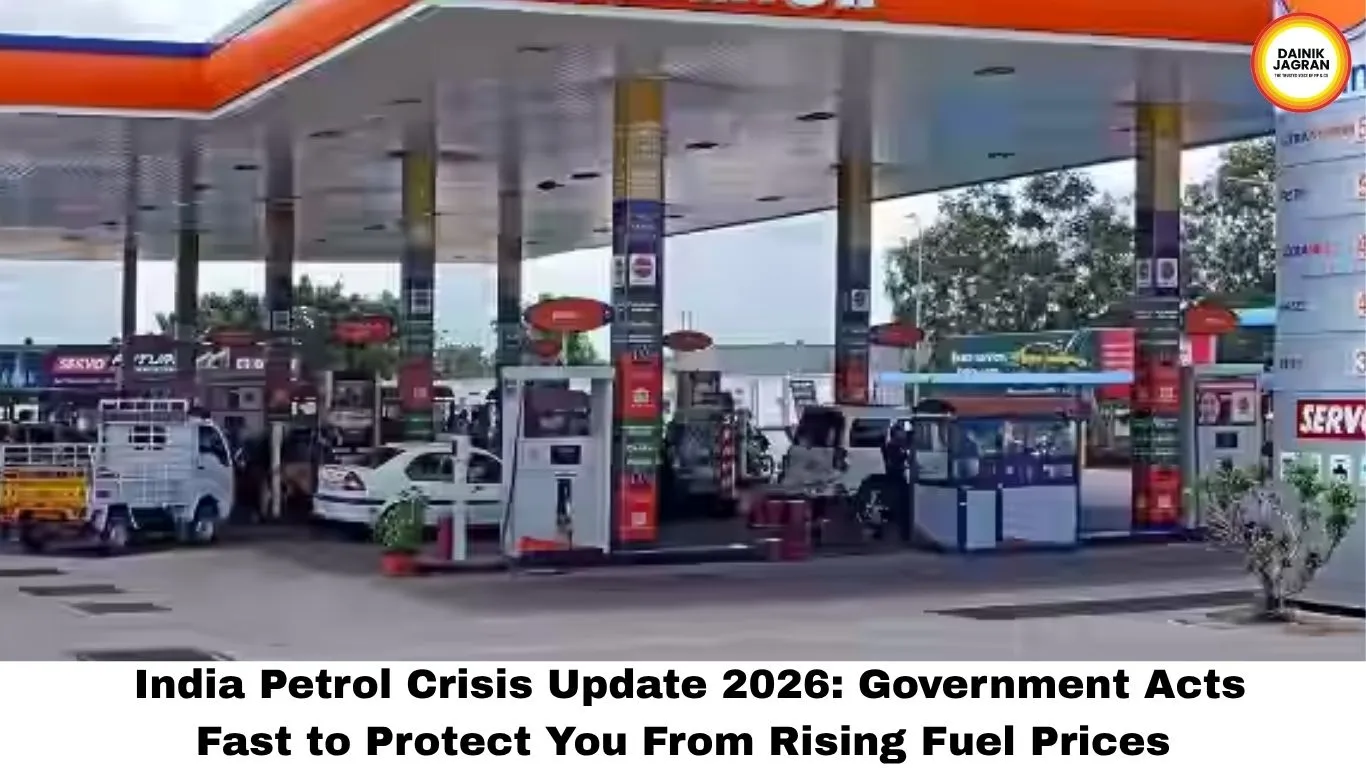
India Petrol Crisis Update 2026: Government Acts Fast to Protect You From Rising Fuel Prices
Digital Desk
India petrol crisis update: Govt slashes excise duty, reserves last 60+ days & fuel prices stay stable. Here's the full truth behind the fuel crisis rumours.
Amid global tensions and viral panic on social media, the Indian government has moved swiftly and decisively to protect ordinary citizens from the impact of rising crude oil prices. While headlines about a "petrol crisis" may have caused anxiety, the reality on the ground tells a far more reassuring story — one of strong reserves, proactive policy, and a government putting its people first.
What Is Actually Happening With India's Petrol Supply?
Let's start with the most important fact: India is not running out of petrol.
The government has confirmed that India currently holds enough crude oil and refined fuel stocks to last comfortably, and there is no immediate plan to raise petrol and diesel prices. In Delhi, petrol is currently priced at ₹94.77 per litre and diesel at ₹87.67 per litre — unchanged for weeks.
Yes, global crude prices have risen sharply due to the ongoing conflict in West Asia. But India's fuel ecosystem has proven remarkably resilient.
The Big Relief: Government Slashes Excise Duty
In a move that signals just how seriously the government is taking consumer protection, the Finance Ministry made a landmark announcement this week.
The Indian government slashed central excise duty on petrol and diesel by ₹10 per litre, offering significant relief to oil marketing companies grappling with rising global crude prices — with immediate effect.
Petrol duties were reduced from ₹13 per litre to just ₹3 per litre, and the ₹10-per-litre duty on diesel was completely removed. State-run companies, which control nearly 90% of the fuel market, have also maintained price stability for consumers. That means the companies have been absorbing rising costs rather than passing them on to you.
Fuel Shortage Rumours: The Truth Behind the Panic
Viral WhatsApp messages claiming India had only days of fuel left sent people rushing to petrol stations across the country. But authorities were quick to set the record straight.
Petroleum Minister Hardeep Singh Puri personally debunked rumours of an impending lockdown, calling them "completely false" and reaffirming that India is "resilient."
Here is what actually happened: the temporary queues seen at some fuel stations were not caused by any shortage in supply. They were caused by panic buying itself — an unfortunate but manageable situation that eased quickly once supplies were replenished at the outlet level.
Why India Is Better Prepared Than You Think
India's energy security framework is robust and built for exactly these kinds of global disruptions. Here are the key reasons to feel confident:
- Strategic reserves are strong. India holds over 60 days' worth of fuel reserves including crude, refined products, and strategic petroleum reserves.
- Diversified sourcing. Officials are actively exploring alternative sources for crude oil, LPG, and LNG imports to reduce dependence on any single supply route.
- Refining powerhouse. India is one of the world's largest oil refiners, capable of processing crude from multiple origins.
- Government shield. The government has signalled it plans to continue protecting consumers unless crude prices rise extremely sharply.
What Should You Do Right Now?
The advice from authorities is simple and empowering:
- Do not panic buy. Rushing to fill tanks beyond your need only creates artificial pressure on local outlets.
- Check official sources. The Ministry of Petroleum and official oil company websites are your most reliable sources of fuel price information.
- Ignore viral forwards. Unverified messages about lockdowns and shortages are false and harmful.
- Fuel rates are revised daily at 6 AM under India's dynamic fuel pricing system, introduced in 2017 for transparency — so stay updated through verified platforms.
The Bigger Picture: India Holds Strong
Global challenges are real. The West Asia conflict has disrupted shipping routes and pushed crude prices higher worldwide. But India's response has been measured, strategic, and citizen-first. From slashing excise duties to securing alternative supply routes, the government has demonstrated that it will not let global volatility derail the lives of ordinary Indians.
The petrol crisis, as many feared it, simply does not exist. What does exist is a government working hard behind the scenes to make sure you never have to face one.

--------
🚨 Beat the News Rush – Join Now!
Get breaking alerts, hot exclusives, and game-changing stories instantly on your phone. No delays, no fluff – just the edge you need. ⚡
Tap to join:
🟢 WhatsApp Channel: https://whatsapp.com/channel/0029VbAeWYG72WTxso1CFr2g
Crave more?
🅕 Facebook: English Dainik Jagran MP CG
🅧 Twitter (X): Jagran MP CG
🅘 Instagram: Dainik Jagran MP CG
Share the fire – keep your crew ahead! 🗞️🔥
India Petrol Crisis Update 2026: Government Acts Fast to Protect You From Rising Fuel Prices
Digital Desk
Amid global tensions and viral panic on social media, the Indian government has moved swiftly and decisively to protect ordinary citizens from the impact of rising crude oil prices. While headlines about a "petrol crisis" may have caused anxiety, the reality on the ground tells a far more reassuring story — one of strong reserves, proactive policy, and a government putting its people first.
What Is Actually Happening With India's Petrol Supply?
Let's start with the most important fact: India is not running out of petrol.
The government has confirmed that India currently holds enough crude oil and refined fuel stocks to last comfortably, and there is no immediate plan to raise petrol and diesel prices. In Delhi, petrol is currently priced at ₹94.77 per litre and diesel at ₹87.67 per litre — unchanged for weeks.
Yes, global crude prices have risen sharply due to the ongoing conflict in West Asia. But India's fuel ecosystem has proven remarkably resilient.
The Big Relief: Government Slashes Excise Duty
In a move that signals just how seriously the government is taking consumer protection, the Finance Ministry made a landmark announcement this week.
The Indian government slashed central excise duty on petrol and diesel by ₹10 per litre, offering significant relief to oil marketing companies grappling with rising global crude prices — with immediate effect.
Petrol duties were reduced from ₹13 per litre to just ₹3 per litre, and the ₹10-per-litre duty on diesel was completely removed. State-run companies, which control nearly 90% of the fuel market, have also maintained price stability for consumers. That means the companies have been absorbing rising costs rather than passing them on to you.
Fuel Shortage Rumours: The Truth Behind the Panic
Viral WhatsApp messages claiming India had only days of fuel left sent people rushing to petrol stations across the country. But authorities were quick to set the record straight.
Petroleum Minister Hardeep Singh Puri personally debunked rumours of an impending lockdown, calling them "completely false" and reaffirming that India is "resilient."
Here is what actually happened: the temporary queues seen at some fuel stations were not caused by any shortage in supply. They were caused by panic buying itself — an unfortunate but manageable situation that eased quickly once supplies were replenished at the outlet level.
Why India Is Better Prepared Than You Think
India's energy security framework is robust and built for exactly these kinds of global disruptions. Here are the key reasons to feel confident:
- Strategic reserves are strong. India holds over 60 days' worth of fuel reserves including crude, refined products, and strategic petroleum reserves.
- Diversified sourcing. Officials are actively exploring alternative sources for crude oil, LPG, and LNG imports to reduce dependence on any single supply route.
- Refining powerhouse. India is one of the world's largest oil refiners, capable of processing crude from multiple origins.
- Government shield. The government has signalled it plans to continue protecting consumers unless crude prices rise extremely sharply.
What Should You Do Right Now?
The advice from authorities is simple and empowering:
- Do not panic buy. Rushing to fill tanks beyond your need only creates artificial pressure on local outlets.
- Check official sources. The Ministry of Petroleum and official oil company websites are your most reliable sources of fuel price information.
- Ignore viral forwards. Unverified messages about lockdowns and shortages are false and harmful.
- Fuel rates are revised daily at 6 AM under India's dynamic fuel pricing system, introduced in 2017 for transparency — so stay updated through verified platforms.
The Bigger Picture: India Holds Strong
Global challenges are real. The West Asia conflict has disrupted shipping routes and pushed crude prices higher worldwide. But India's response has been measured, strategic, and citizen-first. From slashing excise duties to securing alternative supply routes, the government has demonstrated that it will not let global volatility derail the lives of ordinary Indians.
The petrol crisis, as many feared it, simply does not exist. What does exist is a government working hard behind the scenes to make sure you never have to face one.