Bastar Naxal Crackdown: Major Cadre Surrenders With Weapons as Chhattisgarh's Anti-Maoist Drive Enters Final Phase
Digital Desk
A major Naxal cadre has surrendered with weapons in Bastar's Paparav area. Here's what it means for Chhattisgarh's mission to go Naxal-free by March 31, 2026.
Bastar Naxal Crackdown: Major Cadre Surrenders With Weapons as Chhattisgarh's Anti-Maoist Drive Enters Final Phase
With just days left before the government's March 31 deadline, another significant Maoist cadre has laid down arms in Bastar — and the weapons surrendered tell a story of a movement in deep retreat.
The Surrender
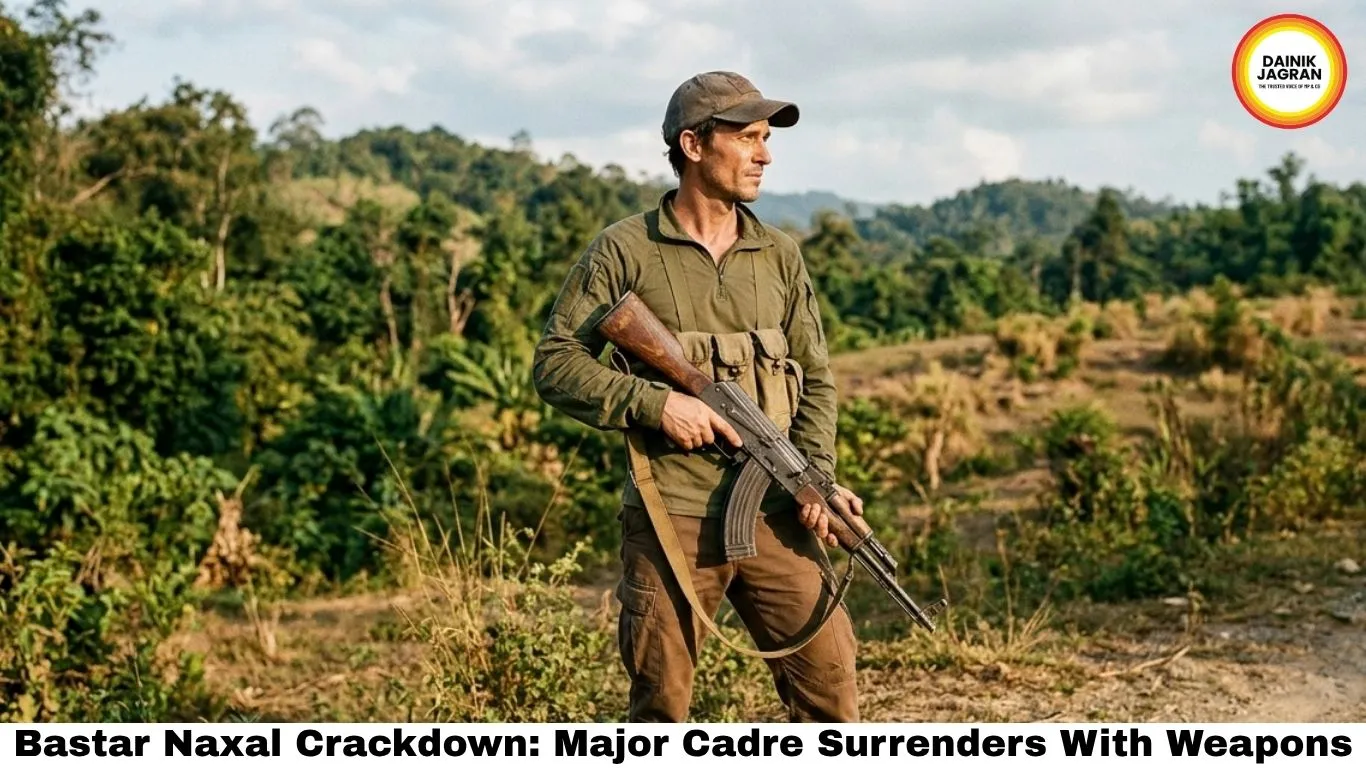
A significant Naxal cadre from the Paparav area of Bastar has surrendered before security forces in Jagdalpur, handing over weapons and choosing to join the mainstream under the state government's Poona Margem rehabilitation initiative.
The surrender is the latest in a relentless wave of capitulations across Chhattisgarh's most sensitive districts — Bijapur, Sukma, Dantewada, and now Bastar — as the government's March 31, 2026 deadline to eliminate Left Wing Extremism closes in by the day.
A Movement in Freefall
The numbers tell the story more clearly than any single arrest or surrender can.
In just the past 26 months, over 2,714 Maoist cadres have returned to the mainstream across Chhattisgarh — a pace of surrender that the insurgency has never experienced in its six-decade history. In 2025 alone, more than 1,500 Naxalites laid down their arms. And in March 2026, the surrenders have accelerated dramatically.
Just weeks ago, 108 Naxalites — including six divisional committee members — surrendered at Jagdalpur, handing over a large cache of weapons along with Rs 3.61 crore in cash and one kilogram of gold recovered from Maoist hideouts. It was the largest seizure of cash and valuables from a single Maoist location in the history of anti-Naxal operations in India.
Before that, 210 cadres — including a Central Committee member — surrendered in what became the largest single-day mass surrender in the history of Chhattisgarh's anti-Naxal campaign. They handed over 153 weapons including AK-47 rifles, INSAS rifles, Self Loading Rifles, carbines, and Barrel Grenade Launchers.
What Is Driving the Surrenders
The surrender wave is not happening in a vacuum. It is the product of a deliberate, multi-pronged strategy that has taken years to reach this tipping point.
Security operations have systematically dismantled the Maoist logistical supply chain. Over 450 Naxal bodies have been recovered in the past two seasons in Bastar alone. Senior commanders — men and women who once directed operations across thousands of square kilometres of forest — have been killed, captured, or have surrendered. The Dandakaranya Special Zonal Committee, once the most powerful regional Maoist body in the country, has been hollowed out from the inside.
At the same time, the Poona Margem rehabilitation initiative — which translates as "from rehabilitation to social reintegration" — has offered cadres a credible exit. Surrendering Naxalites receive financial assistance, skill development training, employment linkages under the new Industrial policy, and land benefits. For young tribal men and women who were recruited into the movement in conditions of poverty and fear, this is a genuinely different offer than anything the Maoist organisation can provide.
The Political Significance
Union Home Minister Amit Shah has staked enormous political capital on the March 31, 2026 deadline — declaring that Abujhmarh and North Bastar, once considered the most impenetrable Maoist heartlands in India, are now free of Naxal presence. Chief Minister Vishnu Deo Sai has called the surrender wave a vindication of the state's development-and-security twin-track approach.
IG Bastar Range Sundarraj Pattilingam has been unambiguous in his assessment: "Their days are numbered. They have only one option — either surrender or face the same action as other cadres."
Those are not the words of a counter-insurgency campaign managing a stalemate. They are the words of a force that believes it is winning.
What Remains
Three districts — Bijapur, Sukma, and Narayanpur — still have an active Naxal presence, though significantly degraded. The hardened ideological core of the movement — those who will not surrender under any circumstances — remains a real, if shrinking, threat.
The March 31 deadline was never a magic number that would make the remaining cadres vanish overnight. What it has done is create an irreversible psychological momentum — a belief, among both security forces and Maoist cadres, that the movement's end is near.
One more cadre has surrendered in Paparav. One more weapon handed over. One more person choosing roads, schools, and a future over forests, explosives, and a dying cause.
Bastar is not there yet. But it has never been closer.
Bastar Naxal Crackdown: Major Cadre Surrenders With Weapons as Chhattisgarh's Anti-Maoist Drive Enters Final Phase
Digital Desk
Bastar Naxal Crackdown: Major Cadre Surrenders With Weapons as Chhattisgarh's Anti-Maoist Drive Enters Final Phase
With just days left before the government's March 31 deadline, another significant Maoist cadre has laid down arms in Bastar — and the weapons surrendered tell a story of a movement in deep retreat.
The Surrender
A significant Naxal cadre from the Paparav area of Bastar has surrendered before security forces in Jagdalpur, handing over weapons and choosing to join the mainstream under the state government's Poona Margem rehabilitation initiative.
The surrender is the latest in a relentless wave of capitulations across Chhattisgarh's most sensitive districts — Bijapur, Sukma, Dantewada, and now Bastar — as the government's March 31, 2026 deadline to eliminate Left Wing Extremism closes in by the day.
A Movement in Freefall
The numbers tell the story more clearly than any single arrest or surrender can.
In just the past 26 months, over 2,714 Maoist cadres have returned to the mainstream across Chhattisgarh — a pace of surrender that the insurgency has never experienced in its six-decade history. In 2025 alone, more than 1,500 Naxalites laid down their arms. And in March 2026, the surrenders have accelerated dramatically.
Just weeks ago, 108 Naxalites — including six divisional committee members — surrendered at Jagdalpur, handing over a large cache of weapons along with Rs 3.61 crore in cash and one kilogram of gold recovered from Maoist hideouts. It was the largest seizure of cash and valuables from a single Maoist location in the history of anti-Naxal operations in India.
Before that, 210 cadres — including a Central Committee member — surrendered in what became the largest single-day mass surrender in the history of Chhattisgarh's anti-Naxal campaign. They handed over 153 weapons including AK-47 rifles, INSAS rifles, Self Loading Rifles, carbines, and Barrel Grenade Launchers.
What Is Driving the Surrenders
The surrender wave is not happening in a vacuum. It is the product of a deliberate, multi-pronged strategy that has taken years to reach this tipping point.
Security operations have systematically dismantled the Maoist logistical supply chain. Over 450 Naxal bodies have been recovered in the past two seasons in Bastar alone. Senior commanders — men and women who once directed operations across thousands of square kilometres of forest — have been killed, captured, or have surrendered. The Dandakaranya Special Zonal Committee, once the most powerful regional Maoist body in the country, has been hollowed out from the inside.
At the same time, the Poona Margem rehabilitation initiative — which translates as "from rehabilitation to social reintegration" — has offered cadres a credible exit. Surrendering Naxalites receive financial assistance, skill development training, employment linkages under the new Industrial policy, and land benefits. For young tribal men and women who were recruited into the movement in conditions of poverty and fear, this is a genuinely different offer than anything the Maoist organisation can provide.
The Political Significance
Union Home Minister Amit Shah has staked enormous political capital on the March 31, 2026 deadline — declaring that Abujhmarh and North Bastar, once considered the most impenetrable Maoist heartlands in India, are now free of Naxal presence. Chief Minister Vishnu Deo Sai has called the surrender wave a vindication of the state's development-and-security twin-track approach.
IG Bastar Range Sundarraj Pattilingam has been unambiguous in his assessment: "Their days are numbered. They have only one option — either surrender or face the same action as other cadres."
Those are not the words of a counter-insurgency campaign managing a stalemate. They are the words of a force that believes it is winning.
What Remains
Three districts — Bijapur, Sukma, and Narayanpur — still have an active Naxal presence, though significantly degraded. The hardened ideological core of the movement — those who will not surrender under any circumstances — remains a real, if shrinking, threat.
The March 31 deadline was never a magic number that would make the remaining cadres vanish overnight. What it has done is create an irreversible psychological momentum — a belief, among both security forces and Maoist cadres, that the movement's end is near.
One more cadre has surrendered in Paparav. One more weapon handed over. One more person choosing roads, schools, and a future over forests, explosives, and a dying cause.
Bastar is not there yet. But it has never been closer.