


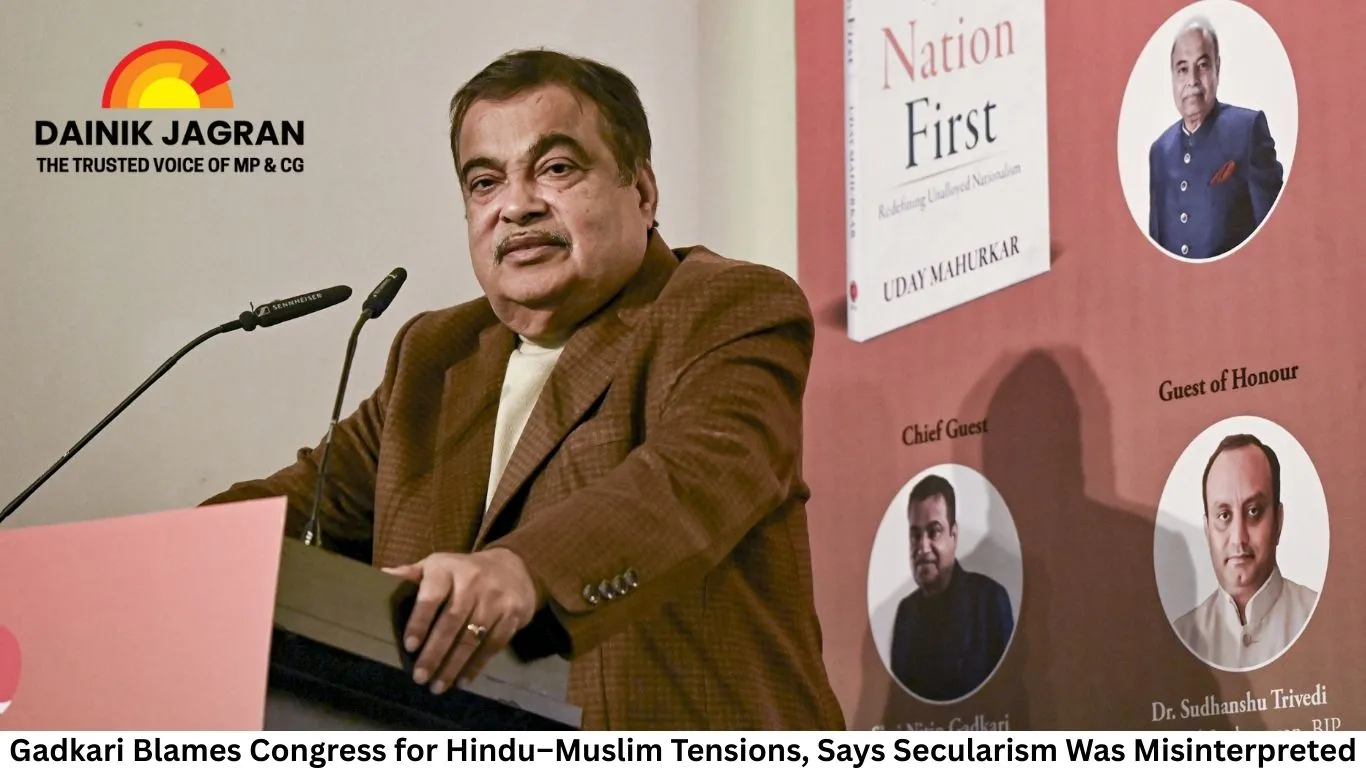
Gadkari Blames Congress for Hindu–Muslim Tensions, Says Secularism Was Misinterpreted
Digital Desk
Gadkari made the remarks while speaking at the launch of Sanatan Sanskriti Ki Atal Drishti, a book authored by Rajasthan Assembly Speaker Professor Vasudev Devnani. The event was attended by several political and academic figures, including Vice President C.P. Radhakrishnan.
According to the Union minister, secularism does not imply being “dharmanirpeksh” in the sense of distancing the state from religion, but instead stands for sarva dharma sambhav—equal respect, justice, and fair treatment for all religions. “The problems related to Hindu–Muslim relations that we still witness today stem from a distortion of this principle,” Gadkari said, without naming specific policies or decisions.
Invoking former Prime Minister Atal Bihari Vajpayee, Gadkari reiterated that India was secular in the past, remains secular today, and will continue to be so in the future. He said this character was rooted not in political ideologies or organisations, but in India’s civilisational and cultural traditions. “Indian, Hindu and Sanatan culture teaches welfare of all and respect for diversity,” he said, describing these values as inherently tolerant and inclusive.
Gadkari also claimed that Indian history offers no examples of Hindu rulers destroying religious sites, a point he said reflected the pluralistic nature of ancient Indian society. He added that compassion and coexistence were central to the country’s cultural ethos and should guide contemporary governance and social relations.
Later in the day, the minister attended another book launch, My Idea of Nation First: Redefining Unalloyed Nationalism, written by journalist Uday Mahurkar. Speaking at that event, Gadkari said the idea of “Nation First” should go beyond slogans and rhetoric. He stressed the need for an honest engagement with history, a clear understanding of systemic shortcomings, and a focus on building future capabilities.
“Modernisation should not mean blind imitation of the West,” Gadkari said. “It must be anchored in civilisational self-confidence and an understanding of India’s own strengths.” BJP leader Sudhanshu Trivedi and retired Lieutenant General V.G. Khandare were also present at the programme.
Gadkari’s comments come at a time when debates around secularism, nationalism, and religious identity continue to shape political discourse in the country. While leaders of the Congress party have consistently rejected accusations of appeasement and defended their interpretation of secularism as constitutionally grounded, the remarks are likely to add to the ongoing political contest over the meaning and practice of secularism in India.
No immediate response from the Congress was available at the time of publication.




.jpg)




