Greening to take priority over paving in NCR street redevelopment, officials tell third Clean Air Dialogue
Felling a tree in Delhi is now "extraordinarily difficult", forest officials say, as the region shifts from isolated planting towards managing its wetlands, forests, streets and parks as a single ecological system
The message from the session was that the region should stop planting in isolation and start managing its wetlands, forests, sanctuaries, streets and parks as a single ecological system. Officials described this as a shift away from simple afforestation towards systems-level restoration.
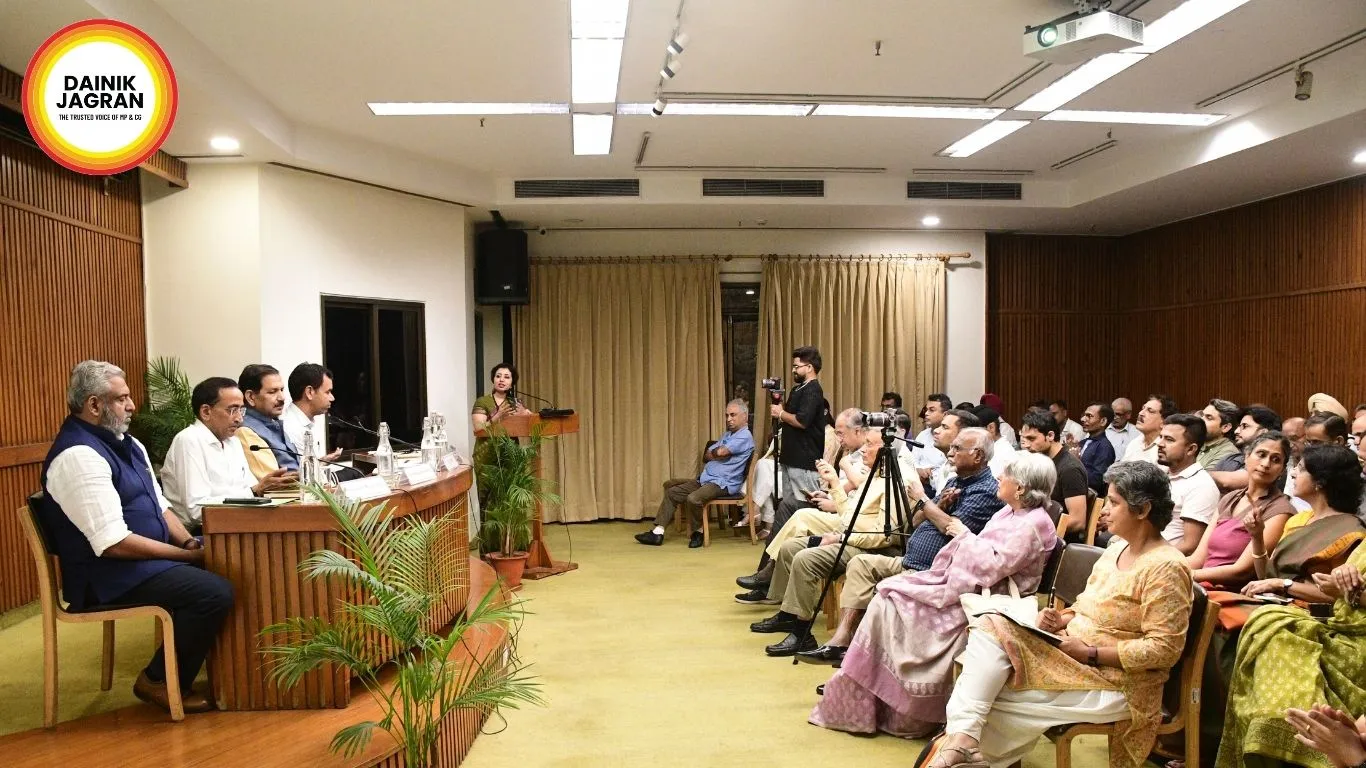
Convened by the CAQM Resource Lab, a joint effort between the Commission for Air Quality Management and the Raahgiri Foundation, the dialogue brought together government agencies, urban planners, environmental experts, citizens and civil society organisations at the India International Centre Annexe. It was the third session in a year-round series designed to keep clean air on the agenda well beyond the winter smog months and to give citizens and civil society a standing seat alongside policymakers.
This edition focused on blue-green infrastructure: the idea that landscape planning, when done at scale, can reduce air pollution and build urban resilience simultaneously. The kind of plantation matters as much as the quantity. Bare, open soil along roads and on unused public land is a major source of dust, which is lifted into the air by wind and passing traffic and adds significantly to the city's particulate load. Dense, native, multi-layered planting of trees, shrubs, and ground cover does the opposite. It binds the soil, traps dust on leaf surfaces and cuts the fine particles thrown up from the ground. Participants set out a clear priority on this basis to replace dust-generating open soil with green-blue corridors that intercept particulate matter and suppress dust at source.
They also argued that a connected ecological network delivers benefits well beyond clean air. It improves thermal comfort and heat resilience, supports public health and biodiversity, and makes streets safer and easier to move through. The panel took up the everyday questions citizens raise most often, too: plantation management, tree cutting and pruning.
Quotes from the Panel
Dr. S.D. Attri, Member (Technical), CAQM: “It is CAQM’s credo that street redevelopment as part of city action plans throughout NCR will mandate end-to-end paving or greening, with greening being the priority”
Sh. Vijay Kumar Bidhuri, IAS, Secretary Environment/Urban Development, Chairman DPCC, Government of Delhi: “When addressing urban emissions, we must recognize that expanding public transit is the only true long-term solution—no amount of new flyovers or underpasses will solve the underlying crisis. Delhi is leading this transition by inducting 13,000 new electric buses, establishing the largest EV fleet in the country. Alongside this mobility shift, our green infrastructure is scaling rapidly; under the 'Ek Ped Maa Ke Naam' campaign, we have already planted 17 lakh trees and shrubs, and we actively invite citizens to track our progress by visiting the geo-tagged plantations within the Asola Bhatti Wildlife Sanctuary.”
Sh. Shyam Sundar Kandpal, IFS, Principal Chief Conservator of Forests, Delhi Forest Department: “The forest department is distributing 10L free plants to plant in parks or private land. The Forest Survey of India has over the last 25 years measured green cover in Delhi, and it has increased from 8% to 25%
Sh. Prashant Rajagopal, IFS, Deputy Inspector General Forests, MOEFCC: "For decades, rapid urban development treated tree cutting as a default consequence of growth. Today, our perspective has fundamentally flipped: robust ecological infrastructure is our primary solution. Securing permission to fell a tree in Delhi is now extraordinarily difficult due to rigorous social audits and a comprehensive tree census, because our ultimate goal must transition away from simple afforestation toward deep, systems-level ecological restoration."
Ms. Neelima Soni, Additional Commissioner, Landscape and Environment Planning Department, DDA: “We have to consider the entire system, looking at water retention and plantation in our streets, wetlands, open spaces and floodplains, when we plan our ecological infrastructure. At DDA we are paying careful attention – as an example in the floodplains of Delhi we have planted 7 lakh native riverine species and 1 crore grasses to hold the soil.”
Ms. Nidhi Madan, Director – Cities and Urban Landscape, Raahgiri Foundation (Moderator): “Our planting policies needs to be viewed through a larger ecological lens that encompasses air, water, land, and natural resources. This means integrating 'sponge cities' or sites, creating connected open spaces, and developing mobility corridors or 'greenways.'
--------
🚨 Beat the News Rush – Join Now!
Get breaking alerts, hot exclusives, and game-changing stories instantly on your phone. No delays, no fluff – just the edge you need. ⚡
Tap to join:
🟢 WhatsApp Channel: Dainik Jagran MP CG
Crave more?
🅕 Facebook: Dainik Jagran MP CG English
🅧 Twitter (X): Dainik Jagran MP CG
🅘 Instagram: Dainik Jagran MP CG
Share the fire – keep your crew ahead! 🗞️🔥
Greening to take priority over paving in NCR street redevelopment, officials tell third Clean Air Dialogue
The message from the session was that the region should stop planting in isolation and start managing its wetlands, forests, sanctuaries, streets and parks as a single ecological system. Officials described this as a shift away from simple afforestation towards systems-level restoration.
Convened by the CAQM Resource Lab, a joint effort between the Commission for Air Quality Management and the Raahgiri Foundation, the dialogue brought together government agencies, urban planners, environmental experts, citizens and civil society organisations at the India International Centre Annexe. It was the third session in a year-round series designed to keep clean air on the agenda well beyond the winter smog months and to give citizens and civil society a standing seat alongside policymakers.
This edition focused on blue-green infrastructure: the idea that landscape planning, when done at scale, can reduce air pollution and build urban resilience simultaneously. The kind of plantation matters as much as the quantity. Bare, open soil along roads and on unused public land is a major source of dust, which is lifted into the air by wind and passing traffic and adds significantly to the city's particulate load. Dense, native, multi-layered planting of trees, shrubs, and ground cover does the opposite. It binds the soil, traps dust on leaf surfaces and cuts the fine particles thrown up from the ground. Participants set out a clear priority on this basis to replace dust-generating open soil with green-blue corridors that intercept particulate matter and suppress dust at source.
They also argued that a connected ecological network delivers benefits well beyond clean air. It improves thermal comfort and heat resilience, supports public health and biodiversity, and makes streets safer and easier to move through. The panel took up the everyday questions citizens raise most often, too: plantation management, tree cutting and pruning.
Quotes from the Panel
Dr. S.D. Attri, Member (Technical), CAQM: “It is CAQM’s credo that street redevelopment as part of city action plans throughout NCR will mandate end-to-end paving or greening, with greening being the priority”
Sh. Vijay Kumar Bidhuri, IAS, Secretary Environment/Urban Development, Chairman DPCC, Government of Delhi: “When addressing urban emissions, we must recognize that expanding public transit is the only true long-term solution—no amount of new flyovers or underpasses will solve the underlying crisis. Delhi is leading this transition by inducting 13,000 new electric buses, establishing the largest EV fleet in the country. Alongside this mobility shift, our green infrastructure is scaling rapidly; under the 'Ek Ped Maa Ke Naam' campaign, we have already planted 17 lakh trees and shrubs, and we actively invite citizens to track our progress by visiting the geo-tagged plantations within the Asola Bhatti Wildlife Sanctuary.”
Sh. Shyam Sundar Kandpal, IFS, Principal Chief Conservator of Forests, Delhi Forest Department: “The forest department is distributing 10L free plants to plant in parks or private land. The Forest Survey of India has over the last 25 years measured green cover in Delhi, and it has increased from 8% to 25%
Sh. Prashant Rajagopal, IFS, Deputy Inspector General Forests, MOEFCC: "For decades, rapid urban development treated tree cutting as a default consequence of growth. Today, our perspective has fundamentally flipped: robust ecological infrastructure is our primary solution. Securing permission to fell a tree in Delhi is now extraordinarily difficult due to rigorous social audits and a comprehensive tree census, because our ultimate goal must transition away from simple afforestation toward deep, systems-level ecological restoration."
Ms. Neelima Soni, Additional Commissioner, Landscape and Environment Planning Department, DDA: “We have to consider the entire system, looking at water retention and plantation in our streets, wetlands, open spaces and floodplains, when we plan our ecological infrastructure. At DDA we are paying careful attention – as an example in the floodplains of Delhi we have planted 7 lakh native riverine species and 1 crore grasses to hold the soil.”
Ms. Nidhi Madan, Director – Cities and Urban Landscape, Raahgiri Foundation (Moderator): “Our planting policies needs to be viewed through a larger ecological lens that encompasses air, water, land, and natural resources. This means integrating 'sponge cities' or sites, creating connected open spaces, and developing mobility corridors or 'greenways.'