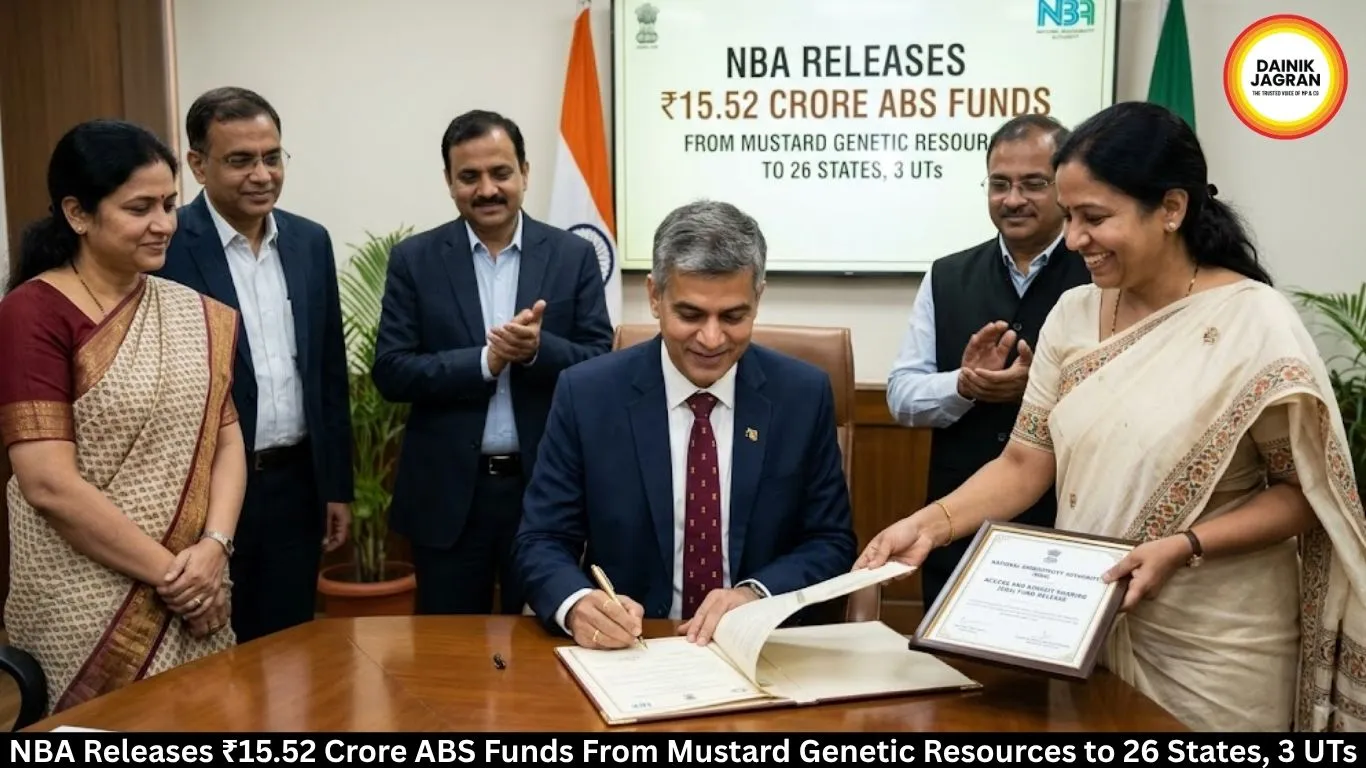
NBA Releases ₹15.52 Crore ABS Funds From Mustard Genetic Resources
Digital desk
The National Biodiversity Authority has released ₹15.52 crore in ABS funds to 26 states and 3 UTs based on mustard cultivation areas across India.
The National Biodiversity Authority (NBA) has released ₹15.52 crore in Access and Benefit Sharing (ABS) funds generated from the commercial use of India's biological resources in developing mustard varieties.
The amount has been released following the use of Indian biological resources by M/s Pioneer Overseas Corporation, which developed 10 commercial hybrid varieties of mustard (Brassica juncea).
The funds will be distributed among 26 State Biodiversity Boards (SBBs) and three Union Territory Biodiversity Councils (UTBCs). The share for each state and Union Territory will be calculated based on the area under mustard cultivation.
Mustard Genetic Resources Used
According to the NBA, Pioneer Overseas Corporation developed the 10 commercial hybrid varieties itself. However, the parental genetic material used for developing these varieties was sourced from open markets and traders.
Since a specific farmer or community could not be identified as the source of the biological resources, the NBA constituted an expert committee to recommend a mechanism for distributing the ABS funds.
The recommendations of the committee were subsequently approved by the authority.
States to Receive Proportionate Share
Under the approved mechanism, when biological resources are obtained through intermediaries such as traders, the ABS amount is distributed among the State Biodiversity Boards and UT Biodiversity Councils where the resource is cultivated.
The NBA obtained mustard cultivation-area data from ICAR-Indian Institute of Mustard Research (ICAR-IIMR), Bharatpur, Rajasthan, and used it to calculate the state-wise distribution.
Rajasthan accounts for around 42 per cent of India's mustard cultivation area, making it the largest beneficiary of the latest ABS release. Uttar Pradesh and Madhya Pradesh follow.
The distribution includes a wide range of states and Union Territories because mustard cultivation is spread across different parts of the country.
Rajasthan Gets ₹6.43 Crore
Rajasthan will receive the largest share, amounting to ₹6.43 crore, followed by Uttar Pradesh with ₹2.28 crore and Madhya Pradesh with ₹1.86 crore.
The top beneficiaries are:
| State | ABS Amount (₹ crore) |
|---|---|
| Rajasthan | 6.43 |
| Uttar Pradesh | 2.28 |
| Madhya Pradesh | 1.86 |
| Haryana | 1.21 |
| West Bengal | 1.10 |
| Jharkhand | 0.73 |
| Assam | 0.53 |
| Gujarat | 0.48 |
| Bihar | 0.15 |
| Punjab | 0.08 |
| Other states/UTs | 0.67 |
Funds to Support Biodiversity Conservation
The State Biodiversity Boards and UT Biodiversity Councils are required to use the ABS funds in accordance with Section 32 of the Biological Diversity Act.
The funds can be used for activities including biodiversity conservation, documentation and updating of People's Biodiversity Registers, and in-situ and ex-situ conservation of biological resources.
Other permitted activities include restoration of degraded ecosystems, strengthening biodiversity heritage sites, capacity building of Biodiversity Management Committees and improving community livelihoods.
₹182.5 Crore Released So Far
The latest release is part of the NBA's broader implementation of the Biological Diversity Act, 2002, which seeks to ensure that communities and regions conserving India's biological diversity receive a fair share of the benefits generated from its commercial use.
The framework is aligned with the principles of equitable benefit sharing under the Nagoya Protocol and Target 13 of the Kunming-Montreal Global Biodiversity Framework.
With the latest release, the NBA has so far disbursed a total of ₹182.5 crore through ABS mechanisms. Of this, ₹116.22 crore has been released to beneficiaries across the country during the past 12 months.
Role of National Biodiversity Authority
The National Biodiversity Authority is a statutory body established under the Biological Diversity Act, 2002, and functions under the Ministry of Environment, Forest and Climate Change.
The authority regulates access to India's biological resources and associated traditional knowledge and works to implement equitable benefit sharing in accordance with the principles of the Nagoya Protocol.
The latest mustard-related disbursement is intended to ensure that commercial benefits generated from India's genetic resources are channelled back towards conservation and communities and regions that help maintain the country's biodiversity.
NBA Releases ₹15.52 Crore ABS Funds From Mustard Genetic Resources
Digital desk
The National Biodiversity Authority (NBA) has released ₹15.52 crore in Access and Benefit Sharing (ABS) funds generated from the commercial use of India's biological resources in developing mustard varieties.
The amount has been released following the use of Indian biological resources by M/s Pioneer Overseas Corporation, which developed 10 commercial hybrid varieties of mustard (Brassica juncea).
The funds will be distributed among 26 State Biodiversity Boards (SBBs) and three Union Territory Biodiversity Councils (UTBCs). The share for each state and Union Territory will be calculated based on the area under mustard cultivation.
Mustard Genetic Resources Used
According to the NBA, Pioneer Overseas Corporation developed the 10 commercial hybrid varieties itself. However, the parental genetic material used for developing these varieties was sourced from open markets and traders.
Since a specific farmer or community could not be identified as the source of the biological resources, the NBA constituted an expert committee to recommend a mechanism for distributing the ABS funds.
The recommendations of the committee were subsequently approved by the authority.
States to Receive Proportionate Share
Under the approved mechanism, when biological resources are obtained through intermediaries such as traders, the ABS amount is distributed among the State Biodiversity Boards and UT Biodiversity Councils where the resource is cultivated.
The NBA obtained mustard cultivation-area data from ICAR-Indian Institute of Mustard Research (ICAR-IIMR), Bharatpur, Rajasthan, and used it to calculate the state-wise distribution.
Rajasthan accounts for around 42 per cent of India's mustard cultivation area, making it the largest beneficiary of the latest ABS release. Uttar Pradesh and Madhya Pradesh follow.
The distribution includes a wide range of states and Union Territories because mustard cultivation is spread across different parts of the country.
Rajasthan Gets ₹6.43 Crore
Rajasthan will receive the largest share, amounting to ₹6.43 crore, followed by Uttar Pradesh with ₹2.28 crore and Madhya Pradesh with ₹1.86 crore.
The top beneficiaries are:
| State | ABS Amount (₹ crore) |
|---|---|
| Rajasthan | 6.43 |
| Uttar Pradesh | 2.28 |
| Madhya Pradesh | 1.86 |
| Haryana | 1.21 |
| West Bengal | 1.10 |
| Jharkhand | 0.73 |
| Assam | 0.53 |
| Gujarat | 0.48 |
| Bihar | 0.15 |
| Punjab | 0.08 |
| Other states/UTs | 0.67 |
Funds to Support Biodiversity Conservation
The State Biodiversity Boards and UT Biodiversity Councils are required to use the ABS funds in accordance with Section 32 of the Biological Diversity Act.
The funds can be used for activities including biodiversity conservation, documentation and updating of People's Biodiversity Registers, and in-situ and ex-situ conservation of biological resources.
Other permitted activities include restoration of degraded ecosystems, strengthening biodiversity heritage sites, capacity building of Biodiversity Management Committees and improving community livelihoods.
₹182.5 Crore Released So Far
The latest release is part of the NBA's broader implementation of the Biological Diversity Act, 2002, which seeks to ensure that communities and regions conserving India's biological diversity receive a fair share of the benefits generated from its commercial use.
The framework is aligned with the principles of equitable benefit sharing under the Nagoya Protocol and Target 13 of the Kunming-Montreal Global Biodiversity Framework.
With the latest release, the NBA has so far disbursed a total of ₹182.5 crore through ABS mechanisms. Of this, ₹116.22 crore has been released to beneficiaries across the country during the past 12 months.
Role of National Biodiversity Authority
The National Biodiversity Authority is a statutory body established under the Biological Diversity Act, 2002, and functions under the Ministry of Environment, Forest and Climate Change.
The authority regulates access to India's biological resources and associated traditional knowledge and works to implement equitable benefit sharing in accordance with the principles of the Nagoya Protocol.
The latest mustard-related disbursement is intended to ensure that commercial benefits generated from India's genetic resources are channelled back towards conservation and communities and regions that help maintain the country's biodiversity.

Recommended For You
--------
🚨 Beat the News Rush – Join Now!
Get breaking alerts, hot exclusives, and game-changing stories instantly on your phone. No delays, no fluff – just the edge you need. ⚡
Tap to join:
🟢 WhatsApp Channel: Dainik Jagran MP CG
Crave more?
🅕 Facebook: Dainik Jagran MP CG English
🅧 Twitter (X): Dainik Jagran MP CG
🅘 Instagram: Dainik Jagran MP CG
Share the fire – keep your crew ahead! 🗞️🔥