Rural India Development: Welfare, Infrastructure and Tribal Empowerment Expand
Digital desk
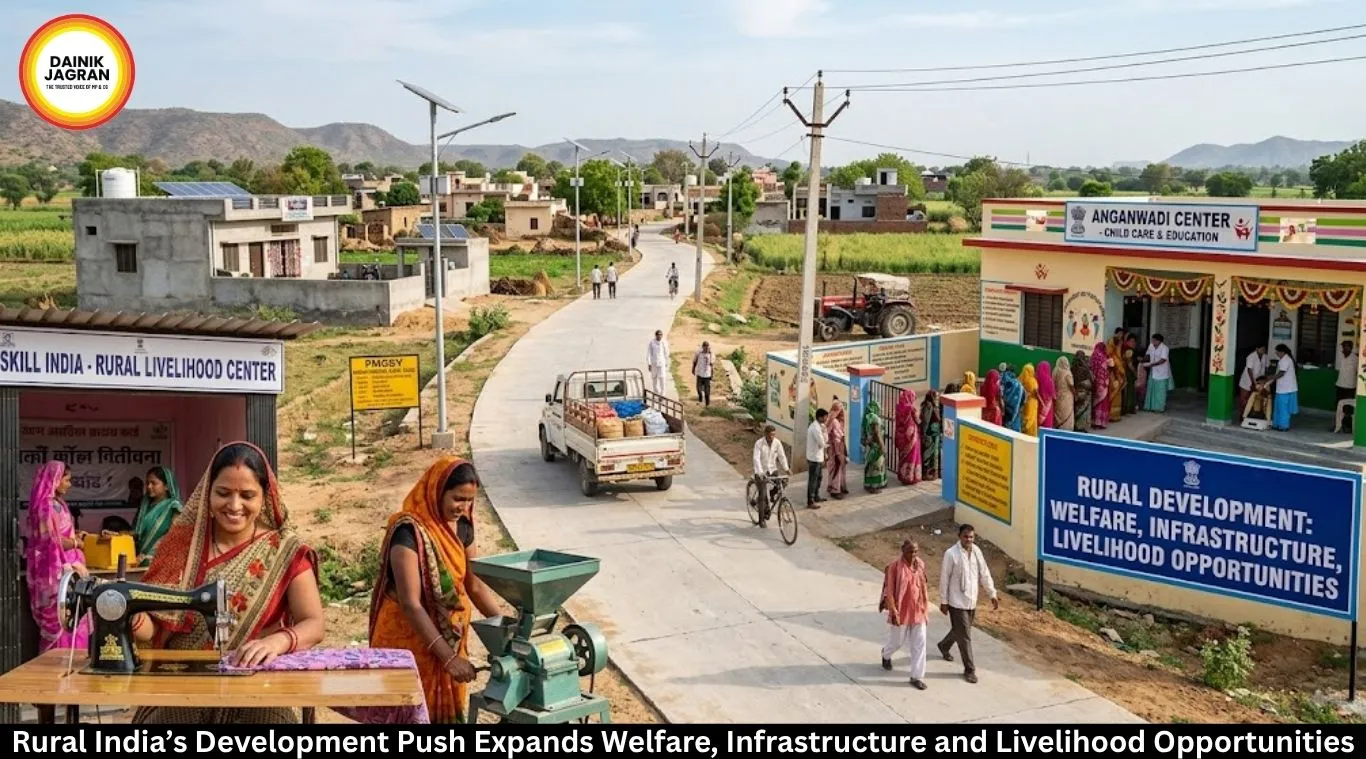
Government data highlights the expansion of rural welfare, housing, tap water, roads, livelihoods, financial inclusion and tribal development programmes across India.
India’s rural and tribal development programmes have expanded significantly across basic services, housing, connectivity, livelihoods, financial inclusion, education and social security, according to data released by the government on Thursday.
The government said the focus has increasingly shifted from welfare delivery to wider community participation, with greater fiscal transfers to local bodies and targeted interventions for women, tribal communities and vulnerable sections.
Higher Funds for Rural Development
Direct fiscal transfers to gram panchayats have increased under the Finance Commission framework. The allocation under the 15th Finance Commission for 2021–26 stood at ₹2.36 lakh crore, while the allocation under the 16th Finance Commission for 2026–31 has been increased to ₹4.35 lakh crore.
The central budget allocation for rural development has also risen from ₹87,765 crore in 2016–17 to ₹2.73 lakh crore in 2026–27. Similarly, the Ministry of Tribal Affairs' allocation has increased from ₹4,826 crore to ₹15,421.97 crore over the same period.
Tap Water, Sanitation and LPG
The government said household tap-water coverage under the Jal Jeevan Mission has expanded from 3.23 crore households in August 2019 to more than 15.91 crore as of August 12, 2026. As many as 2.89 lakh villages have reported 100% tap-water coverage under the Har Ghar Jal campaign.
Under Swachh Bharat Mission-Grameen, more than 12.19 crore individual household toilets have been constructed. India was declared open-defecation free in 2019, while more than 1,288 Gobardhan biogas plants were operational as of August 11, 2026.
The Pradhan Mantri Ujjwala Yojana has provided more than 10.57 crore LPG connections to women from poor households. The overall number of LPG connections in the country has increased from 14.52 crore in 2014 to 33.39 crore in 2026.
Housing and Rural Connectivity
Under the Pradhan Mantri Awas Yojana-Gramin, more than 3.91 crore houses have been sanctioned, with 3.13 crore houses completed as of August 12, 2026.
The government said 99.6% of eligible rural habitations had been connected with all-weather roads by June 2026 under the Pradhan Mantri Gram Sadak Yojana.
Between May 2014 and August 12, 2026, around 4.13 lakh km of roads were constructed, while the number of bridges increased to 10,404. The government has also expanded digital connectivity in rural administration, with 2.19 lakh gram panchayats connected under BharatNet as of May 2026.
Livelihoods and Women’s Participation
The Deendayal Antyodaya Yojana-National Rural Livelihoods Mission has brought 10.19 crore households into 94.46 lakh self-help groups as of August 12.
The government said 3.46 crore women had become 'Lakhpati Didis' by July 29, 2026. More than nine lakh Community Resource Persons are currently working in areas such as agriculture, banking, insurance and nutrition.
The government has also announced the Self-Help Entrepreneur Mart, or SHE-Mart, under the 2026–27 Budget, with an objective of benefiting one crore women through community-owned retail centres linked to the SHG ecosystem.
Financial Inclusion Expands
Financial inclusion has also widened through schemes such as PM Jan Dhan Yojana, PM Mudra Yojana and PM SVANidhi.
The number of beneficiaries under the Jan Dhan scheme increased from 17.9 crore in August 2015 to 58.90 crore by August 12, 2026. Under the Mudra scheme, more than 59.14 crore loans had been sanctioned by July 2026.
PM SVANidhi beneficiaries increased to 78.17 lakh, with ₹18,971.18 crore in loans disbursed by August 12. Women accounted for 46% of the beneficiaries.
The government also reported 31.87 crore registrations on the e-Shram portal by August 12, compared with 14.40 crore in December 2021.
Tribal Development Gets Focus
Tribal development programmes have been expanded through initiatives including PM-JANMAN, PM-JVM and the Pradhan Mantri Janjatiya Unnat Gram Abhiyan.
Under PM-JANMAN, 540 Van Dhan Vikas Kendras had been sanctioned by August 5, benefiting more than 46,000 members of Particularly Vulnerable Tribal Groups.
Under the broader PM-JVM, 4,172 Van Dhan Vikas Kendras have been sanctioned, benefiting around 12.48 lakh tribal people.
The government said PM-JUGA integrates the efforts of 17 ministries to address infrastructure and service gaps in tribal-majority villages and PVTG settlements. Over the past 12 years, 7.60 lakh tribal houses have been completed, while drinking-water facilities have been provided in 28,303 tribal villages.
Education and Social Security
The number of operational Eklavya Model Residential Schools has increased from 129 in 2014–15 to 511 as of August 12, 2026, with 1.68 lakh students enrolled.
The government also highlighted scholarships for Scheduled Tribe and Scheduled Caste students, including support for higher education at institutions such as IITs, IIMs, NITs and AIIMS.
Social security coverage has expanded as well. The government reported 2.17 crore National Pension System beneficiaries in 2025–26 and 9.29 crore beneficiaries under the Atal Pension Yojana as of June 2026.
Focus on Inclusive Growth
The government said the expansion of welfare, infrastructure, livelihood and social-security programmes reflects a broader approach towards inclusive rural development.
The stated objective is to move beyond access to basic services and create stronger opportunities for employment, entrepreneurship, financial security and community participation, particularly for women, tribal communities and economically vulnerable households.
Rural India Development: Welfare, Infrastructure and Tribal Empowerment Expand
Digital desk
India’s rural and tribal development programmes have expanded significantly across basic services, housing, connectivity, livelihoods, financial inclusion, education and social security, according to data released by the government on Thursday.
The government said the focus has increasingly shifted from welfare delivery to wider community participation, with greater fiscal transfers to local bodies and targeted interventions for women, tribal communities and vulnerable sections.
Higher Funds for Rural Development
Direct fiscal transfers to gram panchayats have increased under the Finance Commission framework. The allocation under the 15th Finance Commission for 2021–26 stood at ₹2.36 lakh crore, while the allocation under the 16th Finance Commission for 2026–31 has been increased to ₹4.35 lakh crore.
The central budget allocation for rural development has also risen from ₹87,765 crore in 2016–17 to ₹2.73 lakh crore in 2026–27. Similarly, the Ministry of Tribal Affairs' allocation has increased from ₹4,826 crore to ₹15,421.97 crore over the same period.
Tap Water, Sanitation and LPG
The government said household tap-water coverage under the Jal Jeevan Mission has expanded from 3.23 crore households in August 2019 to more than 15.91 crore as of August 12, 2026. As many as 2.89 lakh villages have reported 100% tap-water coverage under the Har Ghar Jal campaign.
Under Swachh Bharat Mission-Grameen, more than 12.19 crore individual household toilets have been constructed. India was declared open-defecation free in 2019, while more than 1,288 Gobardhan biogas plants were operational as of August 11, 2026.
The Pradhan Mantri Ujjwala Yojana has provided more than 10.57 crore LPG connections to women from poor households. The overall number of LPG connections in the country has increased from 14.52 crore in 2014 to 33.39 crore in 2026.
Housing and Rural Connectivity
Under the Pradhan Mantri Awas Yojana-Gramin, more than 3.91 crore houses have been sanctioned, with 3.13 crore houses completed as of August 12, 2026.
The government said 99.6% of eligible rural habitations had been connected with all-weather roads by June 2026 under the Pradhan Mantri Gram Sadak Yojana.
Between May 2014 and August 12, 2026, around 4.13 lakh km of roads were constructed, while the number of bridges increased to 10,404. The government has also expanded digital connectivity in rural administration, with 2.19 lakh gram panchayats connected under BharatNet as of May 2026.
Livelihoods and Women’s Participation
The Deendayal Antyodaya Yojana-National Rural Livelihoods Mission has brought 10.19 crore households into 94.46 lakh self-help groups as of August 12.
The government said 3.46 crore women had become 'Lakhpati Didis' by July 29, 2026. More than nine lakh Community Resource Persons are currently working in areas such as agriculture, banking, insurance and nutrition.
The government has also announced the Self-Help Entrepreneur Mart, or SHE-Mart, under the 2026–27 Budget, with an objective of benefiting one crore women through community-owned retail centres linked to the SHG ecosystem.
Financial Inclusion Expands
Financial inclusion has also widened through schemes such as PM Jan Dhan Yojana, PM Mudra Yojana and PM SVANidhi.
The number of beneficiaries under the Jan Dhan scheme increased from 17.9 crore in August 2015 to 58.90 crore by August 12, 2026. Under the Mudra scheme, more than 59.14 crore loans had been sanctioned by July 2026.
PM SVANidhi beneficiaries increased to 78.17 lakh, with ₹18,971.18 crore in loans disbursed by August 12. Women accounted for 46% of the beneficiaries.
The government also reported 31.87 crore registrations on the e-Shram portal by August 12, compared with 14.40 crore in December 2021.
Tribal Development Gets Focus
Tribal development programmes have been expanded through initiatives including PM-JANMAN, PM-JVM and the Pradhan Mantri Janjatiya Unnat Gram Abhiyan.
Under PM-JANMAN, 540 Van Dhan Vikas Kendras had been sanctioned by August 5, benefiting more than 46,000 members of Particularly Vulnerable Tribal Groups.
Under the broader PM-JVM, 4,172 Van Dhan Vikas Kendras have been sanctioned, benefiting around 12.48 lakh tribal people.
The government said PM-JUGA integrates the efforts of 17 ministries to address infrastructure and service gaps in tribal-majority villages and PVTG settlements. Over the past 12 years, 7.60 lakh tribal houses have been completed, while drinking-water facilities have been provided in 28,303 tribal villages.
Education and Social Security
The number of operational Eklavya Model Residential Schools has increased from 129 in 2014–15 to 511 as of August 12, 2026, with 1.68 lakh students enrolled.
The government also highlighted scholarships for Scheduled Tribe and Scheduled Caste students, including support for higher education at institutions such as IITs, IIMs, NITs and AIIMS.
Social security coverage has expanded as well. The government reported 2.17 crore National Pension System beneficiaries in 2025–26 and 9.29 crore beneficiaries under the Atal Pension Yojana as of June 2026.
Focus on Inclusive Growth
The government said the expansion of welfare, infrastructure, livelihood and social-security programmes reflects a broader approach towards inclusive rural development.
The stated objective is to move beyond access to basic services and create stronger opportunities for employment, entrepreneurship, financial security and community participation, particularly for women, tribal communities and economically vulnerable households.
Recommended For You
--------
🚨 Beat the News Rush – Join Now!
Get breaking alerts, hot exclusives, and game-changing stories instantly on your phone. No delays, no fluff – just the edge you need. ⚡
Tap to join:
🟢 WhatsApp Channel: Dainik Jagran MP CG
Crave more?
🅕 Facebook: Dainik Jagran MP CG English
🅧 Twitter (X): Dainik Jagran MP CG
🅘 Instagram: Dainik Jagran MP CG
Share the fire – keep your crew ahead! 🗞️🔥