


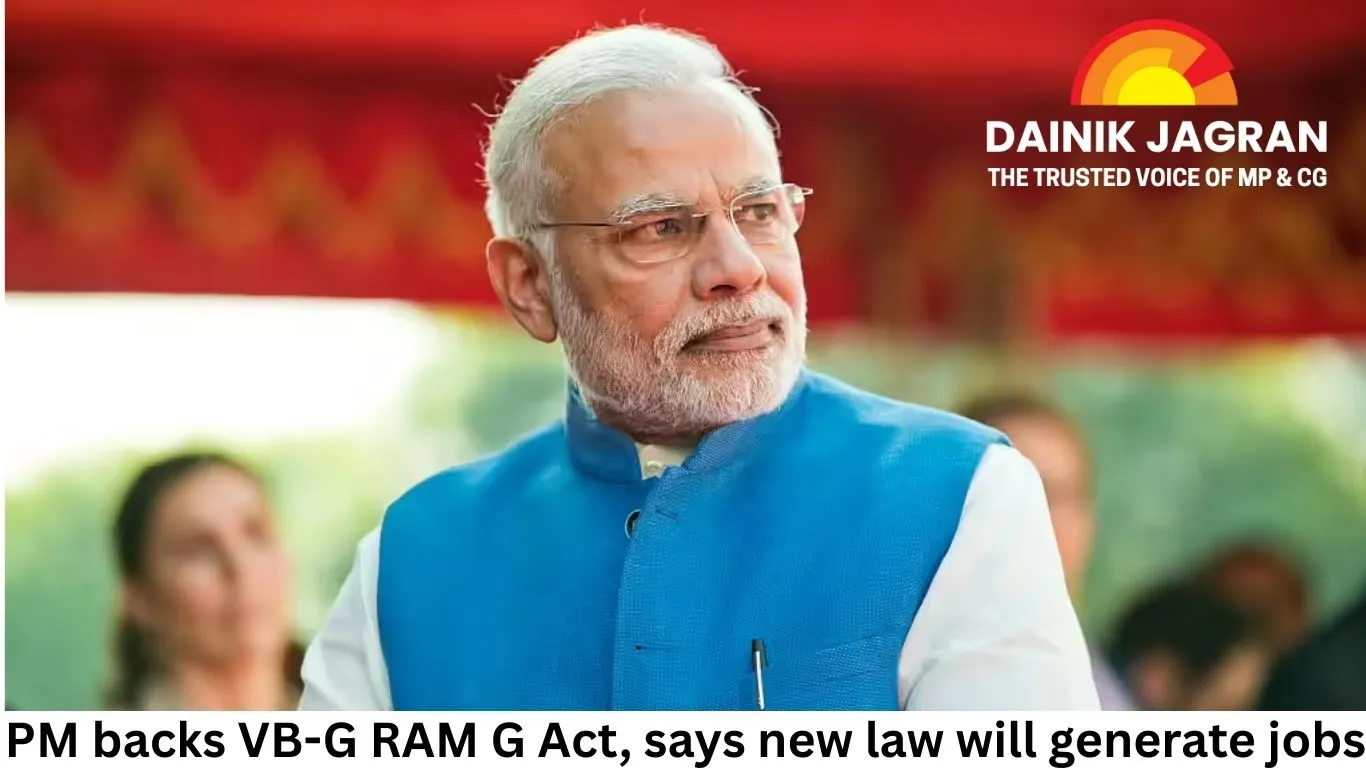
PM backs VB-G RAM G Act, says new law will generate jobs, assets and wealth in villages
Digital Desk
In a statement issued by the Prime Minister’s Office (PMO), Modi said the legislation is designed to strengthen villages economically by linking employment with productivity and asset creation. “This is not just about wages. It is about building permanent rural assets, boosting agriculture and creating long-term opportunities,” he said.
The PMO said the Centre consulted state governments extensively before introducing the Bill. Technical discussions were held with experts, and multiple stakeholders were engaged to ensure the framework addressed practical challenges on the ground.
The VB-G RAM G Bill was passed by Parliament on December 18 during the winter session amid strong opposition protests. President Droupadi Murmu gave her assent on December 21, formally enacting the law.
Union Agriculture Minister Shivraj Singh Chouhan also defended the legislation, dismissing opposition criticism as misleading. At a farmers’ conference in Nagaur on Tuesday, Chouhan said claims that the scheme would reduce rural employment were “baseless”. “Support has been increased, not reduced. This scheme will transform villages,” he said, adding that the estimated annual expenditure would be ₹1.51 lakh crore.
Opposition parties, including the DMK-led alliance, have protested the law, arguing that it may dilute employment guarantees and affect Centre-state coordination.
Under the new Act, rural households will be guaranteed 125 days of work annually, up from the earlier 100 days. Funding will generally be shared in a 60:40 ratio between the Centre and states, with the Centre bearing 90% of the cost in northeastern states, hilly regions and select Union Territories.
The government maintains that the law will strengthen rural livelihoods while aligning employment with development priorities.



.jpg)




