Reel to Real: How Social Media Is Redefining the Nature of Protest Movements

Digital Desk

Reel to Real: How Social Media Is Redefining the Nature of Protest Movements

The first protest I ever witnessed did not happen on a street. It happened in a school corridor.

In 1987, someone had photocopied anonymous sheets accusing the headmaster of corruption and pasted them on classroom doors before the school day began. Teachers arrived, tore down the papers, and within minutes the protest had vanished. The photocopy machine was the closest thing we had to social media.

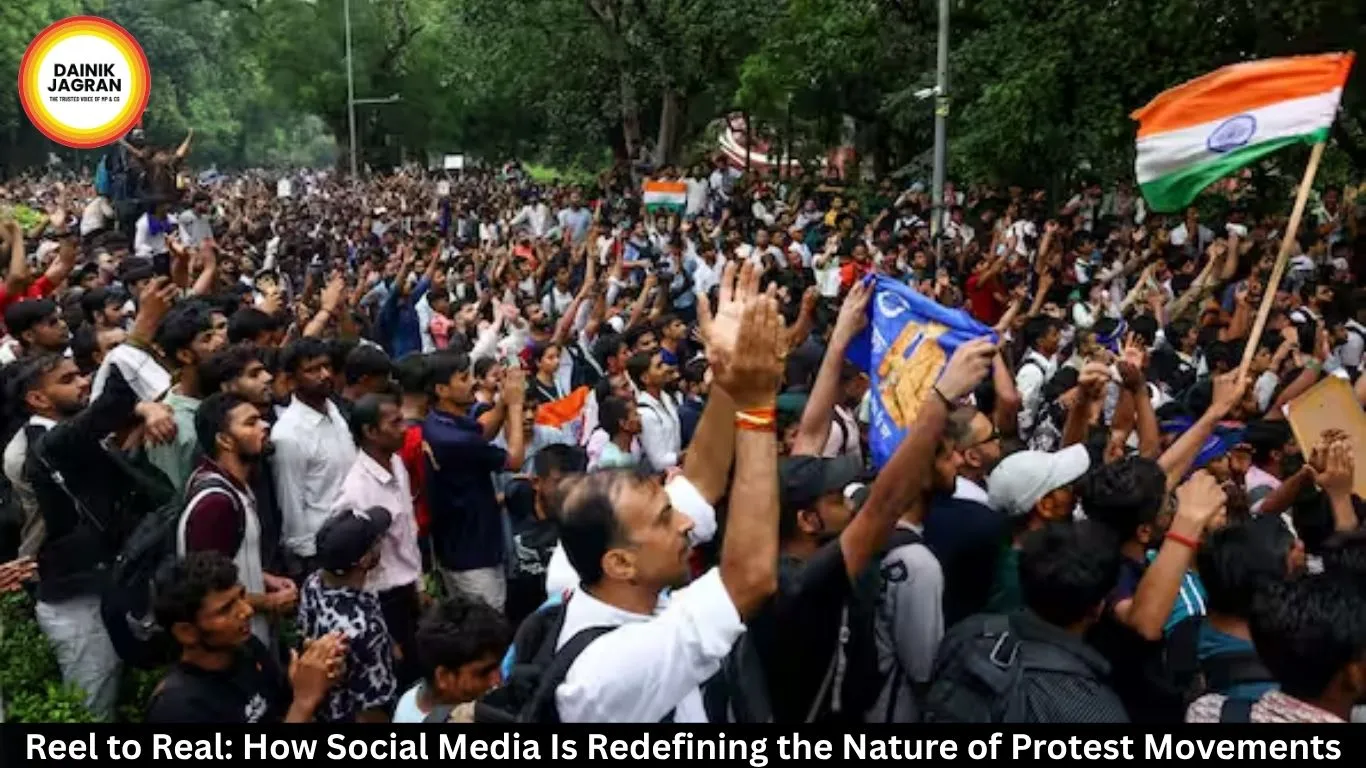
That small memory illustrates how fundamentally protest movements have changed over the past four decades. Earlier, organising collective action required time, coordination, money and physical effort. Today, a movement can emerge from a single viral post and reach millions before its organisers have even met in person.

Historically, mass mobilisation involved what strategist Gene Sharp called laying the groundwork. Activists raised funds for newspaper advertisements, built telephone trees, sent letters and telegrams, distributed pamphlets, and relied heavily on face-to-face networks. The 1963 March on Washington, where Martin Luther King Jr. delivered his "I Have a Dream" speech, took months of meticulous preparation by hundreds of volunteers.

The digital era has compressed that timeline dramatically. Recent protest movements in India have shown how quickly online mobilisation can translate into street action. A slogan, hashtag or meme can gain traction overnight, drawing in participants who may have no prior connection to any organisation. What once required weeks of groundwork can now happen in hours through algorithmic amplification.

This does not mean physical protest has disappeared. Rather, its relationship with communication has changed. Many contemporary movements begin with almost no institutional infrastructure—sometimes no office, membership structure or local committees. Their initial strength lies in visibility: follower counts, shares, reposts, short videos and memes create a sense of momentum that can later manifest on the ground.

The virtual footprint is often far larger than the physical one. Millions may engage with protest-related content online even if only a fraction attend demonstrations. Yet that digital engagement matters because it shapes narratives, attracts media attention and sustains public conversation long after a rally ends.

Another striking change is the role of humour and satire. Previous generations often associated political protest with speeches, pamphlets and marches. Gen Z protesters frequently communicate through Reels, memes and short-form videos. A 30-second clip can condense anger, irony and solidarity into a format designed for rapid sharing. Protest has become not only a political act but also a media product.

In this environment, the sequence is no longer simply real to media. It has become Reel to real, then back to Reel. A protest is organised online, enacted offline, recorded on smartphones, edited into short videos, redistributed online, and then inspires further offline action. The loop constantly regenerates itself.

Technology scholar Zeynep Tufekci argues that modern networked protests should be judged by three kinds of capacity: narrative, disruptive, and electoral. Social media excels at the first. It allows movements to tell compelling stories quickly and emotionally. It can also enhance disruptive capacity by enabling rapid coordination and visibility. Whether it consistently produces electoral influence is less certain, but the potential exists.

The Arab Spring remains the clearest global example of this transformation. Online networks helped activists in countries such as Egypt and Tunisia coordinate protests, share information and bypass traditional gatekeepers. Mobile phones and social media did not cause the uprisings by themselves, but they accelerated organisation and communication in ways that would have been impossible a generation earlier.

The same tools, however, can be used against protesters. Governments have increasingly developed their own digital playbooks: content takedowns, account suspensions, online surveillance, criminal investigations linked to social media activity, and internet shutdowns. Digital platforms that empower dissent can also enable harassment, misinformation and intimidation. The experience of activists in countries such as Myanmar demonstrates how online spaces can become arenas of repression as well as mobilisation.

This raises a deeper question about the technology we have built. Former Apple executive Tony Fadell once wondered whether the internet had become a kind of information "nuclear bomb" capable of reprogramming minds, or a force that empowers people who previously lacked access to information. The answer is probably both. Social media has expanded democratic participation while simultaneously creating new vulnerabilities for manipulation, outrage and polarisation.

Every generation tends to remember its youth as a simpler time. Those who grew up before smartphones often romanticise an era of slower communication and clearer boundaries between public and private life. Today’s young people inhabit a far denser informational environment, where political participation, entertainment and personal identity are intertwined on the same screen. Yet thirty years from now, they too may look back and describe the 2020s as comparatively uncomplicated.

What is certain is that protest movements are no longer shaped primarily by pamphlets, posters or even television coverage. They are shaped by networks, algorithms and attention flows. The challenge for both activists and governments is to understand that a movement’s power now depends not only on how many people gather in a square, but also on how effectively it circulates through the endless feedback loop of the digital public sphere.
--------

🚨 Beat the News Rush – Join Now!

Get breaking alerts, hot exclusives, and game-changing stories instantly on your phone. No delays, no fluff – just the edge you need. ⚡

Tap to join: 

🟢 WhatsApp Channel: Dainik Jagran MP CG

Crave more?

🅕 Facebook: Dainik Jagran MP CG English

🅧 Twitter (X): Dainik Jagran MP CG

🅘 Instagram: Dainik Jagran MP CG

Share the fire – keep your crew ahead! 🗞️🔥

english.dainikjagranmpcg.com
29 Jul 2026 By Abhishek Joshi

Reel to Real: How Social Media Is Redefining the Nature of Protest Movements

Digital Desk

The first protest I ever witnessed did not happen on a street. It happened in a school corridor.

In 1987, someone had photocopied anonymous sheets accusing the headmaster of corruption and pasted them on classroom doors before the school day began. Teachers arrived, tore down the papers, and within minutes the protest had vanished. The photocopy machine was the closest thing we had to social media.

That small memory illustrates how fundamentally protest movements have changed over the past four decades. Earlier, organising collective action required time, coordination, money and physical effort. Today, a movement can emerge from a single viral post and reach millions before its organisers have even met in person.

Historically, mass mobilisation involved what strategist Gene Sharp called laying the groundwork. Activists raised funds for newspaper advertisements, built telephone trees, sent letters and telegrams, distributed pamphlets, and relied heavily on face-to-face networks. The 1963 March on Washington, where Martin Luther King Jr. delivered his "I Have a Dream" speech, took months of meticulous preparation by hundreds of volunteers.

The digital era has compressed that timeline dramatically. Recent protest movements in India have shown how quickly online mobilisation can translate into street action. A slogan, hashtag or meme can gain traction overnight, drawing in participants who may have no prior connection to any organisation. What once required weeks of groundwork can now happen in hours through algorithmic amplification.

This does not mean physical protest has disappeared. Rather, its relationship with communication has changed. Many contemporary movements begin with almost no institutional infrastructure—sometimes no office, membership structure or local committees. Their initial strength lies in visibility: follower counts, shares, reposts, short videos and memes create a sense of momentum that can later manifest on the ground.

The virtual footprint is often far larger than the physical one. Millions may engage with protest-related content online even if only a fraction attend demonstrations. Yet that digital engagement matters because it shapes narratives, attracts media attention and sustains public conversation long after a rally ends.

Another striking change is the role of humour and satire. Previous generations often associated political protest with speeches, pamphlets and marches. Gen Z protesters frequently communicate through Reels, memes and short-form videos. A 30-second clip can condense anger, irony and solidarity into a format designed for rapid sharing. Protest has become not only a political act but also a media product.

In this environment, the sequence is no longer simply real to media. It has become Reel to real, then back to Reel. A protest is organised online, enacted offline, recorded on smartphones, edited into short videos, redistributed online, and then inspires further offline action. The loop constantly regenerates itself.

Technology scholar Zeynep Tufekci argues that modern networked protests should be judged by three kinds of capacity: narrative, disruptive, and electoral. Social media excels at the first. It allows movements to tell compelling stories quickly and emotionally. It can also enhance disruptive capacity by enabling rapid coordination and visibility. Whether it consistently produces electoral influence is less certain, but the potential exists.

The Arab Spring remains the clearest global example of this transformation. Online networks helped activists in countries such as Egypt and Tunisia coordinate protests, share information and bypass traditional gatekeepers. Mobile phones and social media did not cause the uprisings by themselves, but they accelerated organisation and communication in ways that would have been impossible a generation earlier.

The same tools, however, can be used against protesters. Governments have increasingly developed their own digital playbooks: content takedowns, account suspensions, online surveillance, criminal investigations linked to social media activity, and internet shutdowns. Digital platforms that empower dissent can also enable harassment, misinformation and intimidation. The experience of activists in countries such as Myanmar demonstrates how online spaces can become arenas of repression as well as mobilisation.

This raises a deeper question about the technology we have built. Former Apple executive Tony Fadell once wondered whether the internet had become a kind of information "nuclear bomb" capable of reprogramming minds, or a force that empowers people who previously lacked access to information. The answer is probably both. Social media has expanded democratic participation while simultaneously creating new vulnerabilities for manipulation, outrage and polarisation.

Every generation tends to remember its youth as a simpler time. Those who grew up before smartphones often romanticise an era of slower communication and clearer boundaries between public and private life. Today’s young people inhabit a far denser informational environment, where political participation, entertainment and personal identity are intertwined on the same screen. Yet thirty years from now, they too may look back and describe the 2020s as comparatively uncomplicated.

What is certain is that protest movements are no longer shaped primarily by pamphlets, posters or even television coverage. They are shaped by networks, algorithms and attention flows. The challenge for both activists and governments is to understand that a movement’s power now depends not only on how many people gather in a square, but also on how effectively it circulates through the endless feedback loop of the digital public sphere.
https://english.dainikjagranmpcg.com/opinion/reel-to-real-how-social-media-is-redefining-the-nature/article-24116
Tags:

Trending News