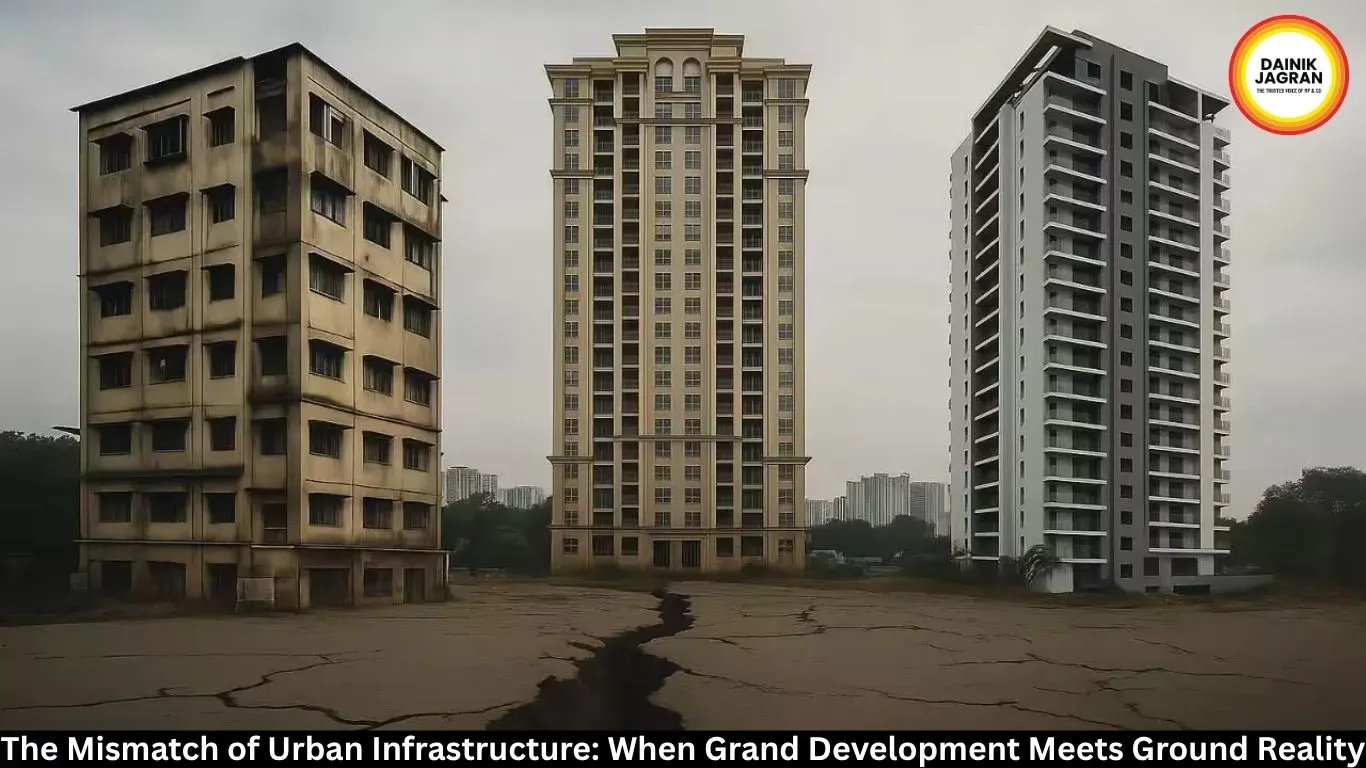
The Mismatch of Urban Infrastructure: When Grand Development Meets Ground Reality
Digital Desk
India's cities are transforming at an unprecedented pace. Metro rail corridors stretch across skylines, smart city command centres monitor traffic in real time, and expressways promise faster connectivity than ever before.
Government initiatives such as the Smart Cities Mission, AMRUT, and large-scale urban redevelopment projects have undoubtedly changed the visual identity of many metropolitan regions. Yet every monsoon, familiar scenes return: flooded streets, overflowing drains, waterlogged underpasses, and neighborhoods left without clean drinking water.
Urban infrastructure today appears caught between ambitious planning and uneven execution. While flagship projects often receive attention and substantial investment, essential civic systems—stormwater drainage, sewage networks, water supply pipelines, and local road maintenance—frequently remain outdated or neglected. As a result, even cities with modern transport systems can struggle to withstand a few hours of intense rainfall.
Monsoon flooding has become the clearest example of this mismatch. In cities such as Mumbai, Bengaluru, Delhi, Chennai, Hyderabad, and several rapidly growing tier-II cities, heavy rainfall routinely disrupts daily life. Schools close, offices witness reduced attendance, traffic grinds to a halt, and emergency services are stretched. The problem is rarely rainfall alone. It reflects decades of shrinking wetlands, encroached natural drainage channels, unplanned construction, and drainage systems designed for climatic conditions that no longer exist.
Climate change has further complicated the challenge. Weather events are becoming more intense and less predictable. Infrastructure built decades ago was never designed to handle today's rainfall patterns. Yet urban planning often continues to rely on outdated assumptions instead of climate-resilient engineering standards.
Water supply presents another paradox. Many metropolitan areas experience simultaneous flooding during the rainy season and water scarcity during summer. Cities lose significant volumes of treated water through ageing pipelines before it even reaches consumers. Residents in several localities depend on private water tankers despite living in cities with major reservoirs nearby. This reflects not merely a shortage of water, but shortcomings in storage, distribution, maintenance, and governance.
Another concern lies in fragmented urban administration. Responsibility for roads, drainage, water supply, electricity, transport, and environmental management is frequently divided among multiple agencies. Without integrated planning, one department may widen a road while another later excavates it for utility work, only for poor restoration to create long-term maintenance issues. Such institutional fragmentation often increases costs while reducing efficiency.
Large infrastructure announcements naturally attract public attention because they are visible symbols of development. However, underground infrastructure rarely receives the same priority despite being equally—if not more—critical. Residents are more likely to judge a city's performance by uninterrupted water supply, efficient drainage, and reliable public services than by iconic projects alone.
Technology can contribute to solutions, but it cannot substitute for sound urban planning. Smart sensors, GIS mapping, flood forecasting systems, and digital monitoring platforms can improve response times. However, unless accompanied by sustained maintenance, transparent governance, updated engineering standards, and coordinated implementation, technological interventions risk becoming isolated achievements rather than systemic solutions.
Citizen participation also deserves greater emphasis. Local communities often identify recurring flooding points, damaged pipelines, or encroachments long before official surveys do. Integrating citizen feedback into planning can improve both accountability and responsiveness. Public reporting platforms, social audits, and ward-level consultations should become routine components of urban governance rather than occasional exercises.
The economic consequences of weak urban infrastructure are equally significant. Flooded business districts interrupt commercial activity, delayed logistics affect supply chains, damaged roads increase vehicle maintenance costs, and unreliable utilities discourage investment. Beyond economic losses, poor infrastructure disproportionately affects vulnerable populations living in informal settlements, where inadequate drainage and sanitation often translate into heightened public health risks.
India's urban future depends not only on building bigger cities but also on building better-functioning ones. Sustainable urbanisation requires balancing landmark development with everyday civic resilience. Investments in underground utilities, drainage modernization, water conservation, and preventive maintenance may lack visual appeal, but they deliver the greatest long-term public value.
The true measure of urban development is not how impressive a city's skyline appears on inauguration day. It is whether residents can travel safely during heavy rains, access clean water consistently, and trust that essential public services will function when they are needed most. Until grassroots implementation receives the same priority as headline projects, India's infrastructure ambitions will continue to face the test of every monsoon.

--------
🚨 Beat the News Rush – Join Now!
Get breaking alerts, hot exclusives, and game-changing stories instantly on your phone. No delays, no fluff – just the edge you need. ⚡
Tap to join:
🟢 WhatsApp Channel: Dainik Jagran MP CG
Crave more?
🅕 Facebook: Dainik Jagran MP CG English
🅧 Twitter (X): Dainik Jagran MP CG
🅘 Instagram: Dainik Jagran MP CG
Share the fire – keep your crew ahead! 🗞️🔥
The Mismatch of Urban Infrastructure: When Grand Development Meets Ground Reality
Digital Desk
Government initiatives such as the Smart Cities Mission, AMRUT, and large-scale urban redevelopment projects have undoubtedly changed the visual identity of many metropolitan regions. Yet every monsoon, familiar scenes return: flooded streets, overflowing drains, waterlogged underpasses, and neighborhoods left without clean drinking water.
Urban infrastructure today appears caught between ambitious planning and uneven execution. While flagship projects often receive attention and substantial investment, essential civic systems—stormwater drainage, sewage networks, water supply pipelines, and local road maintenance—frequently remain outdated or neglected. As a result, even cities with modern transport systems can struggle to withstand a few hours of intense rainfall.
Monsoon flooding has become the clearest example of this mismatch. In cities such as Mumbai, Bengaluru, Delhi, Chennai, Hyderabad, and several rapidly growing tier-II cities, heavy rainfall routinely disrupts daily life. Schools close, offices witness reduced attendance, traffic grinds to a halt, and emergency services are stretched. The problem is rarely rainfall alone. It reflects decades of shrinking wetlands, encroached natural drainage channels, unplanned construction, and drainage systems designed for climatic conditions that no longer exist.
Climate change has further complicated the challenge. Weather events are becoming more intense and less predictable. Infrastructure built decades ago was never designed to handle today's rainfall patterns. Yet urban planning often continues to rely on outdated assumptions instead of climate-resilient engineering standards.
Water supply presents another paradox. Many metropolitan areas experience simultaneous flooding during the rainy season and water scarcity during summer. Cities lose significant volumes of treated water through ageing pipelines before it even reaches consumers. Residents in several localities depend on private water tankers despite living in cities with major reservoirs nearby. This reflects not merely a shortage of water, but shortcomings in storage, distribution, maintenance, and governance.
Another concern lies in fragmented urban administration. Responsibility for roads, drainage, water supply, electricity, transport, and environmental management is frequently divided among multiple agencies. Without integrated planning, one department may widen a road while another later excavates it for utility work, only for poor restoration to create long-term maintenance issues. Such institutional fragmentation often increases costs while reducing efficiency.
Large infrastructure announcements naturally attract public attention because they are visible symbols of development. However, underground infrastructure rarely receives the same priority despite being equally—if not more—critical. Residents are more likely to judge a city's performance by uninterrupted water supply, efficient drainage, and reliable public services than by iconic projects alone.
Technology can contribute to solutions, but it cannot substitute for sound urban planning. Smart sensors, GIS mapping, flood forecasting systems, and digital monitoring platforms can improve response times. However, unless accompanied by sustained maintenance, transparent governance, updated engineering standards, and coordinated implementation, technological interventions risk becoming isolated achievements rather than systemic solutions.
Citizen participation also deserves greater emphasis. Local communities often identify recurring flooding points, damaged pipelines, or encroachments long before official surveys do. Integrating citizen feedback into planning can improve both accountability and responsiveness. Public reporting platforms, social audits, and ward-level consultations should become routine components of urban governance rather than occasional exercises.
The economic consequences of weak urban infrastructure are equally significant. Flooded business districts interrupt commercial activity, delayed logistics affect supply chains, damaged roads increase vehicle maintenance costs, and unreliable utilities discourage investment. Beyond economic losses, poor infrastructure disproportionately affects vulnerable populations living in informal settlements, where inadequate drainage and sanitation often translate into heightened public health risks.
India's urban future depends not only on building bigger cities but also on building better-functioning ones. Sustainable urbanisation requires balancing landmark development with everyday civic resilience. Investments in underground utilities, drainage modernization, water conservation, and preventive maintenance may lack visual appeal, but they deliver the greatest long-term public value.
The true measure of urban development is not how impressive a city's skyline appears on inauguration day. It is whether residents can travel safely during heavy rains, access clean water consistently, and trust that essential public services will function when they are needed most. Until grassroots implementation receives the same priority as headline projects, India's infrastructure ambitions will continue to face the test of every monsoon.