Why Degrees Alone Are No Longer Enough to Get a Job in 2026

Digital Desk

Why Degrees Alone Are No Longer Enough to Get a Job in 2026

Modern employers seek practical skills, digital literacy, communication and adaptability alongside academic qualifications. Here's why India's education system must evolve for the future workforce.

Classrooms need to move beyond marks and memorisation as employers increasingly value practical skills, adaptability and problem-solving

For decades, the path to success appeared straightforward—study hard, earn good marks, secure a degree and land a stable job. That formula no longer holds true. Across industries, employers are discovering that academic qualifications alone are not enough to meet the demands of an economy driven by artificial intelligence, automation and rapid technological change.

Today's students are graduating into a world where jobs are evolving faster than college curricula. Many employers report that fresh graduates possess theoretical knowledge but lack the practical skills needed to contribute from day one. This widening gap between education and employment has become one of the biggest challenges facing young professionals.

India produces millions of graduates every year from schools, colleges and universities. Yet many struggle to find meaningful employment. The issue is not simply a shortage of jobs—it is often a mismatch between what students learn and what the workplace expects.

Traditional education systems continue to prioritise examinations, rote learning and textbook-based assessments. While these remain important for building academic foundations, they rarely prepare students for solving real-world problems, working in teams or adapting to changing technologies.

The workplace of 2026 values a very different set of abilities. Communication skills, analytical thinking, creativity, digital literacy, emotional intelligence and the ability to learn continuously have become as important as technical expertise. Employers increasingly seek candidates who can collaborate, think critically and respond to new challenges rather than simply recall information.

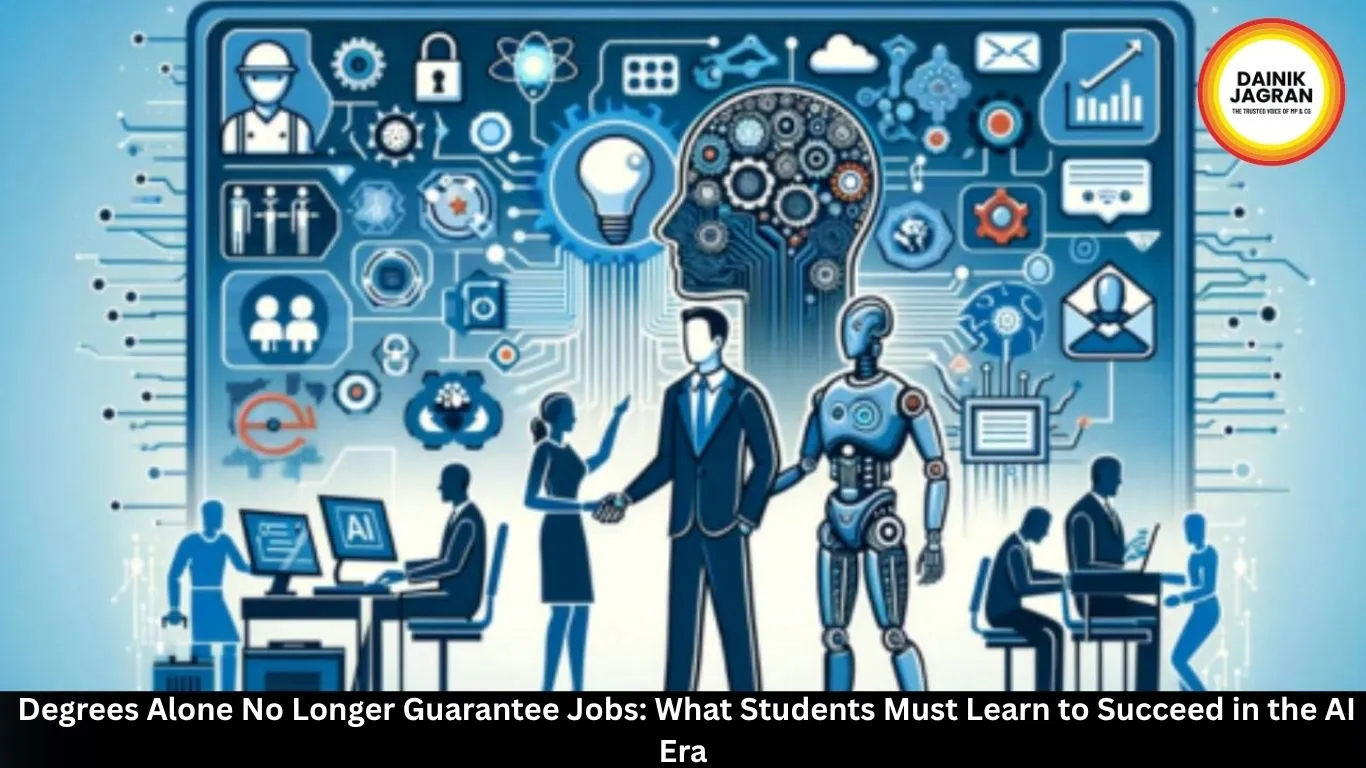
Artificial intelligence has accelerated this transformation. Routine tasks across industries—from customer service and accounting to software development and content creation—are becoming increasingly automated. Rather than replacing every job, AI is changing how work is performed. Professionals who understand how to work alongside AI tools will have a significant advantage over those who resist technological change.

This means students must begin developing practical skills much earlier. Internships, industry projects, research work, entrepreneurship programmes and volunteer activities provide valuable exposure that classrooms alone cannot offer. Building a portfolio of work often matters more than listing certificates on a resume.

Digital competence has also become essential regardless of career choice. Whether pursuing medicine, journalism, engineering, law, commerce or the arts, students are expected to understand digital platforms, data, online collaboration tools and responsible use of AI. The future workforce will not compete against artificial intelligence—it will compete alongside people who know how to use it effectively.

Soft skills are another area where education requires urgent reform. Confidence in public speaking, professional writing, teamwork, leadership, negotiation and time management are increasingly influencing hiring decisions. Many employers believe these skills are difficult to teach after recruitment and therefore prefer candidates who already demonstrate them.

Educational institutions also have a responsibility to evolve. Colleges should strengthen partnerships with industries, update curricula more frequently, promote interdisciplinary learning and provide career guidance that reflects changing market realities. Schools, meanwhile, should encourage curiosity, creativity and problem-solving rather than focusing exclusively on examination scores.

Parents and students also need to redefine success. A high percentage in board examinations remains valuable, but lifelong employability depends on continuous learning. The most successful professionals today regularly upgrade their knowledge through online courses, certifications and practical experience long after formal education ends.

The future belongs to learners rather than degree holders. In a rapidly changing economy, adaptability has become the most valuable qualification of all. Students who embrace new technologies, build practical skills and remain curious throughout their careers will be better prepared for opportunities that may not even exist today.

Education should no longer be viewed merely as preparation for examinations. It must prepare young people for solving problems, creating value and thriving in an unpredictable world where learning never truly ends.
 

--------

๐Ÿšจ Beat the News Rush โ€“ Join Now!

Get breaking alerts, hot exclusives, and game-changing stories instantly on your phone. No delays, no fluff โ€“ just the edge you need. โšก

Tap to join:ย 

๐ŸŸข WhatsApp Channel: Dainik Jagran MP CG

Crave more?

๐Ÿ…• Facebook: Dainik Jagran MP CG English

๐Ÿ…ง Twitter (X): Dainik Jagran MP CG

๐Ÿ…˜ Instagram: Dainik Jagran MP CG

Share the fire โ€“ keep your crew ahead! ๐Ÿ—ž๏ธ๐Ÿ”ฅ

english.dainikjagranmpcg.com
29 Jul 2026 By Abhishek Joshi

Why Degrees Alone Are No Longer Enough to Get a Job in 2026

Digital Desk

Classrooms need to move beyond marks and memorisation as employers increasingly value practical skills, adaptability and problem-solving

For decades, the path to success appeared straightforward—study hard, earn good marks, secure a degree and land a stable job. That formula no longer holds true. Across industries, employers are discovering that academic qualifications alone are not enough to meet the demands of an economy driven by artificial intelligence, automation and rapid technological change.

Today's students are graduating into a world where jobs are evolving faster than college curricula. Many employers report that fresh graduates possess theoretical knowledge but lack the practical skills needed to contribute from day one. This widening gap between education and employment has become one of the biggest challenges facing young professionals.

India produces millions of graduates every year from schools, colleges and universities. Yet many struggle to find meaningful employment. The issue is not simply a shortage of jobs—it is often a mismatch between what students learn and what the workplace expects.

Traditional education systems continue to prioritise examinations, rote learning and textbook-based assessments. While these remain important for building academic foundations, they rarely prepare students for solving real-world problems, working in teams or adapting to changing technologies.

The workplace of 2026 values a very different set of abilities. Communication skills, analytical thinking, creativity, digital literacy, emotional intelligence and the ability to learn continuously have become as important as technical expertise. Employers increasingly seek candidates who can collaborate, think critically and respond to new challenges rather than simply recall information.

Artificial intelligence has accelerated this transformation. Routine tasks across industries—from customer service and accounting to software development and content creation—are becoming increasingly automated. Rather than replacing every job, AI is changing how work is performed. Professionals who understand how to work alongside AI tools will have a significant advantage over those who resist technological change.

This means students must begin developing practical skills much earlier. Internships, industry projects, research work, entrepreneurship programmes and volunteer activities provide valuable exposure that classrooms alone cannot offer. Building a portfolio of work often matters more than listing certificates on a resume.

Digital competence has also become essential regardless of career choice. Whether pursuing medicine, journalism, engineering, law, commerce or the arts, students are expected to understand digital platforms, data, online collaboration tools and responsible use of AI. The future workforce will not compete against artificial intelligence—it will compete alongside people who know how to use it effectively.

Soft skills are another area where education requires urgent reform. Confidence in public speaking, professional writing, teamwork, leadership, negotiation and time management are increasingly influencing hiring decisions. Many employers believe these skills are difficult to teach after recruitment and therefore prefer candidates who already demonstrate them.

Educational institutions also have a responsibility to evolve. Colleges should strengthen partnerships with industries, update curricula more frequently, promote interdisciplinary learning and provide career guidance that reflects changing market realities. Schools, meanwhile, should encourage curiosity, creativity and problem-solving rather than focusing exclusively on examination scores.

Parents and students also need to redefine success. A high percentage in board examinations remains valuable, but lifelong employability depends on continuous learning. The most successful professionals today regularly upgrade their knowledge through online courses, certifications and practical experience long after formal education ends.

The future belongs to learners rather than degree holders. In a rapidly changing economy, adaptability has become the most valuable qualification of all. Students who embrace new technologies, build practical skills and remain curious throughout their careers will be better prepared for opportunities that may not even exist today.

Education should no longer be viewed merely as preparation for examinations. It must prepare young people for solving problems, creating value and thriving in an unpredictable world where learning never truly ends.


https://english.dainikjagranmpcg.com/opinion/why-degrees-alone-are-no-longer-enough-to-get-a/article-24015

Trending News