


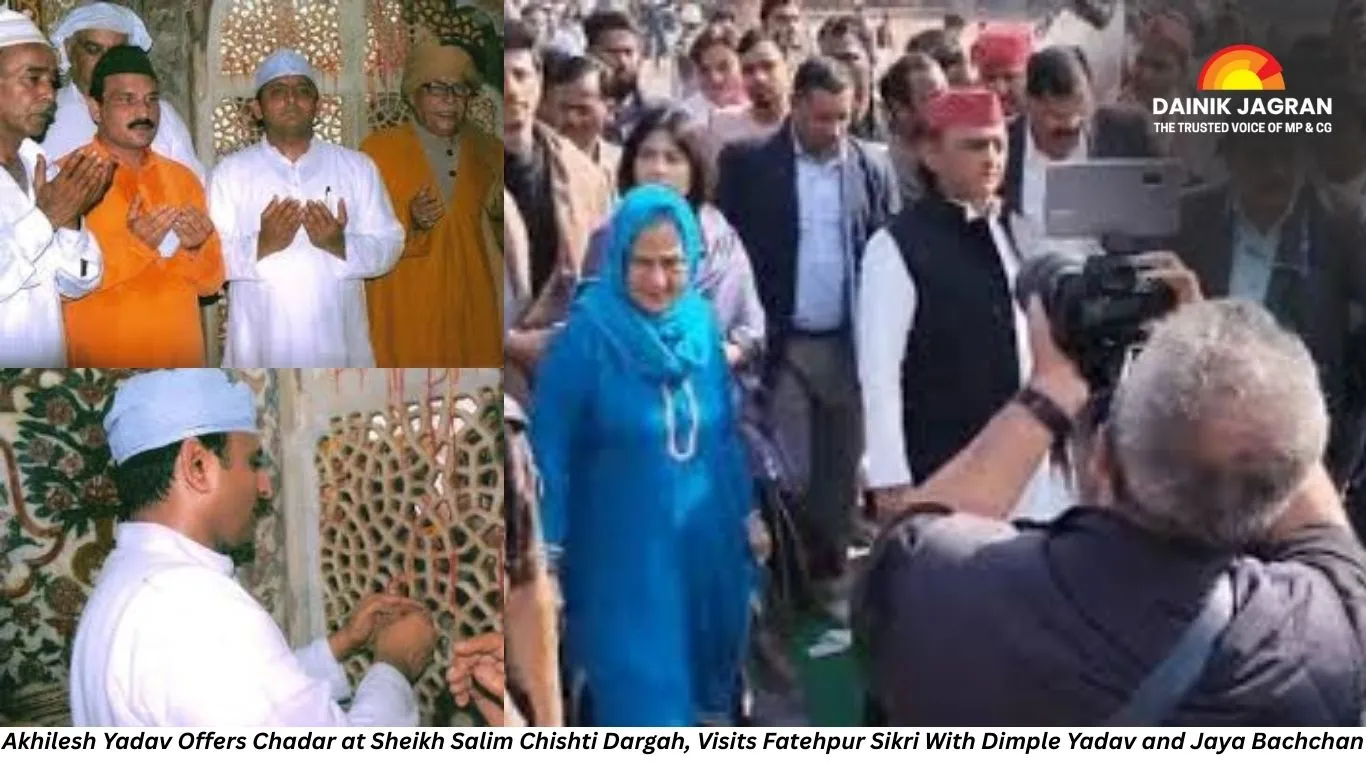
Akhilesh Yadav Offers Chadar at Sheikh Salim Chishti Dargah, Visits Fatehpur Sikri With Dimple Yadav and Jaya Bachchan
Digital Desk
Akhilesh reached the shrine amidst Sufi renditions inside the Jama Masjid complex, where he offered prayers and spent time interacting briefly with devotees and caretakers. Local Samajwadi Party leaders, led by former metropolitan president Chaudhary Wajid Nisar, welcomed the entourage upon arrival.
The visit drew attention as it marked a return to the dargah after 13 years. In September 2012, during his tenure as Uttar Pradesh Chief Minister, Akhilesh had offered a chadar and tied a mannat ka dhaga at the same shrine. Saturday’s visit revived memories of that earlier stop, underscoring the family’s longstanding connection with the Sufi sanctum.
Located about 40 kilometres from Agra, the white marble dargah of Sheikh Salim Chishti stands as one of the most significant Sufi sites of the Mughal era. Built between 1580 and 1581 under Emperor Akbar, the shrine is associated with the prophecy that blessed the birth of Akbar’s son Salim, later Emperor Jahangir. Devotees across communities visit the dargah daily to offer prayers, particularly seeking blessings for children—a belief rooted in centuries-old tradition.
The ASI-protected structure is admired for its intricate latticework, geometric carvings and elevated marble plinth accessed through steep steps. An ambulance and medical team were stationed outside the premises on Saturday as part of the security arrangement.
The dargah, which hosts large congregations during Urs and on Fridays, remains an enduring symbol of the region’s composite culture and Mughal architectural heritage.



.jpg)
.jpg)




