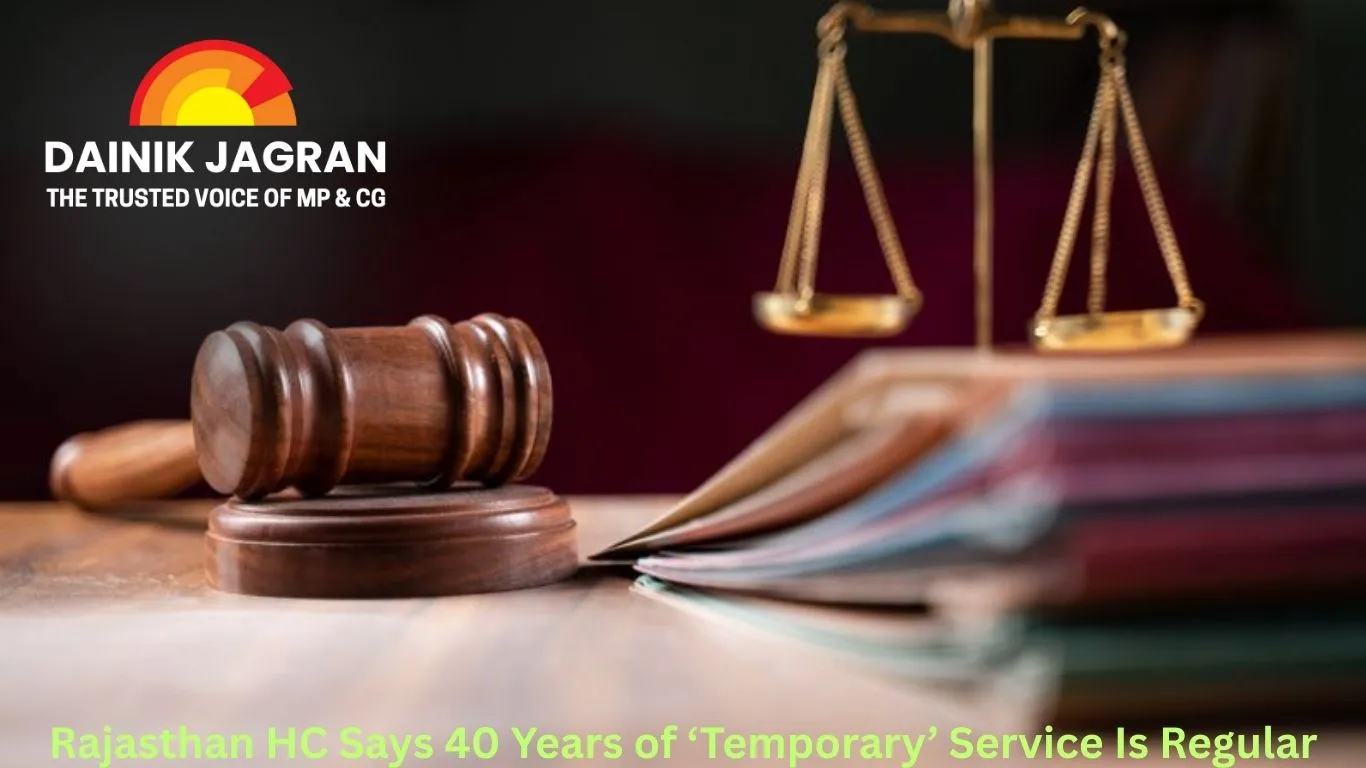
Rajasthan HC Says 40 Years of ‘Temporary’ Service Is Regular: Contract Employees to Receive Pension
Digital Desk
Justice Rekha Borana delivered the order while hearing petitions filed by Satyanarayan Sharma of Bhilwara and 10 others from Pali and Bhilwara districts.
The petitioners argued that despite working uninterruptedly for four decades in Panchayati Raj institutions, they were never regularised and were denied retirement benefits. The state contended that their original appointments did not follow the standard recruitment process and that they were retained only on humanitarian grounds after the abolition of octroi posts.
The court rejected the state’s argument, noting that the petitioners’ long, undisputed service made it untenable to classify their roles as temporary. It cited earlier judgments in Kanhaiyalal Nai and Lalaram Saini, holding that extended, continuous service must be treated as substantive and that no administrative action can negate rights accruing from such service.
Sharma, appointed as a temporary gatekeeper in Panchayat Samiti Lunkaransar in 1981 and later designated an octroi guard, continued to work even after octroi was abolished. Although a 1998 state order protected such employees from retrenchment and a 2016 directive granted them minimum pay scales, he was excluded from the list of beneficiaries.
The High Court ruled that all 11 petitioners be recognised as regular employees from their initial appointment dates and receive pensionary benefits. However, they will not be eligible for arrears linked to pay fixation.
The judgment is expected to bring relief to long-serving contract and temporary workers facing similar disputes across the state.