


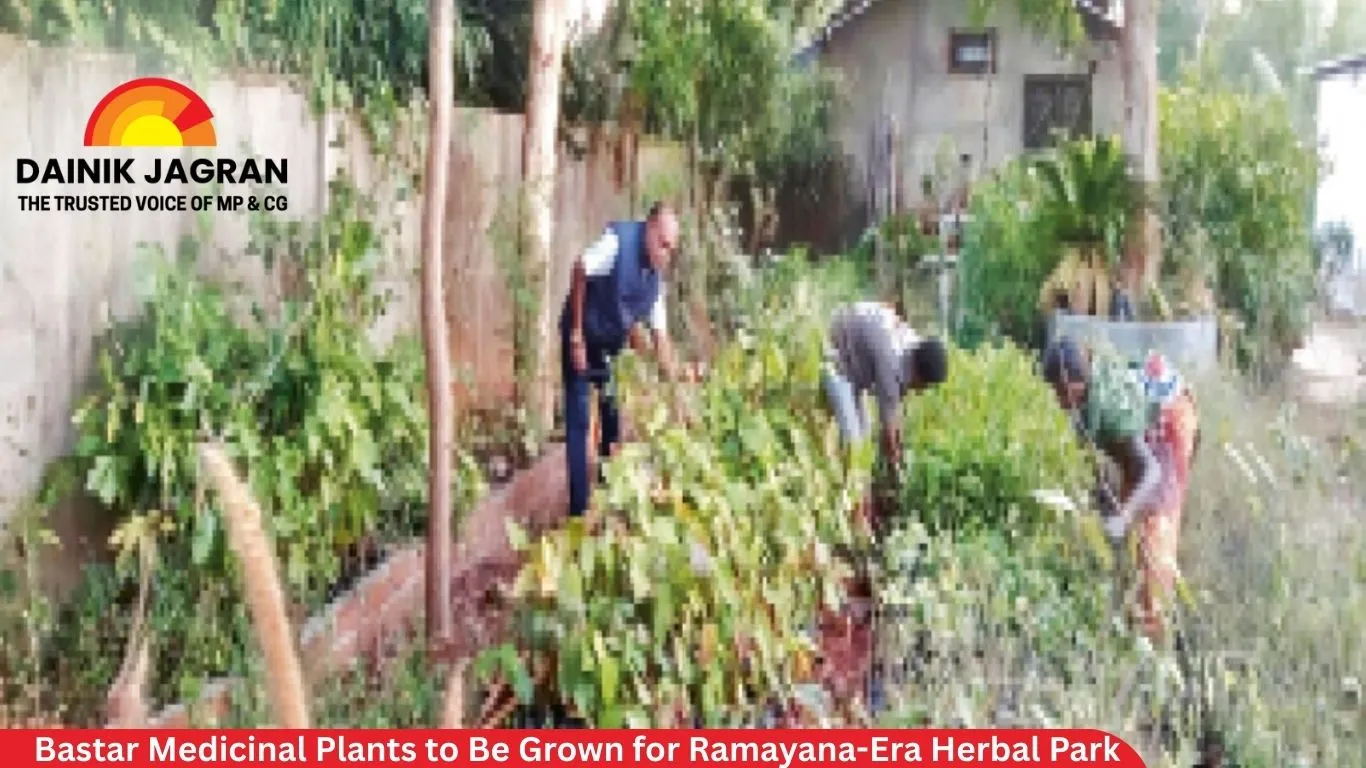
Bastar Medicinal Plants to Be Grown for Ramayana-Era Herbal Park on Saryu River in Ayodhya
Digital Desk
The initiative aims to showcase to devotees across India the herbs that aided Lord Rama during his forest stay. In the first phase, selected plants will be sent to Ayodhya. These include rare and regional species such as Harjod, Maulshree, Adusa, Nirgundi, Giloy, Padmagiloy, Dungri Tulsi, Vidharamand, Patal Garudi, Hanuman Garud, Ramdatoun, Ramkanda, Doodhkanda, Patal Kumhda, Kandmool, Kodo, Kuti, Devdhan, and Waghmar.
Several plants, like Nirgundi and Garudi, are found exclusively in Bastar. The open-air herbal museum, being developed by the Shri Ram Cultural Research Institute in Delhi, will not only cultivate these herbs but also depict episodes from Lord Rama’s life, offering devotees an immersive experience.
Preparation of the plants has already begun in Bastar. The institute has entrusted the responsibility to Vijay Bharat and Dr. Manoj Panigrahi, who are executive members of the research organization. They will oversee the cultivation and supply of medicinal plants to Ayodhya.
Across Bastar’s districts, over 50 traditional healers (Vaidyas) will participate in growing these plants. Approximately 7 acres along the Saryu River are allocated for the park, with the first phase covering around 50 dismil. Cultivating the plants will take three to four months, and the Vaidyas will receive training in the coming days to ensure timely completion.
This initiative is expected to create a distinctive spiritual and educational experience, connecting devotees with the ancient herbal knowledge associated with the Ramayana era.



.jpg)




