

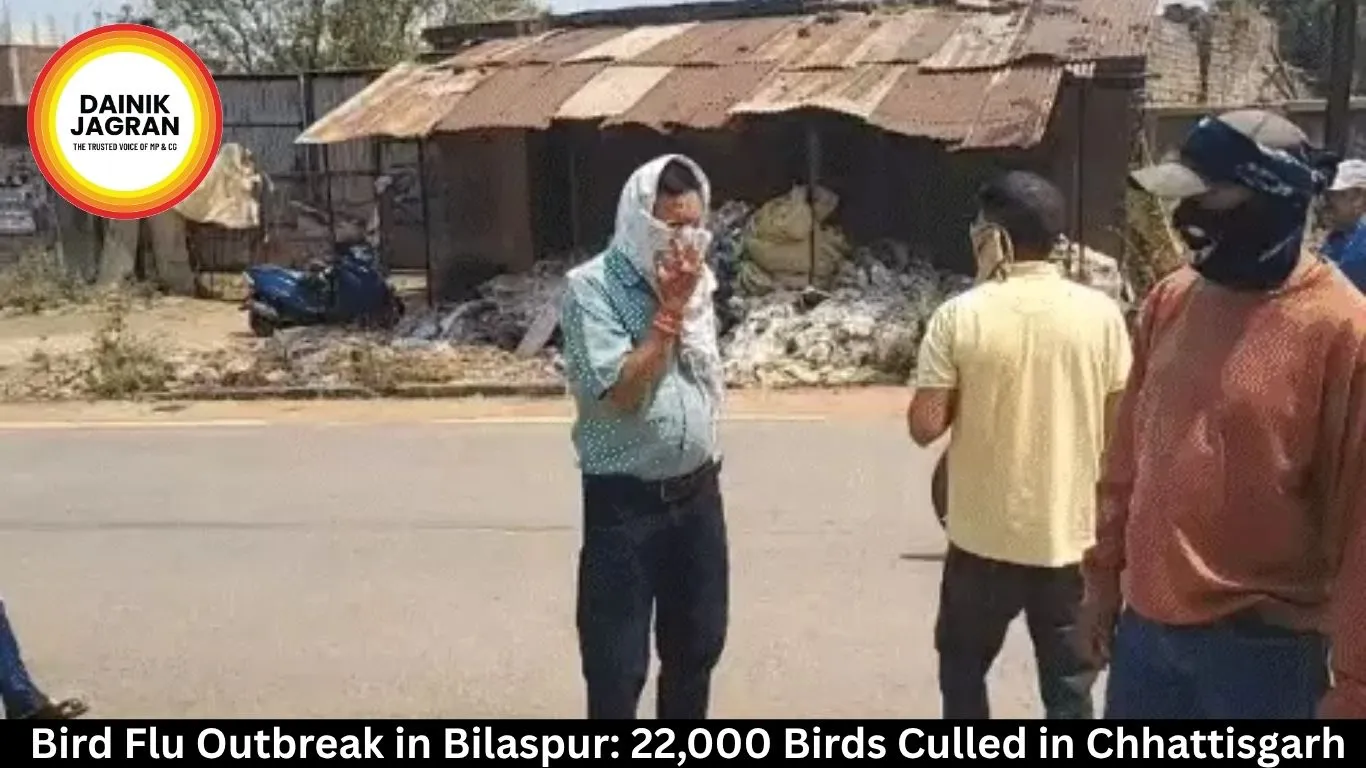
Bird Flu Outbreak in Bilaspur: 22,000 Birds Culled in Chhattisgarh
Digital Desk
Bird flu confirmed at Bilaspur's Koni poultry farm in Chhattisgarh; over 22,000 birds culled, surveillance zone declared, and Raigarh put on high alert. Latest news today.
Bird Flu Confirmed in Bilaspur: Over 22,000 Birds Culled as Chhattisgarh Scrambles to Contain Outbreak
Avian influenza detected at state-run Koni poultry farm; dead chickens dumped in residential colony drain spark fresh alarm
A Crisis Breaks in Koni
A full-blown bird flu emergency has gripped Bilaspur district in Chhattisgarh after laboratory tests confirmed avian influenza at a state-run poultry farm in the Koni area, officials announced on Tuesday. Approximately 4,744 chickens died suddenly at the government facility, with the Bhopal laboratory confirming the cause as the highly contagious avian influenza virus by late Tuesday night. The outbreak has set off an urgent, multi-department containment operation across the district.
The Timeline of Deaths
Around 4,400 chickens died at the Koni government poultry farm between March 19 and 24, out of a total housed population of 5,037 birds. According to sources, farm manager Dr. Sanjay Raj initially treated the deaths as a routine illness — a decision that allowed the outbreak to go undetected for critical days before the matter was escalated to Joint Director Dr. G.S. Tanwar and subsequently to District Collector Sanjay Agrawal.
Samples from the dead birds were dispatched on Monday to laboratories in both Bhopal and Pune, and the Bhopal lab confirmed the presence of avian influenza shortly after.
Containment Zones Declared
The district administration declared a one-kilometre radius around the farm as an Infected Zone and a 10-kilometre radius as a Surveillance Zone, with strict protocols now in place across both areas.
Over 22,000 birds — including hatchlings — have been culled and buried, while all remaining feed, eggs, and poultry within the infected zone have been safely disposed of using scientific methods. A complete ban on the movement of poultry, eggs, and related materials from the zone is currently in force.
Dead Chickens Dumped Near Residential Colony
What has added a fresh layer of alarm to this India news update is a disturbing discovery in the Khamtarai locality. According to local reports, 30 to 35 dead chickens were found stuffed in sacks and dumped near a drain outside Dream City Colony — directly contradicting the administration's earlier assurances that all carcasses had been properly buried. Residents of the area have raised a stink, quite literally, complaining of unbearable stench and demanding immediate removal by the authorities.
The incident points to serious gaps in the disposal protocol and raises legitimate concerns about the risk of the virus spreading beyond controlled zones into densely populated neighbourhoods.
Public Warnings Issued
Authorities have initiated a 'munadi' — the traditional public announcement method — warning residents not to sell birds and instructing them to keep poultry indoors. The sale of meat has also been restricted within the 1 to 10 km radius, and no birds can be transported within or into the surveillance zone.
The Animal Husbandry Department will provide compensation to affected poultry owners, and the public has been urged to immediately report unusually high bird mortality in private farms to the nearest authorities.
Raigarh Put on High Alert
This is not Chhattisgarh's first brush with the virus this year. In early February 2025, bird flu caused by the H5N1 virus was confirmed at a state-run farm in Raigarh's Chakradhar Nagar, following which a joint operation by the municipal corporation, veterinary, and health departments led to the culling of 5,000 chickens and 12,000 quails, along with the destruction of 17,000 eggs and poultry feed.
Following the fresh Bilaspur outbreak, Raigarh district has been put on alert once again, with officials monitoring poultry farms closely for any signs of infection.
Farm Serves Tribal Farmers
The Koni poultry facility is government-operated and serves a specific social purpose — it provides chicks to farmers belonging to Scheduled Caste and Scheduled Tribe communities, who raise poultry as a primary livelihood. The farm housed over 6,000 birds across multiple breeds before the outbreak. The loss of nearly the entire stock deals a serious economic blow to the dependent farming community, even as compensation processes are set in motion.
What Comes Next
District Collector Sanjay Agrawal has issued immediate directives for containment and prevention under the Revised Action Plan for Prevention and Containment of Avian Influenza (2021). Intensive sampling across the surveillance zone is ongoing, and health authorities are monitoring for any signs of human exposure.
The Bilaspur bird flu outbreak, coming within months of the Raigarh incident, signals an urgent need for stronger biosecurity standards at government-run poultry facilities across Chhattisgarh. As trending news India continues to track the situation, the focus now shifts to whether authorities can plug the disposal gaps and contain what is, for now, still an animal-level outbreak before it escalates further.
Bird Flu Outbreak in Bilaspur: 22,000 Birds Culled in Chhattisgarh
Digital Desk
Bird Flu Confirmed in Bilaspur: Over 22,000 Birds Culled as Chhattisgarh Scrambles to Contain Outbreak
Avian influenza detected at state-run Koni poultry farm; dead chickens dumped in residential colony drain spark fresh alarm
A Crisis Breaks in Koni
A full-blown bird flu emergency has gripped Bilaspur district in Chhattisgarh after laboratory tests confirmed avian influenza at a state-run poultry farm in the Koni area, officials announced on Tuesday. Approximately 4,744 chickens died suddenly at the government facility, with the Bhopal laboratory confirming the cause as the highly contagious avian influenza virus by late Tuesday night. The outbreak has set off an urgent, multi-department containment operation across the district.
The Timeline of Deaths
Around 4,400 chickens died at the Koni government poultry farm between March 19 and 24, out of a total housed population of 5,037 birds. According to sources, farm manager Dr. Sanjay Raj initially treated the deaths as a routine illness — a decision that allowed the outbreak to go undetected for critical days before the matter was escalated to Joint Director Dr. G.S. Tanwar and subsequently to District Collector Sanjay Agrawal.
Samples from the dead birds were dispatched on Monday to laboratories in both Bhopal and Pune, and the Bhopal lab confirmed the presence of avian influenza shortly after.
Containment Zones Declared
The district administration declared a one-kilometre radius around the farm as an Infected Zone and a 10-kilometre radius as a Surveillance Zone, with strict protocols now in place across both areas.
Over 22,000 birds — including hatchlings — have been culled and buried, while all remaining feed, eggs, and poultry within the infected zone have been safely disposed of using scientific methods. A complete ban on the movement of poultry, eggs, and related materials from the zone is currently in force.
Dead Chickens Dumped Near Residential Colony
What has added a fresh layer of alarm to this India news update is a disturbing discovery in the Khamtarai locality. According to local reports, 30 to 35 dead chickens were found stuffed in sacks and dumped near a drain outside Dream City Colony — directly contradicting the administration's earlier assurances that all carcasses had been properly buried. Residents of the area have raised a stink, quite literally, complaining of unbearable stench and demanding immediate removal by the authorities.
The incident points to serious gaps in the disposal protocol and raises legitimate concerns about the risk of the virus spreading beyond controlled zones into densely populated neighbourhoods.
Public Warnings Issued
Authorities have initiated a 'munadi' — the traditional public announcement method — warning residents not to sell birds and instructing them to keep poultry indoors. The sale of meat has also been restricted within the 1 to 10 km radius, and no birds can be transported within or into the surveillance zone.
The Animal Husbandry Department will provide compensation to affected poultry owners, and the public has been urged to immediately report unusually high bird mortality in private farms to the nearest authorities.
Raigarh Put on High Alert
This is not Chhattisgarh's first brush with the virus this year. In early February 2025, bird flu caused by the H5N1 virus was confirmed at a state-run farm in Raigarh's Chakradhar Nagar, following which a joint operation by the municipal corporation, veterinary, and health departments led to the culling of 5,000 chickens and 12,000 quails, along with the destruction of 17,000 eggs and poultry feed.
Following the fresh Bilaspur outbreak, Raigarh district has been put on alert once again, with officials monitoring poultry farms closely for any signs of infection.
Farm Serves Tribal Farmers
The Koni poultry facility is government-operated and serves a specific social purpose — it provides chicks to farmers belonging to Scheduled Caste and Scheduled Tribe communities, who raise poultry as a primary livelihood. The farm housed over 6,000 birds across multiple breeds before the outbreak. The loss of nearly the entire stock deals a serious economic blow to the dependent farming community, even as compensation processes are set in motion.
What Comes Next
District Collector Sanjay Agrawal has issued immediate directives for containment and prevention under the Revised Action Plan for Prevention and Containment of Avian Influenza (2021). Intensive sampling across the surveillance zone is ongoing, and health authorities are monitoring for any signs of human exposure.
The Bilaspur bird flu outbreak, coming within months of the Raigarh incident, signals an urgent need for stronger biosecurity standards at government-run poultry facilities across Chhattisgarh. As trending news India continues to track the situation, the focus now shifts to whether authorities can plug the disposal gaps and contain what is, for now, still an animal-level outbreak before it escalates further.


