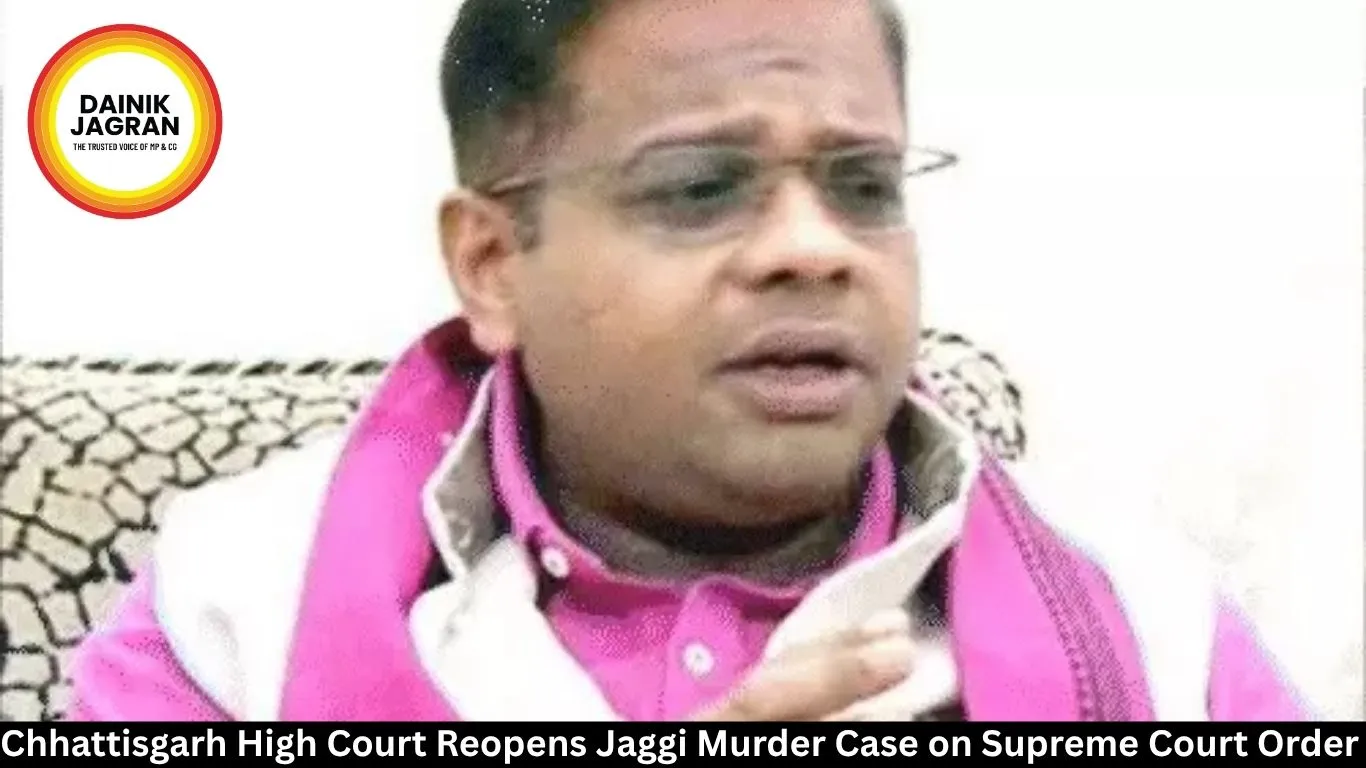
Chhattisgarh High Court Reopens Jaggi Murder Case on Supreme Court Order
Digital Desk
Chhattisgarh High Court has reopened the 2003 Ramavatar Jaggi murder case following Supreme Court directions. Final hearing on April 1; Amit Jogi may need to seek fresh bail as CBI appeal against his acquittal proceeds. Key updates on the high-profile political case.
Bilaspur High Court to hear CBI appeal against Amit Jogi’s acquittal in 2003 Ramavatar Jaggi murder on April 1
The long-running Ramavatar Jaggi murder case has been reopened in the Chhattisgarh High Court following directions from the Supreme Court. On Wednesday, a division bench headed by Chief Justice Ramesh Sinha took up the matter for hearing, with the final arguments scheduled for April 1.
Case Revived After Decades
The development comes after the Supreme Court in November 2025 allowed the Central Bureau of Investigation’s (CBI) appeal, condoning a significant delay and directing the High Court to examine the plea against Amit Jogi’s acquittal on merits. Ramavatar Jaggi, then treasurer of the Nationalist Congress Party (NCP) in Chhattisgarh, was shot dead in Raipur on June 4, 2003.
Satish Jaggi, son of the deceased leader, was present during the proceedings. Sources indicated that the bench has fixed April 1 for the final hearing where the CBI, the state government, Amit Jogi and the complainant’s side will present their arguments.
Background of the High-Profile Case
The murder occurred at a politically sensitive time, just months before the 2003 Assembly elections. Allegations surfaced that the killing was part of a larger conspiracy to disrupt an upcoming NCP rally that was to be attended by senior leaders, including Sharad Pawar. Initial police investigation faced accusations of bias, prompting the state government to hand over the probe to the CBI.
The CBI named Amit Jogi, son of then Chief Minister Ajit Jogi, among 31 accused, alleging he was involved in the conspiracy. In 2007, a special CBI court in Raipur acquitted Amit Jogi citing insufficient evidence but convicted 28 others, including two former CSPs, a police station in-charge, Yahya Dhebar (brother of then Raipur mayor), and several shooters, sentencing most to life imprisonment.
The High Court had earlier upheld the life sentences of the convicts in 2024. However, appeals against Amit Jogi’s acquittal by the state and the CBI were dismissed on technical grounds, including inordinate delay in filing by the CBI.
Supreme Court Intervention
In a key ruling last November, the Supreme Court observed that the case involved grave charges of conspiracy to murder a rival political figure and deserved a liberal approach rather than dismissal on technicalities. It condoned the CBI’s delay of over 1,373 days and remitted the matter back to the Chhattisgarh High Court for fresh consideration of the appeal on merits. The apex court also granted Amit Jogi an opportunity of hearing.
Legal Implications for Amit Jogi
Legal experts noted that with the case now reopened on merits, Amit Jogi, who was earlier arrested and spent time in custody before being acquitted, may need to seek fresh bail. Satish Jaggi told reporters that Amit Jogi has once again become an official accused in the matter.
Reacting to the development, Amit Jogi expressed full faith in the judiciary. “I have just been informed that the High Court will hear the matter on April 1. I was acquitted two decades ago. I say with complete peace and confidence that God’s grace has been with me so far and will continue to be. I have full trust in the justice system — truth will prevail,” he said.
Political Backdrop
The incident took place when Chhattisgarh had recently been carved out as a separate state. There was reported discontent within the Congress after Ajit Jogi was chosen as Chief Minister over senior leader V.C. Shukla. Shukla later joined the NCP along with his close associate Ramavatar Jaggi, who was made the party’s treasurer in the state. The murder happened days before a major NCP rally, adding to the political undertones of the case.
What Lies Ahead
The April 1 hearing will be crucial as the High Court examines the CBI’s appeal against the acquittal on the strength of evidence and the conspiracy angle. The outcome could have implications not only for the individuals involved but also for public perception of high-profile political cases from the state’s early years.
Observers say the proceedings will test how the judiciary balances technical aspects with the merits of serious criminal allegations in politically sensitive matters. The case continues to draw attention as a test of accountability in India’s justice system.
Chhattisgarh High Court Reopens Jaggi Murder Case on Supreme Court Order
Digital Desk
Bilaspur High Court to hear CBI appeal against Amit Jogi’s acquittal in 2003 Ramavatar Jaggi murder on April 1
The long-running Ramavatar Jaggi murder case has been reopened in the Chhattisgarh High Court following directions from the Supreme Court. On Wednesday, a division bench headed by Chief Justice Ramesh Sinha took up the matter for hearing, with the final arguments scheduled for April 1.
Case Revived After Decades
The development comes after the Supreme Court in November 2025 allowed the Central Bureau of Investigation’s (CBI) appeal, condoning a significant delay and directing the High Court to examine the plea against Amit Jogi’s acquittal on merits. Ramavatar Jaggi, then treasurer of the Nationalist Congress Party (NCP) in Chhattisgarh, was shot dead in Raipur on June 4, 2003.
Satish Jaggi, son of the deceased leader, was present during the proceedings. Sources indicated that the bench has fixed April 1 for the final hearing where the CBI, the state government, Amit Jogi and the complainant’s side will present their arguments.
Background of the High-Profile Case
The murder occurred at a politically sensitive time, just months before the 2003 Assembly elections. Allegations surfaced that the killing was part of a larger conspiracy to disrupt an upcoming NCP rally that was to be attended by senior leaders, including Sharad Pawar. Initial police investigation faced accusations of bias, prompting the state government to hand over the probe to the CBI.
The CBI named Amit Jogi, son of then Chief Minister Ajit Jogi, among 31 accused, alleging he was involved in the conspiracy. In 2007, a special CBI court in Raipur acquitted Amit Jogi citing insufficient evidence but convicted 28 others, including two former CSPs, a police station in-charge, Yahya Dhebar (brother of then Raipur mayor), and several shooters, sentencing most to life imprisonment.
The High Court had earlier upheld the life sentences of the convicts in 2024. However, appeals against Amit Jogi’s acquittal by the state and the CBI were dismissed on technical grounds, including inordinate delay in filing by the CBI.
Supreme Court Intervention
In a key ruling last November, the Supreme Court observed that the case involved grave charges of conspiracy to murder a rival political figure and deserved a liberal approach rather than dismissal on technicalities. It condoned the CBI’s delay of over 1,373 days and remitted the matter back to the Chhattisgarh High Court for fresh consideration of the appeal on merits. The apex court also granted Amit Jogi an opportunity of hearing.
Legal Implications for Amit Jogi
Legal experts noted that with the case now reopened on merits, Amit Jogi, who was earlier arrested and spent time in custody before being acquitted, may need to seek fresh bail. Satish Jaggi told reporters that Amit Jogi has once again become an official accused in the matter.
Reacting to the development, Amit Jogi expressed full faith in the judiciary. “I have just been informed that the High Court will hear the matter on April 1. I was acquitted two decades ago. I say with complete peace and confidence that God’s grace has been with me so far and will continue to be. I have full trust in the justice system — truth will prevail,” he said.
Political Backdrop
The incident took place when Chhattisgarh had recently been carved out as a separate state. There was reported discontent within the Congress after Ajit Jogi was chosen as Chief Minister over senior leader V.C. Shukla. Shukla later joined the NCP along with his close associate Ramavatar Jaggi, who was made the party’s treasurer in the state. The murder happened days before a major NCP rally, adding to the political undertones of the case.
What Lies Ahead
The April 1 hearing will be crucial as the High Court examines the CBI’s appeal against the acquittal on the strength of evidence and the conspiracy angle. The outcome could have implications not only for the individuals involved but also for public perception of high-profile political cases from the state’s early years.
Observers say the proceedings will test how the judiciary balances technical aspects with the merits of serious criminal allegations in politically sensitive matters. The case continues to draw attention as a test of accountability in India’s justice system.