Bhilai Municipal Corporation Budget: Censure Motion Against Commissioner
Digital Desk
Bhilai Municipal Corporation passes a unanimous censure motion against Commissioner Rajeev Pandey. Budget session sees chaos over corruption and insulting remarks.
Bhilai Civic Body Passes Censure Motion Against Commissioner During Budget Session
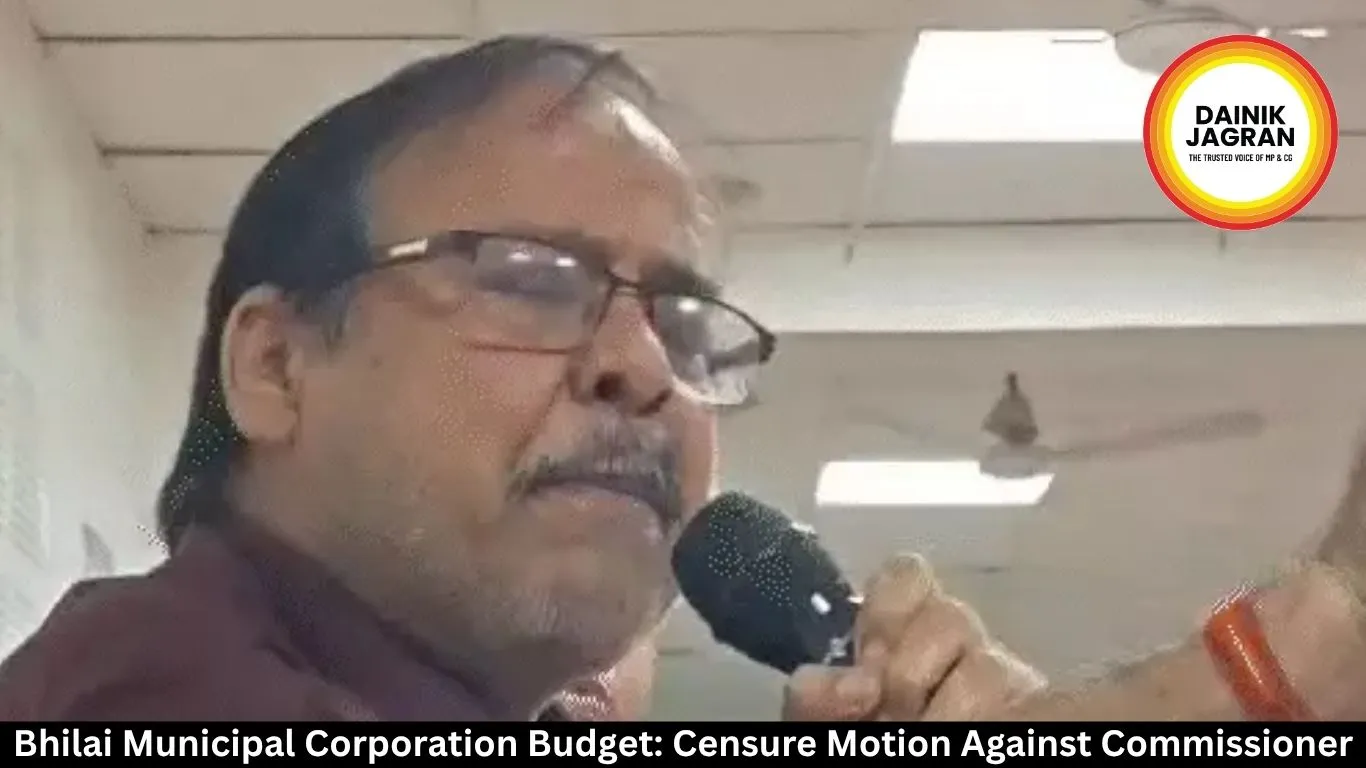
The Bhilai Municipal Corporation (BMC) witnessed unprecedented high drama on Wednesday as both ruling and opposition councillors united to pass a censure motion against Municipal Commissioner Rajeev Pandey following his controversial remarks during the budget proceedings.
The final budget session of the Bhilai Municipal Corporation for the financial year 2026–27 turned into a battleground on Wednesday. While Mayor Neeraj Pal tabled a budget exceeding ₹838 crore, the focus quickly shifted from fiscal allocations to a heated confrontation between the executive and the elected representatives.
The tension peaked when Commissioner Rajeev Pandey reportedly stated he would only remain in the house if "intelligent conversation" took place. The remark was perceived as an insult to the dignity of the house, prompting an immediate and rare show of unity between Congress and BJP councillors, who collectively demanded his removal and signed a formal censure motion.
Uproar over budget discrepancies
The session began on a stormy note with BJP councillor Piyush Mishra alleging a lack of transparency. Mishra claimed that the budget speech copies and detailed income-expenditure reports were not provided to the members in advance.
Demanding a postponement of the session until all documents were tabled, the opposition accused the municipal administration of hiding financial facts. The House was briefly adjourned for an hour as slogans were raised against the Mayor’s council.
Allegations of financial irregularities
A significant portion of the debate centered on the alleged misappropriation of the education cess. Piyush Mishra termed the diversion of these funds a "criminal economic offense," claiming that rules were bypassed to favor contractors.
In response, Commissioner Rajeev Pandey admitted that approximately ₹4 crore had been collected as education cess and assured the house that moving forward, these funds would be strictly utilized for educational purposes only. He further noted that the Bhilai Steel Plant (BSP) had contributed ₹3 crore as building permission fees this year.
Opposition targets four-year tenure
Leader of Opposition Bhojraj Sinha arrived at the session armed with files detailing alleged corruption over the past four years. The accusations included the controversial "sale" of the Meena Bazaar ground and irregularities in tender processes.
Sinha alleged that payments were being released to contractors by frequently changing budget heads to avoid scrutiny. "If there is no transparency in how public money is spent, this budget is merely a piece of paper," Sinha remarked during the heated exchange.
Bipartisan front against Commissioner
The defining moment of the day occurred when Commissioner Pandey’s remarks about the "quality of intellect" in the house sparked outrage. Congress councillor Rajesh Chaudhary and BJP members stood together, arguing that the statement undermined the democratic sanctity of the corporation.
Mayor Neeraj Pal, despite heading the ruling dispensation, eventually joined the councillors in signing the censure motion. The members have now moved a formal request to the state government seeking the immediate transfer of the Commissioner.
Infrastructure and basic amenities
Amidst the political firestorm, several councillors raised concerns regarding the city’s failing infrastructure. BJP councillor Veena Chandra questioned the utility of an ₹838 crore budget when the administration has failed to provide basic drinking water to several wards.
"When fundamental needs like water and drainage are not addressed, these massive figures mean nothing to the common citizen," she stated, supported by several ruling party members who also demanded an account of infrastructure works in their respective areas.
Focus of 2026–27 budget
Despite the disruptions, the budget aims to focus on the holistic development of Bhilai. Key priorities mentioned in the proposal include the construction of new roads, improved sewerage systems, and the effective implementation of state and central welfare schemes.
The civic body plans to intensify its sanitation drives and modernize street lighting across all wards. However, the passage of these proposals remains overshadowed by the administrative standoff that has now reached the corridors of the state power in Raipur.
Future course of action
The unanimous passage of the censure motion has put the state government in a tight spot regarding the administrative leadership at BMC. While the budget technically stands presented, the implementation phase faces a hurdle due to the trust deficit between the bureaucrats and the elected wing.
Local observers suggest that a high-level inquiry into the "education cess" and "tender head" allegations is likely to follow, given the mounting pressure from both the BJP and Congress camps ahead of the next electoral cycle.
Bhilai Municipal Corporation Budget: Censure Motion Against Commissioner
Digital Desk
Bhilai Civic Body Passes Censure Motion Against Commissioner During Budget Session
The Bhilai Municipal Corporation (BMC) witnessed unprecedented high drama on Wednesday as both ruling and opposition councillors united to pass a censure motion against Municipal Commissioner Rajeev Pandey following his controversial remarks during the budget proceedings.
The final budget session of the Bhilai Municipal Corporation for the financial year 2026–27 turned into a battleground on Wednesday. While Mayor Neeraj Pal tabled a budget exceeding ₹838 crore, the focus quickly shifted from fiscal allocations to a heated confrontation between the executive and the elected representatives.
The tension peaked when Commissioner Rajeev Pandey reportedly stated he would only remain in the house if "intelligent conversation" took place. The remark was perceived as an insult to the dignity of the house, prompting an immediate and rare show of unity between Congress and BJP councillors, who collectively demanded his removal and signed a formal censure motion.
Uproar over budget discrepancies
The session began on a stormy note with BJP councillor Piyush Mishra alleging a lack of transparency. Mishra claimed that the budget speech copies and detailed income-expenditure reports were not provided to the members in advance.
Demanding a postponement of the session until all documents were tabled, the opposition accused the municipal administration of hiding financial facts. The House was briefly adjourned for an hour as slogans were raised against the Mayor’s council.
Allegations of financial irregularities
A significant portion of the debate centered on the alleged misappropriation of the education cess. Piyush Mishra termed the diversion of these funds a "criminal economic offense," claiming that rules were bypassed to favor contractors.
In response, Commissioner Rajeev Pandey admitted that approximately ₹4 crore had been collected as education cess and assured the house that moving forward, these funds would be strictly utilized for educational purposes only. He further noted that the Bhilai Steel Plant (BSP) had contributed ₹3 crore as building permission fees this year.
Opposition targets four-year tenure
Leader of Opposition Bhojraj Sinha arrived at the session armed with files detailing alleged corruption over the past four years. The accusations included the controversial "sale" of the Meena Bazaar ground and irregularities in tender processes.
Sinha alleged that payments were being released to contractors by frequently changing budget heads to avoid scrutiny. "If there is no transparency in how public money is spent, this budget is merely a piece of paper," Sinha remarked during the heated exchange.
Bipartisan front against Commissioner
The defining moment of the day occurred when Commissioner Pandey’s remarks about the "quality of intellect" in the house sparked outrage. Congress councillor Rajesh Chaudhary and BJP members stood together, arguing that the statement undermined the democratic sanctity of the corporation.
Mayor Neeraj Pal, despite heading the ruling dispensation, eventually joined the councillors in signing the censure motion. The members have now moved a formal request to the state government seeking the immediate transfer of the Commissioner.
Infrastructure and basic amenities
Amidst the political firestorm, several councillors raised concerns regarding the city’s failing infrastructure. BJP councillor Veena Chandra questioned the utility of an ₹838 crore budget when the administration has failed to provide basic drinking water to several wards.
"When fundamental needs like water and drainage are not addressed, these massive figures mean nothing to the common citizen," she stated, supported by several ruling party members who also demanded an account of infrastructure works in their respective areas.
Focus of 2026–27 budget
Despite the disruptions, the budget aims to focus on the holistic development of Bhilai. Key priorities mentioned in the proposal include the construction of new roads, improved sewerage systems, and the effective implementation of state and central welfare schemes.
The civic body plans to intensify its sanitation drives and modernize street lighting across all wards. However, the passage of these proposals remains overshadowed by the administrative standoff that has now reached the corridors of the state power in Raipur.
Future course of action
The unanimous passage of the censure motion has put the state government in a tight spot regarding the administrative leadership at BMC. While the budget technically stands presented, the implementation phase faces a hurdle due to the trust deficit between the bureaucrats and the elected wing.
Local observers suggest that a high-level inquiry into the "education cess" and "tender head" allegations is likely to follow, given the mounting pressure from both the BJP and Congress camps ahead of the next electoral cycle.