8 Labourers Killed in MP Road Accident: Law on Worker Transport Explained
Digital desk
Eight labourers were killed in a Bhind road accident. Here's what Indian and Madhya Pradesh motor vehicle rules say about transporting workers and who may be responsible.
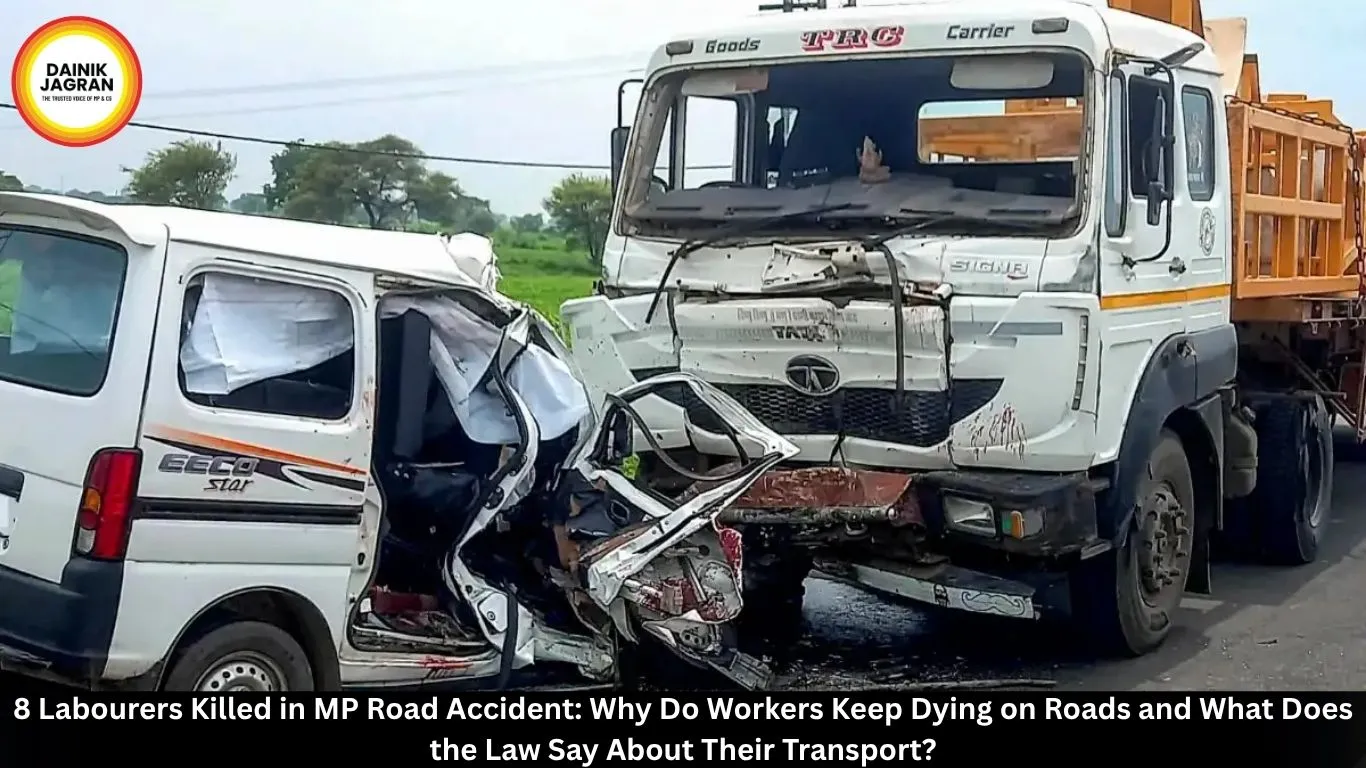
Eight migrant labourers were killed and 23 others injured after a pickup vehicle carrying 29 workers collided head-on with a truck in Madhya Pradesh’s Bhind district late on August 17, once again raising questions over how workers are transported on Indian roads. The accident occurred in the Gohad area along National Highway 719, with preliminary reports indicating that the pickup was travelling at high speed. (The Times of India)
The latest tragedy has brought renewed attention to a recurring road-safety problem: workers being moved in vehicles that may not be designed or permitted to carry such large numbers of passengers.
What Happened in Bhind?
According to reports, the pickup was carrying 29 migrant labourers when it collided with an oncoming truck in the Gohad area.
Eight workers died in the crash, while 23 people, including the truck driver, were injured and taken for medical treatment. Emergency teams reached the spot after the collision. (The Times of India)
The accident is now being investigated, including the circumstances surrounding the vehicle’s speed, the manner in which the workers were being transported and whether applicable transport rules were followed.
Why Worker Transport Is a Safety Issue
Migrant and daily-wage workers often depend on inexpensive transport arranged by contractors, employers or vehicle operators to travel between workplaces and residential areas.
The problem becomes particularly serious when a goods vehicle or pickup is used to transport more workers than its approved seating capacity.
The Central Motor Vehicles Rules treat carrying people in a goods carriage beyond permitted capacity as a safety and licensing concern. The rules also specifically identify carrying persons in a goods carriage beyond the cabin’s capacity or on the vehicle as an act that can constitute grounds for action against a driver’s licence. (India Code)
What Madhya Pradesh Law Says
Madhya Pradesh has additional provisions governing the carriage of people in goods vehicles.
Rule 97 of the M.P. Motor Vehicles Rules, 1994 states that people generally cannot be carried in a goods carriage except within specified conditions. It limits the number of people who may travel in the cabin and lays down requirements intended to prevent passengers from falling from the vehicle. (Indian Kanoon)
The rule also provides limited exceptions in certain circumstances, including permissions issued by the Regional Transport Authority. Even where such permission exists, conditions relating to space and safe carriage have to be followed. (Indian Kanoon)
That means the question after an accident is not simply whether workers were travelling in a vehicle, but what type of vehicle it was, what its permit allowed, how many people it was authorised to carry and whether the safety conditions were met.
Who Can Be Held Responsible?
Responsibility in a fatal road accident can depend on the facts established during the investigation.
Potentially relevant parties can include the driver, vehicle owner, operator or contractor, depending on who arranged the journey and whether there were violations such as dangerous driving, overloading or unauthorised carriage of passengers.
The Motor Vehicles Act also requires transport vehicles operating in public places to comply with the conditions of their permits. Section 66 states that a transport vehicle cannot generally be used in a public place except in accordance with the applicable permit conditions. (India Code)
However, liability cannot be assigned solely on the basis of the number of victims. Police investigation and evidence are required to establish whether any particular person or organisation violated the law or was negligent.
Why Accidents Keep Exposing the Same Problem
The Bhind accident reflects a wider vulnerability faced by workers who have limited access to safe and affordable transportation.
For employers and contractors, using an available pickup or goods vehicle can be cheaper than arranging a properly authorised passenger vehicle. For workers, refusing such transport may not always be a realistic option when reaching a workplace is essential for earning a daily wage.
This creates a dangerous combination of economic dependence, overcrowding, inadequate vehicle suitability and road-safety risks.
Past accidents in Madhya Pradesh have also involved labourers travelling in goods vehicles. In one 2018 incident in Alirajpur, eight labourers were killed after a sand-laden truck carrying workers overturned. (The Times of India)
What Needs to Be Checked
Following such accidents, enforcement agencies generally need to examine several questions:
-
Was the vehicle registered and permitted to carry passengers?
-
How many people was it authorised to carry?
-
Was the vehicle overloaded?
-
Was the driver properly licensed?
-
Was the vehicle travelling within the prescribed speed limit?
-
Who arranged the transportation of the workers?
-
Was the journey connected to employment or a contractor’s work?
-
Did the vehicle comply with applicable safety and permit conditions?
These questions are important because a road accident may have more than one contributing factor.
The Bigger Road Safety Question
The deaths in Bhind are therefore not only about one collision. They also highlight the risks faced by workers when transportation arrangements prioritise affordability or convenience over safety.
The law already places restrictions on carrying people in goods vehicles and provides rules governing the circumstances in which workers can be transported. (Indian Kanoon)
The larger challenge is enforcement.
Unless employers, contractors, vehicle owners and drivers consistently follow passenger-capacity, permit and road-safety requirements—and authorities regularly check compliance—workers travelling to earn a living will remain exposed to preventable risks.
The investigation into the Bhind crash will determine the specific causes and whether any legal violations occurred. But the tragedy has once again raised a broader question for Madhya Pradesh and other states: how many workers must die before safe transportation becomes a basic requirement rather than an afterthought?

8 Labourers Killed in MP Road Accident: Law on Worker Transport Explained
Digital desk
Eight migrant labourers were killed and 23 others injured after a pickup vehicle carrying 29 workers collided head-on with a truck in Madhya Pradesh’s Bhind district late on August 17, once again raising questions over how workers are transported on Indian roads. The accident occurred in the Gohad area along National Highway 719, with preliminary reports indicating that the pickup was travelling at high speed. (The Times of India)
The latest tragedy has brought renewed attention to a recurring road-safety problem: workers being moved in vehicles that may not be designed or permitted to carry such large numbers of passengers.
What Happened in Bhind?
According to reports, the pickup was carrying 29 migrant labourers when it collided with an oncoming truck in the Gohad area.
Eight workers died in the crash, while 23 people, including the truck driver, were injured and taken for medical treatment. Emergency teams reached the spot after the collision. (The Times of India)
The accident is now being investigated, including the circumstances surrounding the vehicle’s speed, the manner in which the workers were being transported and whether applicable transport rules were followed.
Why Worker Transport Is a Safety Issue
Migrant and daily-wage workers often depend on inexpensive transport arranged by contractors, employers or vehicle operators to travel between workplaces and residential areas.
The problem becomes particularly serious when a goods vehicle or pickup is used to transport more workers than its approved seating capacity.
The Central Motor Vehicles Rules treat carrying people in a goods carriage beyond permitted capacity as a safety and licensing concern. The rules also specifically identify carrying persons in a goods carriage beyond the cabin’s capacity or on the vehicle as an act that can constitute grounds for action against a driver’s licence. (India Code)
What Madhya Pradesh Law Says
Madhya Pradesh has additional provisions governing the carriage of people in goods vehicles.
Rule 97 of the M.P. Motor Vehicles Rules, 1994 states that people generally cannot be carried in a goods carriage except within specified conditions. It limits the number of people who may travel in the cabin and lays down requirements intended to prevent passengers from falling from the vehicle. (Indian Kanoon)
The rule also provides limited exceptions in certain circumstances, including permissions issued by the Regional Transport Authority. Even where such permission exists, conditions relating to space and safe carriage have to be followed. (Indian Kanoon)
That means the question after an accident is not simply whether workers were travelling in a vehicle, but what type of vehicle it was, what its permit allowed, how many people it was authorised to carry and whether the safety conditions were met.
Who Can Be Held Responsible?
Responsibility in a fatal road accident can depend on the facts established during the investigation.
Potentially relevant parties can include the driver, vehicle owner, operator or contractor, depending on who arranged the journey and whether there were violations such as dangerous driving, overloading or unauthorised carriage of passengers.
The Motor Vehicles Act also requires transport vehicles operating in public places to comply with the conditions of their permits. Section 66 states that a transport vehicle cannot generally be used in a public place except in accordance with the applicable permit conditions. (India Code)
However, liability cannot be assigned solely on the basis of the number of victims. Police investigation and evidence are required to establish whether any particular person or organisation violated the law or was negligent.
Why Accidents Keep Exposing the Same Problem
The Bhind accident reflects a wider vulnerability faced by workers who have limited access to safe and affordable transportation.
For employers and contractors, using an available pickup or goods vehicle can be cheaper than arranging a properly authorised passenger vehicle. For workers, refusing such transport may not always be a realistic option when reaching a workplace is essential for earning a daily wage.
This creates a dangerous combination of economic dependence, overcrowding, inadequate vehicle suitability and road-safety risks.
Past accidents in Madhya Pradesh have also involved labourers travelling in goods vehicles. In one 2018 incident in Alirajpur, eight labourers were killed after a sand-laden truck carrying workers overturned. (The Times of India)
What Needs to Be Checked
Following such accidents, enforcement agencies generally need to examine several questions:
-
Was the vehicle registered and permitted to carry passengers?
-
How many people was it authorised to carry?
-
Was the vehicle overloaded?
-
Was the driver properly licensed?
-
Was the vehicle travelling within the prescribed speed limit?
-
Who arranged the transportation of the workers?
-
Was the journey connected to employment or a contractor’s work?
-
Did the vehicle comply with applicable safety and permit conditions?
These questions are important because a road accident may have more than one contributing factor.
The Bigger Road Safety Question
The deaths in Bhind are therefore not only about one collision. They also highlight the risks faced by workers when transportation arrangements prioritise affordability or convenience over safety.
The law already places restrictions on carrying people in goods vehicles and provides rules governing the circumstances in which workers can be transported. (Indian Kanoon)
The larger challenge is enforcement.
Unless employers, contractors, vehicle owners and drivers consistently follow passenger-capacity, permit and road-safety requirements—and authorities regularly check compliance—workers travelling to earn a living will remain exposed to preventable risks.
The investigation into the Bhind crash will determine the specific causes and whether any legal violations occurred. But the tragedy has once again raised a broader question for Madhya Pradesh and other states: how many workers must die before safe transportation becomes a basic requirement rather than an afterthought?

Recommended For You
--------
🚨 Beat the News Rush – Join Now!
Get breaking alerts, hot exclusives, and game-changing stories instantly on your phone. No delays, no fluff – just the edge you need. ⚡
Tap to join:
🟢 WhatsApp Channel: Dainik Jagran MP CG
Crave more?
🅕 Facebook: Dainik Jagran MP CG English
🅧 Twitter (X): Dainik Jagran MP CG
🅘 Instagram: Dainik Jagran MP CG
Share the fire – keep your crew ahead! 🗞️🔥