


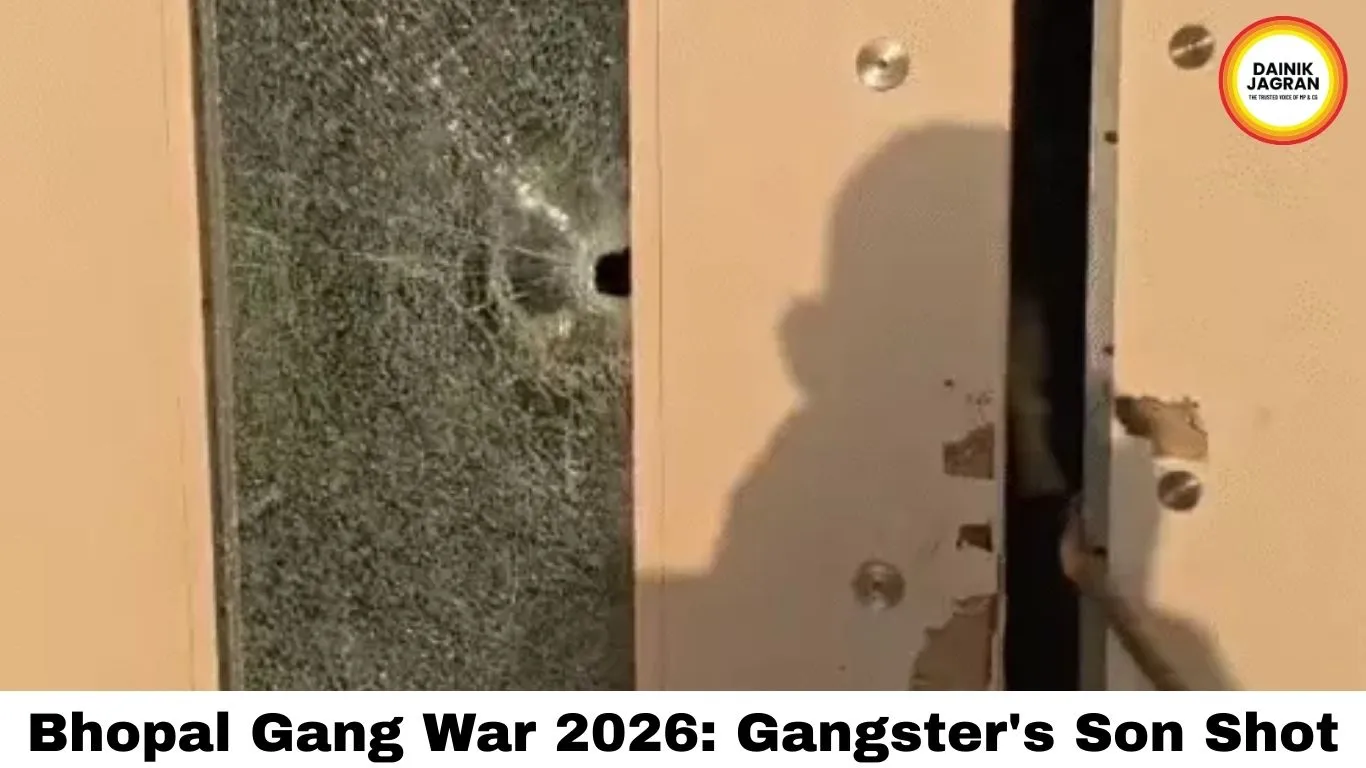
Bhopal Gang War 2026: Gangster's Son Shot, Hospital Attack Follows — India's Capital of Lakes Becomes a Capital of Lawlessness
Digital Desk
When the City of Lakes Bleeds
Bhopal — the City of Lakes, the seat of Madhya Pradesh's government, the home of the country's top-tier police administration — is watching a gang war play out in broad daylight on its streets. And in the latest, most alarming chapter of this crisis, a gangster's son has been shot and the violence has spilled into a hospital.
This is not a stray incident. It is the latest in a chilling pattern that raises one urgent question: who is actually in control of Bhopal's streets?
What Happened: The Shooting and the Hospital Attack
According to the report, the son of a known criminal was targeted in a shooting by a rival gang. The attack — brazen, targeted, and apparently pre-planned — did not stop at the street. In a disturbing escalation that has become increasingly common in Indian gang warfare, the violence followed the victim into a hospital setting, where a follow-up attack was reportedly attempted.
This pattern of hospital-targeting is particularly alarming. A hospital is not just a building — it is a protected space under Indian law and under every norm of civilised society. When gangsters pursue their targets into medical facilities, it signals one thing above all else: they feel no fear of consequences.
On January 25, 2026, in Bhopal's Kolar area — a Sunday morning when the entire city was on high security footing — armed criminals arrived in vehicles without number plates, attacked a history-sheeter from Rewa in broad daylight, and escaped without being caught, even though police had set up checkpoints across the city.
That incident, and this latest hospital-targeting shooting, are not isolated. They are bookmarks in a growing volume of gang violence that Bhopal's police appear unable to contain.
A City Under Siege: The Pattern of Gang Violence
In Kolar's Om Nagar area, a rival group led by Shahzad arrived with 25 to 30 armed youths and launched a sudden assault on gangster Jeetu Yadav's location. Yadav's head was split open and his Fortuner car was vandalised. To save his own life, Yadav fired shots into the air — forcing the attackers to retreat. Police from Kolar and three surrounding police stations had to be deployed to restore order.
The bigger question in that case was not that a gang war took place — it was how armed criminals in vehicles with no number plates entered Bhopal, carried out an attack, and fled freely, while police stood at checkpoints across the city.
That question remains unanswered. And now a gangster's son has been shot and a hospital has been targeted.
The History-Sheeter Problem: Bhopal's Organised Crime Ecosystem
Bhopal's gang violence does not emerge from a vacuum. The city has a long, documented history of organised crime that has thrived under the shadow of political patronage and institutional failure.
Notorious criminals in Bhopal have historically operated with extraordinary impunity — one such gangster had over 60 criminal cases registered against him including murder, robbery and dacoity, and yet continued operating freely for decades. He even slapped an IPS officer and had a jail official shot by his own shooter in 2003.
The sons and associates of such men inherit both the criminal networks and the rivalries that come with them. When the original gangster falls, his son becomes the new target — and the cycle of revenge shootings begins again.
This is precisely the dynamic that report describes: a gangster's son targeted, the attack continuing into a hospital, and a city asking what comes next.
The Law and Order Question: Where Is the Police?
Bhopal is the capital city of a state that prides itself on its law enforcement record. The MP government has celebrated major security achievements in recent months, including the elimination of Naxal threats in the state's forest districts. Chief Minister Mohan Yadav has spoken repeatedly about his government's commitment to a crime-free Madhya Pradesh.
And yet:
- Armed criminals enter Bhopal in vehicles without number plates and attack targets in broad daylight — then escape.
- Gang violence follows victims into hospitals, turning medical facilities into crime scenes.
- History-sheeters with dozens of cases registered against them continue to move freely across the state.
- Rival gangs carry out coordinated, pre-planned attacks in areas surrounded by police checkpoints.
The gap between the government's crime-fighting narrative and the ground reality is growing — and every new shooting makes it wider.
What Must Change: A Five-Point Accountability Demand
The citizens of Bhopal — who live, work, and raise children in this city — deserve more than press conferences after each shooting. Here is what must happen immediately:
- Mandatory number plate verification at all entry points into Bhopal, with camera surveillance and real-time tracking of unregistered vehicles.
- Hospital security protocols: Every government and private hospital in the city must have armed security deployment to prevent gang-related follow-up attacks on admitted patients.
- Preventive detention of active history-sheeters: The Madhya Pradesh government must review and enforce the NSA (National Security Act) and Goondas Act provisions against known gangsters before they act — not after.
- Independent review of police intelligence failures: How did armed criminals reach a gangster's son without being intercepted? That failure must be investigated and those responsible held accountable.
- Witness and victim protection: If the shot victim or family members are afraid to file FIRs — a common reality in gang cases — the state must provide enforceable protection guarantees.
Conclusion: A City Cannot Be Governed by Fear
Bhopal is a city of 2.5 million people. It is home to students, government employees, traders, families and daily wage workers who have nothing to do with gang wars — but who live with their consequences every single day.
When a gangster's son is shot on the streets and the attacker follows him to a hospital to finish the job, the message sent to ordinary citizens is deeply disturbing: the state does not control its own streets.
The Mohan Yadav government has the legal tools, the manpower, and the mandate to act decisively. What appears to be missing is the political will to confront the networks of patronage and protection that have allowed Bhopal's criminal ecosystem to survive — and now, to flourish openly.
The lakes of Bhopal are beautiful. But a city where gang wars play out in hospitals is a city that has lost something far more important than beauty — it has lost the basic sense of safety its people deserve.

.jpg)




