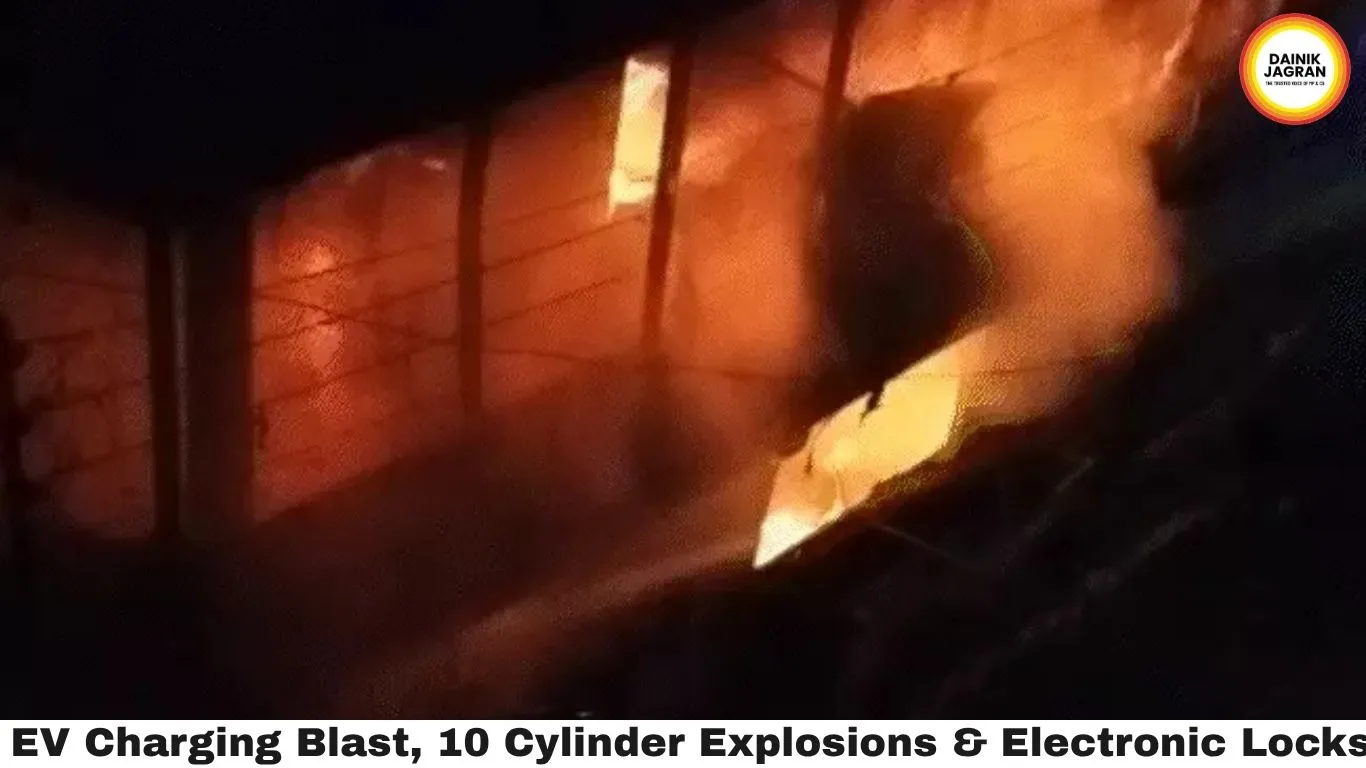
Indore Fire Tragedy: EV Charging Blast, 10 Cylinder Explosions & Electronic Locks That Wouldn't Open — 8 Dead in Brijeshwari Annexe Horror
Digital Desk
8 dead in Indore as EV charging short circuit triggered gas cylinder blasts. Electronic locks sealed doors shut, trapping residents inside. Full story.
Three hazards converged in the dead of night — and eight people never woke up.
Eight members of a family are dead after an electric car being charged outside their home exploded in the early hours of Wednesday morning in Indore. The incident took place between 3:30 AM and 4:30 AM in Brajeshwari Annex Colony near Bengali Square — when most of the family was fast asleep. What followed was not just a fire. It was a catastrophic chain reaction that has shaken Madhya Pradesh and triggered a nationwide conversation about the hidden dangers of modern living.
How It Began: An EV Charging Point That Turned Fatal
The fire is suspected to have started while a Tata Punch electric vehicle was being charged inside the premises. A short circuit at the charging point caused the parked car to catch fire. The flames rapidly spread from the vehicle to the three-storey residential building. Inside the house, more than ten cooking gas cylinders were stored. At least four of them exploded in quick succession, tearing through the structure and sending shockwaves across the neighbourhood.
The timing made everything worse. With the family asleep, there was no one to respond quickly, no one to cut off the gas supply, and no one to warn those on upper floors before the blaze took hold.
The Electronic Lock Factor — Modern Convenience Became a Death Trap
This is the detail that has stunned safety experts and the public alike. The building was fitted with an electronic locking system. When the explosion cut power to the structure, the smart locks engaged — sealing doors shut at precisely the moment when residents needed to escape.
Trapped behind powered-down smart locks, with smoke filling corridors and gas cylinders still exploding below, residents had no way out. Rescue teams also struggled to gain entry because of the electronic locks. Firefighters were eventually forced to access the upper floors by climbing across from a neighbouring building.
The Victims — A Family Wiped Out
The deceased include two minor children, three women, and three men. Three others were pulled out alive and taken to hospital with critical injuries. The victims include rubber trader Manoj Pugalia and his pregnant daughter-in-law Simran. Six of the deceased were relatives who had recently arrived from Kishanganj in Bihar and were staying at the house.
The names of the deceased are Vijay Sethia (65), Suman Sethia (60), Chhotu Sethia (22), Rashi Sethia (12), Manoj Pugalia (65), Simran (30), Tinu (35), and Tanmay (6). A 6-year-old child and a pregnant woman among the dead — a grief no city should have to carry.
Flammable Chemicals Stored at Home — A Ticking Time Bomb
The danger did not stop at the gas cylinders. The house belonged to Manoj Pugalia, who ran a polymer business. Flammable chemicals connected to his business were also stored inside the residential building. Once ignited, those chemicals added further acceleration to a fire that was already out of control. Storing commercial flammable material in a residential building is prohibited under multiple regulatory frameworks — yet it happens across India with alarming frequency and near-zero enforcement.
Government Response and the Investigation
Madhya Pradesh Chief Minister Mohan Yadav extended condolences and termed the incident a serious warning. He stated that the accident has raised new concerns regarding electric vehicle charging safety and ordered a detailed investigation, saying the tragedy highlights emerging risks associated with modern technologies. While digital locks and electric vehicles are essential conveniences, safety awareness and precautions are equally important, he added.
Prime Minister Narendra Modi announced an ex-gratia of Rs 2 lakh from the PMNRF for the next of kin of each of the eight deceased. The injured will receive Rs 50,000 each.
Three Lessons India Cannot Afford to Ignore
The Indore fire tragedy is not an isolated accident — it is a collision of three systemic failures that are present in homes across the country right now.
EV Charging Safety: Overnight home charging using uncertified cables or overloaded domestic sockets is a documented risk. India urgently needs mandatory certified home charging standards for all EV owners.
Electronic Locks Without Failsafe: Smart locks that engage during a power cut — with no manual override or battery backup — are a fire safety disaster waiting to happen. Every electronic lock sold in India must be required to include a manual release mechanism by law.
Flammable Material in Homes: Commercial quantities of gas cylinders and industrial chemicals stored in residential buildings must be subject to regular, enforceable municipal inspections.
Eight lives. One EV charger. Ten cylinders. Doors that wouldn't open. India must act before the next family pays the same price.
Indore Fire Tragedy: EV Charging Blast, 10 Cylinder Explosions & Electronic Locks That Wouldn't Open — 8 Dead in Brijeshwari Annexe Horror
Digital Desk
Three hazards converged in the dead of night — and eight people never woke up.
Eight members of a family are dead after an electric car being charged outside their home exploded in the early hours of Wednesday morning in Indore. The incident took place between 3:30 AM and 4:30 AM in Brajeshwari Annex Colony near Bengali Square — when most of the family was fast asleep. What followed was not just a fire. It was a catastrophic chain reaction that has shaken Madhya Pradesh and triggered a nationwide conversation about the hidden dangers of modern living.
How It Began: An EV Charging Point That Turned Fatal
The fire is suspected to have started while a Tata Punch electric vehicle was being charged inside the premises. A short circuit at the charging point caused the parked car to catch fire. The flames rapidly spread from the vehicle to the three-storey residential building. Inside the house, more than ten cooking gas cylinders were stored. At least four of them exploded in quick succession, tearing through the structure and sending shockwaves across the neighbourhood.
The timing made everything worse. With the family asleep, there was no one to respond quickly, no one to cut off the gas supply, and no one to warn those on upper floors before the blaze took hold.
The Electronic Lock Factor — Modern Convenience Became a Death Trap
This is the detail that has stunned safety experts and the public alike. The building was fitted with an electronic locking system. When the explosion cut power to the structure, the smart locks engaged — sealing doors shut at precisely the moment when residents needed to escape.
Trapped behind powered-down smart locks, with smoke filling corridors and gas cylinders still exploding below, residents had no way out. Rescue teams also struggled to gain entry because of the electronic locks. Firefighters were eventually forced to access the upper floors by climbing across from a neighbouring building.
The Victims — A Family Wiped Out
The deceased include two minor children, three women, and three men. Three others were pulled out alive and taken to hospital with critical injuries. The victims include rubber trader Manoj Pugalia and his pregnant daughter-in-law Simran. Six of the deceased were relatives who had recently arrived from Kishanganj in Bihar and were staying at the house.
The names of the deceased are Vijay Sethia (65), Suman Sethia (60), Chhotu Sethia (22), Rashi Sethia (12), Manoj Pugalia (65), Simran (30), Tinu (35), and Tanmay (6). A 6-year-old child and a pregnant woman among the dead — a grief no city should have to carry.
Flammable Chemicals Stored at Home — A Ticking Time Bomb
The danger did not stop at the gas cylinders. The house belonged to Manoj Pugalia, who ran a polymer business. Flammable chemicals connected to his business were also stored inside the residential building. Once ignited, those chemicals added further acceleration to a fire that was already out of control. Storing commercial flammable material in a residential building is prohibited under multiple regulatory frameworks — yet it happens across India with alarming frequency and near-zero enforcement.
Government Response and the Investigation
Madhya Pradesh Chief Minister Mohan Yadav extended condolences and termed the incident a serious warning. He stated that the accident has raised new concerns regarding electric vehicle charging safety and ordered a detailed investigation, saying the tragedy highlights emerging risks associated with modern technologies. While digital locks and electric vehicles are essential conveniences, safety awareness and precautions are equally important, he added.
Prime Minister Narendra Modi announced an ex-gratia of Rs 2 lakh from the PMNRF for the next of kin of each of the eight deceased. The injured will receive Rs 50,000 each.
Three Lessons India Cannot Afford to Ignore
The Indore fire tragedy is not an isolated accident — it is a collision of three systemic failures that are present in homes across the country right now.
EV Charging Safety: Overnight home charging using uncertified cables or overloaded domestic sockets is a documented risk. India urgently needs mandatory certified home charging standards for all EV owners.
Electronic Locks Without Failsafe: Smart locks that engage during a power cut — with no manual override or battery backup — are a fire safety disaster waiting to happen. Every electronic lock sold in India must be required to include a manual release mechanism by law.
Flammable Material in Homes: Commercial quantities of gas cylinders and industrial chemicals stored in residential buildings must be subject to regular, enforceable municipal inspections.
Eight lives. One EV charger. Ten cylinders. Doors that wouldn't open. India must act before the next family pays the same price.