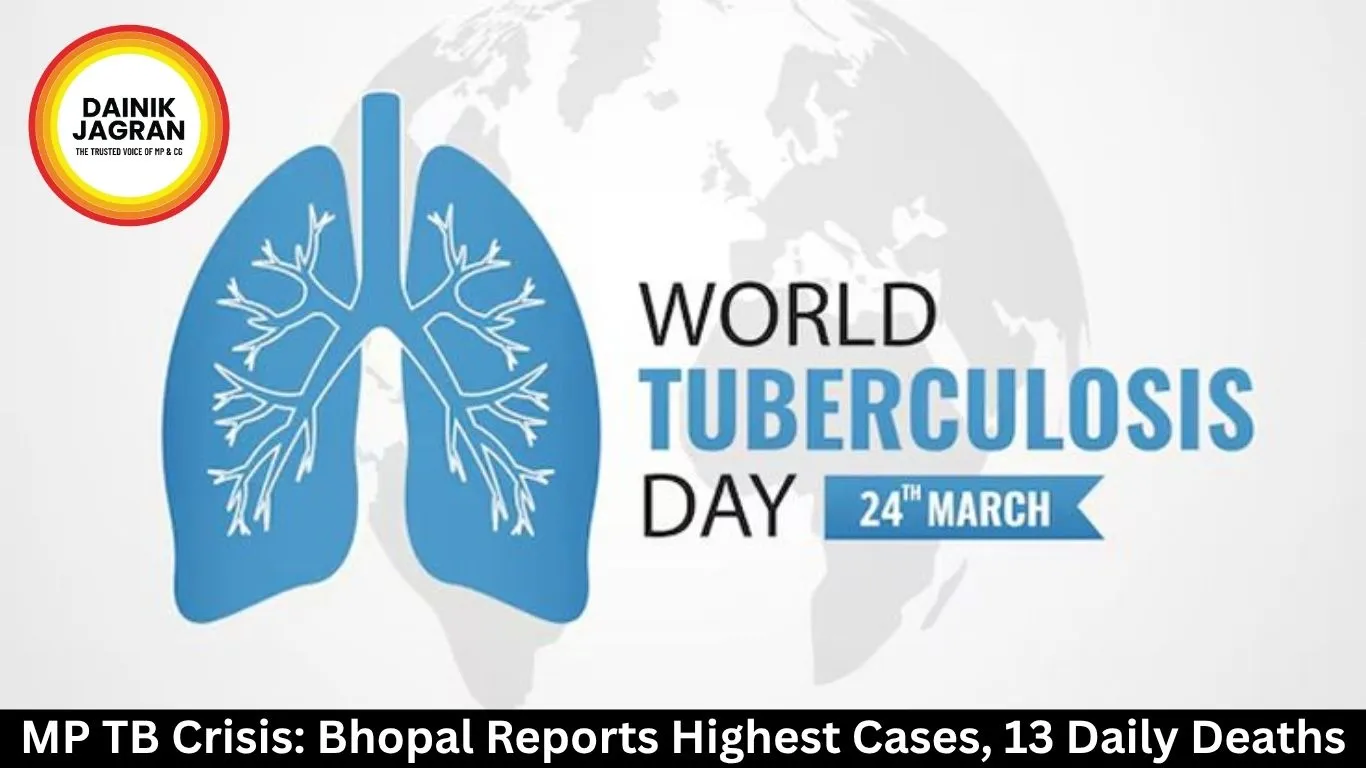
MP TB Crisis: Bhopal Reports Highest Cases, 13 Daily Deaths
Digital Desk
Madhya Pradesh reports 1.71 lakh TB cases in 2025 with Bhopal as the hotspot. State launches 100-day elimination drive to curb rising mortality and MDR-TB.
MP TB Crisis: Bhopal Emerges as Hotspot; State Reports 13 Deaths Daily
Over 1.71 Lakh Cases Notified in 2025 as Madhya Pradesh Battles Rising Drug Resistance and High Mortality in Tribal Belts
Despite intensified screening and the introduction of advanced drug regimens, Tuberculosis (TB) remains a formidable public health challenge in Madhya Pradesh. Latest health department data reveals a grim reality: the state is recording an average of 13 TB-related deaths every day.
In 2025, the state has already seen 4,733 fatalities linked to the respiratory infection. While the total number of notified cases stands at 1.71 lakh—a marginal dip from the 1.80 lakh recorded last year—the high mortality rate continues to alarm medical experts and policy trackers in the region.
Bhopal reports highest burden
The state capital has surfaced as the primary concern for health officials, reporting the highest concentration of infections across Madhya Pradesh. Public health data indicates that Bhopal alone accounted for 332 deaths in 2025.
Large urban centers including Indore, Gwalior, and Jabalpur follow closely, contributing significantly to the state’s overall caseload. The density of cases in these hubs is being attributed to high population concentration and late diagnosis in urban slums.
Rising drug resistance threat
A critical hurdle in the state's elimination goal is the prevalence of Multi-Drug Resistant TB (MDR-TB). This year, 2,513 patients were diagnosed with MDR-TB, a condition often triggered by interrupted treatment cycles or improper medication adherence.
Even more concerning is the detection of five cases of Extensively Drug-Resistant TB (XDR-TB). Experts note that while XDR-TB is rarer, it is far more difficult and expensive to treat, requiring specialized clinical intervention and prolonged isolation.
New treatment protocols introduced
Medical professionals are banking on updated pharmaceutical interventions to bridge the recovery gap. Dr. Vikas Mishra, Associate Professor at the Regional Institute of Respiratory Diseases, noted that the transition to the BPaLM regimen is a significant step forward.
"The new six-month BPaLM drug regimen has made treatment significantly more manageable for patients," Dr. Mishra stated. This shorter, more effective course is expected to improve compliance rates compared to older, year-long treatment protocols.
Mortality spikes in tribal districts
The data highlights a stark geographical disparity in survival rates. While the state’s average mortality rate sits at 2.7%, certain tribal and rural pockets are witnessing nearly double that figure.
Mandsaur and Neemuch have reported mortality rates as high as 6%, while Betul stands at approximately 5%. Districts like Alirajpur, Dindori, and Shahdol are also struggling with rates between 3% and 4%, largely due to systemic issues.
Nutrition and access gaps
Health analysts point toward a "lethal combination" of malnutrition and delayed healthcare access in these high-mortality zones. Poor Body Mass Index (BMI) levels among tribal populations often weaken immune responses, making standard TB treatments less effective.
According to officials, many patients in remote areas only reach tertiary care centers when the disease has reached an advanced stage. This delay, coupled with existing comorbidities like anemia, significantly reduces the window for successful intervention.
100-day elimination drive
In response to the persistent numbers, the state is launching an aggressive 100-day “TB-Free Campaign” starting March 24. Dr. Ruby Khan, In-Charge State TB Officer, confirmed that the drive will focus on "active case finding" rather than waiting for patients to visit clinics.
The campaign will deploy handheld X-ray machines for village-level doorstep screening. Alongside TB testing, the government plans to integrate screenings for anemia, blood pressure, and sugar levels to provide a holistic health assessment for high-risk individuals.
Future outlook and monitoring
The upcoming months will be crucial for Madhya Pradesh as it seeks to meet the national goal of TB elimination. Authorities are now focusing on "contact tracing," where the immediate family and social circles of a positive patient are screened proactively.
With the 100-day mission, the state hopes to significantly lower the transmission rate. However, experts emphasize that sustained success will depend on consistent drug supplies and improved nutritional support programs for the underprivileged.

MP TB Crisis: Bhopal Reports Highest Cases, 13 Daily Deaths
Digital Desk
MP TB Crisis: Bhopal Emerges as Hotspot; State Reports 13 Deaths Daily
Over 1.71 Lakh Cases Notified in 2025 as Madhya Pradesh Battles Rising Drug Resistance and High Mortality in Tribal Belts
Despite intensified screening and the introduction of advanced drug regimens, Tuberculosis (TB) remains a formidable public health challenge in Madhya Pradesh. Latest health department data reveals a grim reality: the state is recording an average of 13 TB-related deaths every day.
In 2025, the state has already seen 4,733 fatalities linked to the respiratory infection. While the total number of notified cases stands at 1.71 lakh—a marginal dip from the 1.80 lakh recorded last year—the high mortality rate continues to alarm medical experts and policy trackers in the region.
Bhopal reports highest burden
The state capital has surfaced as the primary concern for health officials, reporting the highest concentration of infections across Madhya Pradesh. Public health data indicates that Bhopal alone accounted for 332 deaths in 2025.
Large urban centers including Indore, Gwalior, and Jabalpur follow closely, contributing significantly to the state’s overall caseload. The density of cases in these hubs is being attributed to high population concentration and late diagnosis in urban slums.
Rising drug resistance threat
A critical hurdle in the state's elimination goal is the prevalence of Multi-Drug Resistant TB (MDR-TB). This year, 2,513 patients were diagnosed with MDR-TB, a condition often triggered by interrupted treatment cycles or improper medication adherence.
Even more concerning is the detection of five cases of Extensively Drug-Resistant TB (XDR-TB). Experts note that while XDR-TB is rarer, it is far more difficult and expensive to treat, requiring specialized clinical intervention and prolonged isolation.
New treatment protocols introduced
Medical professionals are banking on updated pharmaceutical interventions to bridge the recovery gap. Dr. Vikas Mishra, Associate Professor at the Regional Institute of Respiratory Diseases, noted that the transition to the BPaLM regimen is a significant step forward.
"The new six-month BPaLM drug regimen has made treatment significantly more manageable for patients," Dr. Mishra stated. This shorter, more effective course is expected to improve compliance rates compared to older, year-long treatment protocols.
Mortality spikes in tribal districts
The data highlights a stark geographical disparity in survival rates. While the state’s average mortality rate sits at 2.7%, certain tribal and rural pockets are witnessing nearly double that figure.
Mandsaur and Neemuch have reported mortality rates as high as 6%, while Betul stands at approximately 5%. Districts like Alirajpur, Dindori, and Shahdol are also struggling with rates between 3% and 4%, largely due to systemic issues.
Nutrition and access gaps
Health analysts point toward a "lethal combination" of malnutrition and delayed healthcare access in these high-mortality zones. Poor Body Mass Index (BMI) levels among tribal populations often weaken immune responses, making standard TB treatments less effective.
According to officials, many patients in remote areas only reach tertiary care centers when the disease has reached an advanced stage. This delay, coupled with existing comorbidities like anemia, significantly reduces the window for successful intervention.
100-day elimination drive
In response to the persistent numbers, the state is launching an aggressive 100-day “TB-Free Campaign” starting March 24. Dr. Ruby Khan, In-Charge State TB Officer, confirmed that the drive will focus on "active case finding" rather than waiting for patients to visit clinics.
The campaign will deploy handheld X-ray machines for village-level doorstep screening. Alongside TB testing, the government plans to integrate screenings for anemia, blood pressure, and sugar levels to provide a holistic health assessment for high-risk individuals.
Future outlook and monitoring
The upcoming months will be crucial for Madhya Pradesh as it seeks to meet the national goal of TB elimination. Authorities are now focusing on "contact tracing," where the immediate family and social circles of a positive patient are screened proactively.
With the 100-day mission, the state hopes to significantly lower the transmission rate. However, experts emphasize that sustained success will depend on consistent drug supplies and improved nutritional support programs for the underprivileged.