US Can Maintain Iran Naval Blockade Indefinitely, Pete Hegseth Says

Digital desk

US Can Maintain Iran Naval Blockade Indefinitely, Pete Hegseth Says

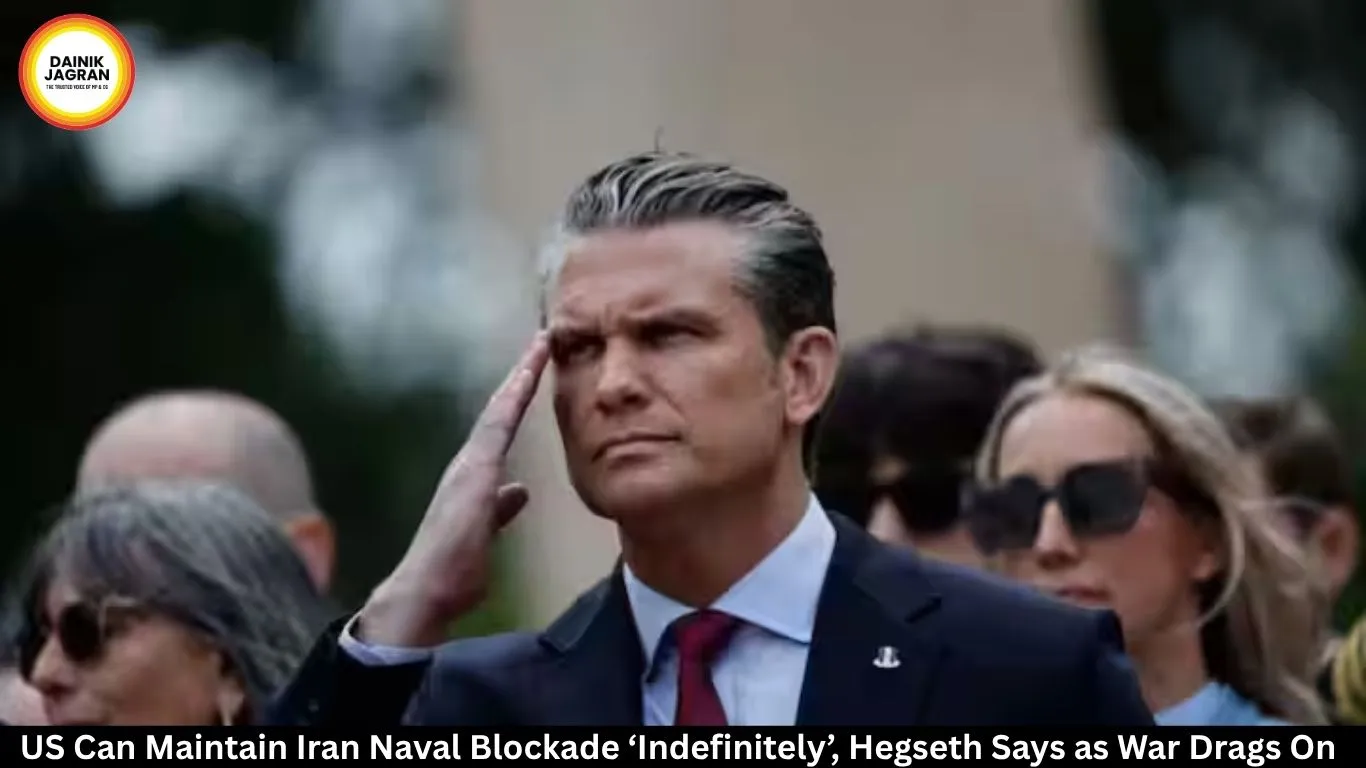
US Defence Secretary Pete Hegseth says the US Navy can maintain its blockade of Iran indefinitely as Washington continues pressure on Tehran amid the ongoing war.

The United States has enough naval resources to maintain its blockade of Iran indefinitely, US Defence Secretary Pete Hegseth said on Thursday, signalling that Washington is prepared to continue military and economic pressure on Tehran as efforts to end the war remain stalled.

Hegseth said the US Navy could sustain the operation by rotating ships in and out of the region as required, suggesting that Washington does not currently face an immediate shortage of naval assets for the blockade.

“Indefinitely the United States Navy can maintain a blockade like that because we’ll rotate ships in and out,” Hegseth told reporters in Panama.

Also Read... Trump Secretly Switched Planes in Turkey Over Security Threat, Iran Link Reported

Hegseth Defends Blockade

Hegseth made the remarks after speaking with the crew of the USS Gridley, a guided-missile destroyer that had previously operated in the Middle East.

Also Read... Ford to Shift Lincoln Production From China to US From 2030 Amid Tariff War

His comments underline the administration's intention to maintain pressure on Iran while negotiations aimed at ending the conflict remain unresolved.

Also Read... US Flags India, EU, Canada in China Tariff Evasion Transshipment Risk List

The blockade has become a central component of the US strategy against Tehran, particularly because of the importance of the Strait of Hormuz to global energy markets.

Trump Claims Hormuz Control

Hegseth's remarks came a day after President Donald Trump claimed that the United States had complete control over the strategically important waterway.

Trump said on his Truth Social platform that the US naval blockade had become a “wall of steel” and asserted that Iran had little ability to challenge the American presence.

The Strait of Hormuz is one of the world's most important energy transit routes. Before the conflict, roughly one-fifth of global oil and liquefied natural gas shipments passed through the waterway.

Conflict Disrupts Energy Routes

The war began with US-Israeli strikes on Iran on February 28, according to the account provided by US officials and the source material.

Iran subsequently moved to restrict access through the Strait of Hormuz, severely disrupting commercial shipping and energy flows.

The United States then established a naval blockade targeting Iranian shipping and ports while maintaining that it would protect freedom of navigation for vessels travelling to and from non-Iranian ports.

Washington has deployed tens of thousands of military personnel to the wider Middle East since the conflict began, including more than 20 warships.

Commercial Ships Intercepted

The US military has said it has redirected more than 55 commercial vessels attempting to breach the blockade.

According to US officials, three vessels have been disabled and two others boarded since the blockade began.

The confrontation has also involved direct military action against individual ships.

Earlier this week, a US Navy MH-60 helicopter fired two Hellfire missiles at the engine room of a Panama-flagged vessel after the ship allegedly ignored warnings from US forces, according to the US military.

Iran Continues Retaliation

Despite months of US military strikes against Iranian targets, Tehran has continued to challenge Washington's efforts to control the strategic waterway.

US strikes have targeted Iranian leadership and damaged significant parts of the country's military infrastructure, including elements of its navy.

Iran has responded with missile and drone attacks against US allies in the region and has also targeted commercial vessels attempting to pass through the Strait of Hormuz without Iranian permission.

The continuing confrontation has kept maritime security and energy supplies under pressure.

Pressure Mounts on Trump

The prolonged conflict is also creating political pressure on the Trump administration.

Trump has alternated between warnings of further escalation and statements suggesting that a potential peace agreement could be reached.

At the same time, the administration has so far avoided some of the most escalatory measures, including deploying large numbers of ground troops or carrying out attacks on strategic islands and desalination infrastructure.

Trump is facing pressure to bring the conflict to an end ahead of the November midterm elections, while elevated fuel prices have emerged as a major concern, particularly among voters in rural areas that have traditionally supported him.

For now, Hegseth's comments indicate that Washington is prepared to sustain the naval blockade for as long as necessary, even as diplomatic efforts to end the war remain uncertain.

 

english.dainikjagranmpcg.com
14 Aug 2026 By Abhishek Joshi

US Can Maintain Iran Naval Blockade Indefinitely, Pete Hegseth Says

Digital desk

The United States has enough naval resources to maintain its blockade of Iran indefinitely, US Defence Secretary Pete Hegseth said on Thursday, signalling that Washington is prepared to continue military and economic pressure on Tehran as efforts to end the war remain stalled.

Hegseth said the US Navy could sustain the operation by rotating ships in and out of the region as required, suggesting that Washington does not currently face an immediate shortage of naval assets for the blockade.

“Indefinitely the United States Navy can maintain a blockade like that because we’ll rotate ships in and out,” Hegseth told reporters in Panama.

Hegseth Defends Blockade

Hegseth made the remarks after speaking with the crew of the USS Gridley, a guided-missile destroyer that had previously operated in the Middle East.

His comments underline the administration's intention to maintain pressure on Iran while negotiations aimed at ending the conflict remain unresolved.

The blockade has become a central component of the US strategy against Tehran, particularly because of the importance of the Strait of Hormuz to global energy markets.

Trump Claims Hormuz Control

Hegseth's remarks came a day after President Donald Trump claimed that the United States had complete control over the strategically important waterway.

Trump said on his Truth Social platform that the US naval blockade had become a “wall of steel” and asserted that Iran had little ability to challenge the American presence.

The Strait of Hormuz is one of the world's most important energy transit routes. Before the conflict, roughly one-fifth of global oil and liquefied natural gas shipments passed through the waterway.

Conflict Disrupts Energy Routes

The war began with US-Israeli strikes on Iran on February 28, according to the account provided by US officials and the source material.

Iran subsequently moved to restrict access through the Strait of Hormuz, severely disrupting commercial shipping and energy flows.

The United States then established a naval blockade targeting Iranian shipping and ports while maintaining that it would protect freedom of navigation for vessels travelling to and from non-Iranian ports.

Washington has deployed tens of thousands of military personnel to the wider Middle East since the conflict began, including more than 20 warships.

Commercial Ships Intercepted

The US military has said it has redirected more than 55 commercial vessels attempting to breach the blockade.

According to US officials, three vessels have been disabled and two others boarded since the blockade began.

The confrontation has also involved direct military action against individual ships.

Earlier this week, a US Navy MH-60 helicopter fired two Hellfire missiles at the engine room of a Panama-flagged vessel after the ship allegedly ignored warnings from US forces, according to the US military.

Iran Continues Retaliation

Despite months of US military strikes against Iranian targets, Tehran has continued to challenge Washington's efforts to control the strategic waterway.

US strikes have targeted Iranian leadership and damaged significant parts of the country's military infrastructure, including elements of its navy.

Iran has responded with missile and drone attacks against US allies in the region and has also targeted commercial vessels attempting to pass through the Strait of Hormuz without Iranian permission.

The continuing confrontation has kept maritime security and energy supplies under pressure.

Pressure Mounts on Trump

The prolonged conflict is also creating political pressure on the Trump administration.

Trump has alternated between warnings of further escalation and statements suggesting that a potential peace agreement could be reached.

At the same time, the administration has so far avoided some of the most escalatory measures, including deploying large numbers of ground troops or carrying out attacks on strategic islands and desalination infrastructure.

Trump is facing pressure to bring the conflict to an end ahead of the November midterm elections, while elevated fuel prices have emerged as a major concern, particularly among voters in rural areas that have traditionally supported him.

For now, Hegseth's comments indicate that Washington is prepared to sustain the naval blockade for as long as necessary, even as diplomatic efforts to end the war remain uncertain.
 

https://english.dainikjagranmpcg.com/top-stories/us-can-maintain-iran-naval-blockade-indefinitely-pete-hegseth-says/article-26001

--------

🚨 Beat the News Rush – Join Now!

Get breaking alerts, hot exclusives, and game-changing stories instantly on your phone. No delays, no fluff – just the edge you need. ⚡

Tap to join: 

🟢 WhatsApp Channel: Dainik Jagran MP CG

Crave more?

🅕 Facebook: Dainik Jagran MP CG English

🅧 Twitter (X): Dainik Jagran MP CG

🅘 Instagram: Dainik Jagran MP CG

Share the fire – keep your crew ahead! 🗞️🔥

Trending News