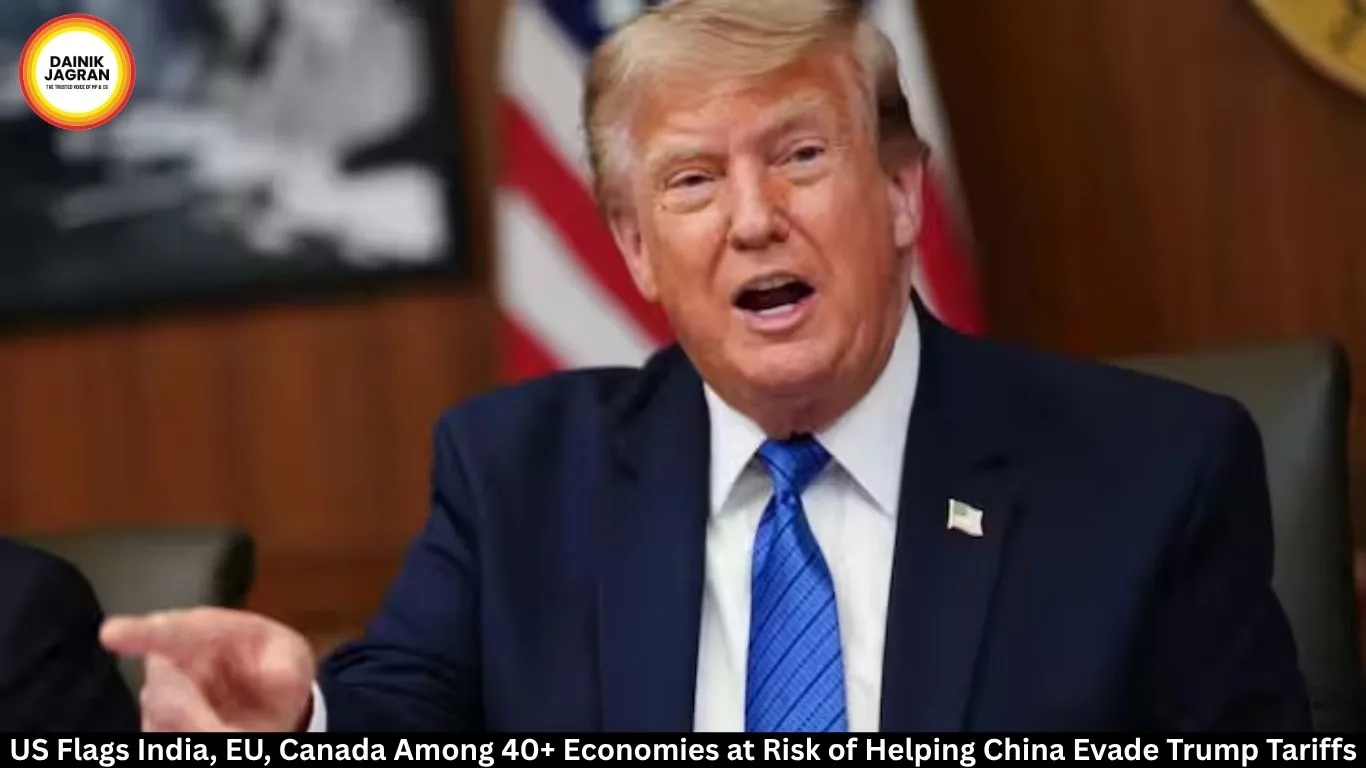
US Flags India, EU, Canada in China Tariff Evasion Transshipment Risk List

Digital desk

US Flags India, EU, Canada in China Tariff Evasion Transshipment Risk List

The Trump administration has flagged India, EU, Canada, Japan, South Korea and other economies as potential transshipment risks for Chinese goods and plans AI-powered checks.

The Trump administration has identified more than 40 economies, including India, the European Union, Canada, Japan and South Korea, as potential transshipment risks in the movement of Chinese goods into the United States.

A White House report released on Thursday highlighted what Washington describes as “illegal transshipment” — a practice in which Chinese products are routed through a third country before being exported to the US, potentially allowing exporters to avoid or reduce tariffs imposed directly on Chinese goods.

The development could bring greater scrutiny to countries that have become important links in global supply chains as companies seek alternatives to manufacturing and sourcing from China.

Also Read... US Congress Pushes New Defence Partnership with Israel Amid Changing Public Opinion

India Among Economies Under Scrutiny

The report identified more than 40 economies as having an elevated risk of involvement in illegal transshipment. The list includes India along with the European Union, Mexico, Canada, Taiwan, Japan, South Korea and Vietnam.

Also Read... Ford to Shift Lincoln Production From China to US From 2030 Amid Tariff War

US trade adviser Peter Navarro accused China of using third countries to disguise the origin of its exports and circumvent US trade restrictions.

Also Read... Iran Rejects Trump’s ‘Total Control’ Claim, Says Strait of Hormuz Remains Blocked

“For years, the great transhipment scam has let Communist China launder its exports through more than 40 countries,” Navarro told reporters.

The White House report, however, indicates that the risks vary from one economy to another. Some countries may have transshipment concerns within otherwise legitimate trade flows, while others have become closely integrated with supply chains linked to China.

Washington Plans AI-Based Checks

The Trump administration is also planning to use artificial intelligence to identify shipments that may have been rerouted through third countries to avoid US tariffs.

Navarro said the White House is working with US Customs and Border Protection on an AI-enabled system that would analyse shipping and trade information.

The proposed system could examine shipping records, cargo routes and historical routing patterns to identify shipments that may have been transshipped before reaching the US.

The move is part of Washington's broader effort to prevent businesses from bypassing tariffs by changing the route or origin of Chinese products.

Supply Chains Shifted After Tariff War

The issue has gained importance as companies have diversified their supply chains away from China.

During Trump's first presidency, Washington and Beijing became involved in a major tariff dispute beginning around 2018. As tariffs increased, several companies started looking for alternative manufacturing and sourcing locations.

Countries such as Vietnam emerged as beneficiaries of this shift, with businesses expanding production and sourcing networks outside China.

The latest US action suggests Washington is now paying closer attention to whether such alternative supply chains are being used to simply reroute Chinese products rather than genuinely shift production.

Potential Impact on Global Trade

The expanded focus on transshipment could increase compliance requirements for exporters and manufacturers operating across international supply chains.

Companies in countries identified as higher-risk could face greater scrutiny from US customs authorities, particularly where products have significant Chinese inputs or pass through multiple countries before entering the American market.

For India and other economies on the list, the issue could become increasingly important as businesses seek to expand exports to the US while maintaining supply-chain links with China.

The administration's proposed AI-based monitoring system could further increase the ability of US authorities to track trade routes and identify unusual shipping patterns.

Trump Administration Tightens Tariff Enforcement

The latest move comes as the Trump administration continues its broader trade policy of imposing tariffs on US trading partners while maintaining additional duties on Chinese imports.

Washington's emphasis on transshipment indicates that simply changing the country through which goods enter the US may not be enough to avoid tariff scrutiny.

The White House is now seeking to determine whether products genuinely originate from a third country or are Chinese goods being rerouted through another economy.

The approach could add another layer of complexity to global trade as companies adjust their supply chains to navigate the Trump administration's tariff policies.

 

english.dainikjagranmpcg.com
14 Aug 2026 By Abhishek Joshi

US Flags India, EU, Canada in China Tariff Evasion Transshipment Risk List

Digital desk

The Trump administration has identified more than 40 economies, including India, the European Union, Canada, Japan and South Korea, as potential transshipment risks in the movement of Chinese goods into the United States.

A White House report released on Thursday highlighted what Washington describes as “illegal transshipment” — a practice in which Chinese products are routed through a third country before being exported to the US, potentially allowing exporters to avoid or reduce tariffs imposed directly on Chinese goods.

The development could bring greater scrutiny to countries that have become important links in global supply chains as companies seek alternatives to manufacturing and sourcing from China.

India Among Economies Under Scrutiny

The report identified more than 40 economies as having an elevated risk of involvement in illegal transshipment. The list includes India along with the European Union, Mexico, Canada, Taiwan, Japan, South Korea and Vietnam.

US trade adviser Peter Navarro accused China of using third countries to disguise the origin of its exports and circumvent US trade restrictions.

“For years, the great transhipment scam has let Communist China launder its exports through more than 40 countries,” Navarro told reporters.

The White House report, however, indicates that the risks vary from one economy to another. Some countries may have transshipment concerns within otherwise legitimate trade flows, while others have become closely integrated with supply chains linked to China.

Washington Plans AI-Based Checks

The Trump administration is also planning to use artificial intelligence to identify shipments that may have been rerouted through third countries to avoid US tariffs.

Navarro said the White House is working with US Customs and Border Protection on an AI-enabled system that would analyse shipping and trade information.

The proposed system could examine shipping records, cargo routes and historical routing patterns to identify shipments that may have been transshipped before reaching the US.

The move is part of Washington's broader effort to prevent businesses from bypassing tariffs by changing the route or origin of Chinese products.

Supply Chains Shifted After Tariff War

The issue has gained importance as companies have diversified their supply chains away from China.

During Trump's first presidency, Washington and Beijing became involved in a major tariff dispute beginning around 2018. As tariffs increased, several companies started looking for alternative manufacturing and sourcing locations.

Countries such as Vietnam emerged as beneficiaries of this shift, with businesses expanding production and sourcing networks outside China.

The latest US action suggests Washington is now paying closer attention to whether such alternative supply chains are being used to simply reroute Chinese products rather than genuinely shift production.

Potential Impact on Global Trade

The expanded focus on transshipment could increase compliance requirements for exporters and manufacturers operating across international supply chains.

Companies in countries identified as higher-risk could face greater scrutiny from US customs authorities, particularly where products have significant Chinese inputs or pass through multiple countries before entering the American market.

For India and other economies on the list, the issue could become increasingly important as businesses seek to expand exports to the US while maintaining supply-chain links with China.

The administration's proposed AI-based monitoring system could further increase the ability of US authorities to track trade routes and identify unusual shipping patterns.

Trump Administration Tightens Tariff Enforcement

The latest move comes as the Trump administration continues its broader trade policy of imposing tariffs on US trading partners while maintaining additional duties on Chinese imports.

Washington's emphasis on transshipment indicates that simply changing the country through which goods enter the US may not be enough to avoid tariff scrutiny.

The White House is now seeking to determine whether products genuinely originate from a third country or are Chinese goods being rerouted through another economy.

The approach could add another layer of complexity to global trade as companies adjust their supply chains to navigate the Trump administration's tariff policies.
 

https://english.dainikjagranmpcg.com/top-stories/us-flags-india-eu-canada-in-china-tariff-evasion-transshipment/article-26007

--------

🚨 Beat the News Rush – Join Now!

Get breaking alerts, hot exclusives, and game-changing stories instantly on your phone. No delays, no fluff – just the edge you need. ⚡

Tap to join: 

🟢 WhatsApp Channel: Dainik Jagran MP CG

Crave more?

🅕 Facebook: Dainik Jagran MP CG English

🅧 Twitter (X): Dainik Jagran MP CG

🅘 Instagram: Dainik Jagran MP CG

Share the fire – keep your crew ahead! 🗞️🔥

Trending News