Indian National Killed in Iran Missile Attack on Kuwait Amid Escalating West Asia Tensions
Kuwait City:
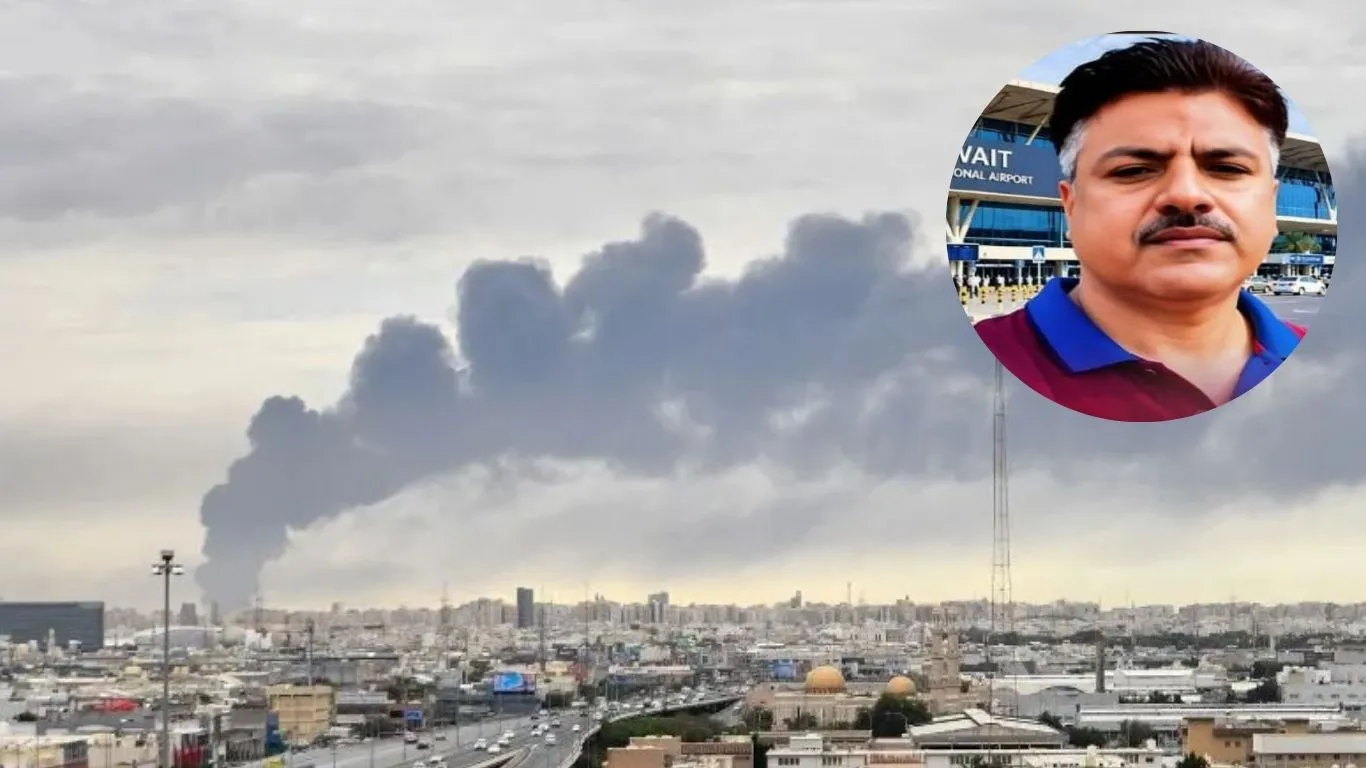
In a major escalation of tensions in West Asia, an Indian national has been killed in a missile and drone attack carried out by Iran on Kuwait, according to confirmation from the Indian Embassy. The attack reportedly targeted Kuwait International Airport and has raised fresh concerns over the security situation in Gulf countries.
Diplomatic sources confirmed that the Indian citizen lost his life during the strike, marking one of the first reported civilian casualties involving a foreign national in the latest phase of the conflict. Authorities have not yet released the identity of the victim, but officials said they are in close contact with local authorities and are providing assistance to the family.
The attack comes amid a sudden breakdown of the ceasefire between Iran and the United States, which had been in place for 56 days. Reports suggest that renewed missile exchanges began after a series of strikes and counter-strikes involving US forces and Iranian positions in the region. According to Iranian state-linked statements, the escalation followed an alleged attack on an IRGC command center near Kharg Island, which Iran claims was targeted by the US Navy.
In response, Iran reportedly launched coordinated strikes on US-linked military installations in Kuwait and Bahrain. The Islamic Revolutionary Guard Corps (IRGC) has claimed responsibility for targeting facilities linked to the US Navy’s Fifth Fleet in Bahrain. The situation has rapidly intensified, with both sides exchanging accusations and military actions.
The US Central Command (CENTCOM), however, has claimed that most incoming Iranian missiles were intercepted mid-air and neutralized before reaching their intended targets. Despite these claims, Iranian military leadership has warned that operations will continue until the United States and Israel issue formal apologies, further deepening fears of prolonged conflict.
The latest flare-up marks a renewed phase of hostilities after weeks of relative calm. The earlier conflict between the United States, Israel, and Iran reportedly lasted from late February to early April, causing widespread global concern over energy security and regional stability. Although a ceasefire was declared in early April, the agreement appears to have collapsed, leading to renewed missile exchanges 56 days later.
The situation has also sparked political debate over competing international narratives. While US officials have downplayed reports of ongoing negotiations, some media outlets suggest that diplomatic communication between Washington and Tehran has stalled in recent weeks. Former US President Donald Trump has dismissed such reports, calling them “fake news” and insisting that previous claims about negotiations were inaccurate.
As tensions continue to rise, Gulf nations remain on high alert, with heightened security measures at airports, military installations, and critical infrastructure sites. The killing of an Indian national has further underscored the widening impact of the conflict beyond the immediate region, drawing attention from international diplomatic circles.

--------
🚨 Beat the News Rush – Join Now!
Get breaking alerts, hot exclusives, and game-changing stories instantly on your phone. No delays, no fluff – just the edge you need. ⚡
Tap to join:
🟢 WhatsApp Channel: Dainik Jagran MP CG
Crave more?
🅕 Facebook: Dainik Jagran MP CG English
🅧 Twitter (X): Dainik Jagran MP CG
🅘 Instagram: Dainik Jagran MP CG
Share the fire – keep your crew ahead! 🗞️🔥
Indian National Killed in Iran Missile Attack on Kuwait Amid Escalating West Asia Tensions
Kuwait City:
In a major escalation of tensions in West Asia, an Indian national has been killed in a missile and drone attack carried out by Iran on Kuwait, according to confirmation from the Indian Embassy. The attack reportedly targeted Kuwait International Airport and has raised fresh concerns over the security situation in Gulf countries.
Diplomatic sources confirmed that the Indian citizen lost his life during the strike, marking one of the first reported civilian casualties involving a foreign national in the latest phase of the conflict. Authorities have not yet released the identity of the victim, but officials said they are in close contact with local authorities and are providing assistance to the family.
The attack comes amid a sudden breakdown of the ceasefire between Iran and the United States, which had been in place for 56 days. Reports suggest that renewed missile exchanges began after a series of strikes and counter-strikes involving US forces and Iranian positions in the region. According to Iranian state-linked statements, the escalation followed an alleged attack on an IRGC command center near Kharg Island, which Iran claims was targeted by the US Navy.
In response, Iran reportedly launched coordinated strikes on US-linked military installations in Kuwait and Bahrain. The Islamic Revolutionary Guard Corps (IRGC) has claimed responsibility for targeting facilities linked to the US Navy’s Fifth Fleet in Bahrain. The situation has rapidly intensified, with both sides exchanging accusations and military actions.
The US Central Command (CENTCOM), however, has claimed that most incoming Iranian missiles were intercepted mid-air and neutralized before reaching their intended targets. Despite these claims, Iranian military leadership has warned that operations will continue until the United States and Israel issue formal apologies, further deepening fears of prolonged conflict.
The latest flare-up marks a renewed phase of hostilities after weeks of relative calm. The earlier conflict between the United States, Israel, and Iran reportedly lasted from late February to early April, causing widespread global concern over energy security and regional stability. Although a ceasefire was declared in early April, the agreement appears to have collapsed, leading to renewed missile exchanges 56 days later.
The situation has also sparked political debate over competing international narratives. While US officials have downplayed reports of ongoing negotiations, some media outlets suggest that diplomatic communication between Washington and Tehran has stalled in recent weeks. Former US President Donald Trump has dismissed such reports, calling them “fake news” and insisting that previous claims about negotiations were inaccurate.
As tensions continue to rise, Gulf nations remain on high alert, with heightened security measures at airports, military installations, and critical infrastructure sites. The killing of an Indian national has further underscored the widening impact of the conflict beyond the immediate region, drawing attention from international diplomatic circles.