Trump Administration Ends NOAA Support for 2026 Arctic Report Card

Digital desk

Trump Administration Ends NOAA Support for 2026 Arctic Report Card

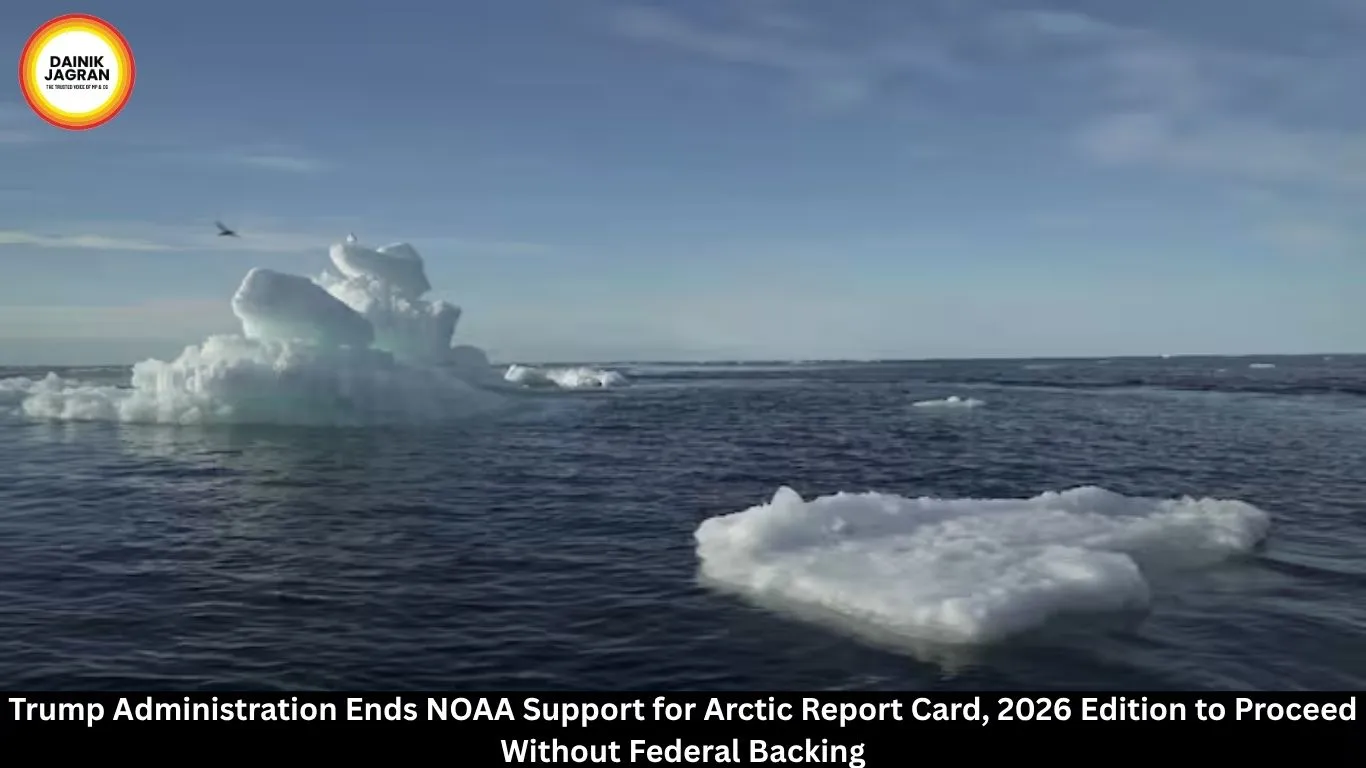
The Trump administration has withdrawn NOAA support for the Arctic Report Card, ending two decades of federal coordination while the 2026 edition continues without NOAA backing.

 The Trump administration has withdrawn federal support for the annual Arctic Report Card, ending the US National Oceanic and Atmospheric Administration's (NOAA) two-decade role in coordinating the assessment of environmental, ecological and social changes across the Arctic.

The 2026 edition of the report is already being prepared and is expected to move forward, but without NOAA's coordination, logistical assistance and formal publication as a NOAA technical report.

The decision was communicated to some scientists involved in the report on Monday, according to people familiar with the matter. The reason for the immediate withdrawal was not publicly explained.

Also Read... Indian-Origin NASA Astronaut Anil Menon Completes First ISS Spacewalk, Installs Solar Array Hardware

NOAA Ends Coordination Role

NOAA spokesperson Kim Doster confirmed that the agency would no longer facilitate the 2026 edition.

Also Read... Trump Says US-Iran War Must End Soon as Middle East Tensions Continue

Doster said data historically contributed by NOAA would continue to be collected and remain publicly available.

Also Read... Brazil Helicopter Crash: Four Killed in Rio de Janeiro's Tijuca National Park

However, the agency's withdrawal means this year's publication will not carry the same NOAA technical-report status it has traditionally held.

NOAA has played a significant coordinating role in the report, including providing a coordinating editor, hosting the publication online and supporting its public release alongside the lead authors.

21st Edition Already Underway

The Arctic Report Card's 2026 edition is already in preparation, with lead authors, chapter contributors and other scientists working on the assessment.

Without NOAA's logistical and editorial support, the researchers will now have to determine how the publication will be completed and released.

The report is generally published each December and has become a major annual reference for understanding conditions across the Arctic.

What Is Arctic Report Card?

The Arctic Report Card provides an annual overview of changes taking place across the Arctic region.

The publication covers a wide range of environmental and ecological indicators, including sea ice, wildlife, vegetation and climate conditions.

It also examines changes affecting communities and the lives of people living across the Arctic.

Scientists have increasingly focused on the region because the Arctic is warming significantly faster than the global average, contributing to rapid changes in sea ice, ecosystems and weather patterns.

Beyond Climate Science

The report has attracted attention beyond scientific and academic circles.

Researchers and educators use its findings to track long-term environmental trends, while policymakers have relied on its assessments when considering Arctic-related issues.

The report's findings have also had implications for national security and strategic planning. According to one source, NATO has previously cited the assessment.

That broader use has made the publication an important source of consolidated information about a region that is becoming increasingly significant for environmental, economic and geopolitical reasons.

Wider Climate Policy Changes

NOAA's withdrawal comes amid broader changes to federal climate programmes and access to government climate information under the Trump administration.

The agency has already discontinued some climate-related initiatives and stopped producing its annual report on billion-dollar weather and climate disasters, according to the report.

The administration has also halted updates to Climate.gov, limiting the release of new official information on subjects including El Niño and global warming.

National Climate Assessment Affected

Other major climate programmes have also faced changes.

NOAA dismissed authors who had been working on the federally mandated National Climate Assessment and plans to restart the author-selection process.

The move has drawn attention because some of the proposed or selected authors have questioned aspects of the scientific consensus surrounding human-caused climate change.

The changes have raised concerns among scientists about the future of federal climate research and the role of government agencies in communicating environmental information.

Data to Remain Public

Despite ending its coordination role, NOAA has said that data historically provided by the agency for the Arctic Report Card will continue to be collected and made publicly available.

That means researchers involved in the 2026 assessment will still have access to NOAA's underlying datasets, although they will no longer receive the same institutional coordination and logistical support.

The immediate challenge will therefore be maintaining the report's annual publication and scientific continuity without its traditional federal framework.

What Comes Next?

The 2026 Arctic Report Card is expected to continue despite NOAA's withdrawal.

Researchers will now have to establish an alternative mechanism for coordinating the report, managing its publication and communicating its findings.

The development could ultimately determine whether the report continues as an independent scientific assessment or takes a different institutional form.

For scientists monitoring rapid changes in the Arctic, maintaining consistent long-term data and annual assessments will remain important as environmental and geopolitical attention on the region continues to grow.


 

english.dainikjagranmpcg.com
11 Aug 2026 By Abhishek Joshi

Trump Administration Ends NOAA Support for 2026 Arctic Report Card

Digital desk

 The Trump administration has withdrawn federal support for the annual Arctic Report Card, ending the US National Oceanic and Atmospheric Administration's (NOAA) two-decade role in coordinating the assessment of environmental, ecological and social changes across the Arctic.

The 2026 edition of the report is already being prepared and is expected to move forward, but without NOAA's coordination, logistical assistance and formal publication as a NOAA technical report.

The decision was communicated to some scientists involved in the report on Monday, according to people familiar with the matter. The reason for the immediate withdrawal was not publicly explained.

NOAA Ends Coordination Role

NOAA spokesperson Kim Doster confirmed that the agency would no longer facilitate the 2026 edition.

Doster said data historically contributed by NOAA would continue to be collected and remain publicly available.

However, the agency's withdrawal means this year's publication will not carry the same NOAA technical-report status it has traditionally held.

NOAA has played a significant coordinating role in the report, including providing a coordinating editor, hosting the publication online and supporting its public release alongside the lead authors.

21st Edition Already Underway

The Arctic Report Card's 2026 edition is already in preparation, with lead authors, chapter contributors and other scientists working on the assessment.

Without NOAA's logistical and editorial support, the researchers will now have to determine how the publication will be completed and released.

The report is generally published each December and has become a major annual reference for understanding conditions across the Arctic.

What Is Arctic Report Card?

The Arctic Report Card provides an annual overview of changes taking place across the Arctic region.

The publication covers a wide range of environmental and ecological indicators, including sea ice, wildlife, vegetation and climate conditions.

It also examines changes affecting communities and the lives of people living across the Arctic.

Scientists have increasingly focused on the region because the Arctic is warming significantly faster than the global average, contributing to rapid changes in sea ice, ecosystems and weather patterns.

Beyond Climate Science

The report has attracted attention beyond scientific and academic circles.

Researchers and educators use its findings to track long-term environmental trends, while policymakers have relied on its assessments when considering Arctic-related issues.

The report's findings have also had implications for national security and strategic planning. According to one source, NATO has previously cited the assessment.

That broader use has made the publication an important source of consolidated information about a region that is becoming increasingly significant for environmental, economic and geopolitical reasons.

Wider Climate Policy Changes

NOAA's withdrawal comes amid broader changes to federal climate programmes and access to government climate information under the Trump administration.

The agency has already discontinued some climate-related initiatives and stopped producing its annual report on billion-dollar weather and climate disasters, according to the report.

The administration has also halted updates to Climate.gov, limiting the release of new official information on subjects including El Niño and global warming.

National Climate Assessment Affected

Other major climate programmes have also faced changes.

NOAA dismissed authors who had been working on the federally mandated National Climate Assessment and plans to restart the author-selection process.

The move has drawn attention because some of the proposed or selected authors have questioned aspects of the scientific consensus surrounding human-caused climate change.

The changes have raised concerns among scientists about the future of federal climate research and the role of government agencies in communicating environmental information.

Data to Remain Public

Despite ending its coordination role, NOAA has said that data historically provided by the agency for the Arctic Report Card will continue to be collected and made publicly available.

That means researchers involved in the 2026 assessment will still have access to NOAA's underlying datasets, although they will no longer receive the same institutional coordination and logistical support.

The immediate challenge will therefore be maintaining the report's annual publication and scientific continuity without its traditional federal framework.

What Comes Next?

The 2026 Arctic Report Card is expected to continue despite NOAA's withdrawal.

Researchers will now have to establish an alternative mechanism for coordinating the report, managing its publication and communicating its findings.

The development could ultimately determine whether the report continues as an independent scientific assessment or takes a different institutional form.

For scientists monitoring rapid changes in the Arctic, maintaining consistent long-term data and annual assessments will remain important as environmental and geopolitical attention on the region continues to grow.


https://english.dainikjagranmpcg.com/international/trump-administration-ends-noaa-support-for-2026-arctic-report-card/article-25617

--------

🚨 Beat the News Rush – Join Now!

Get breaking alerts, hot exclusives, and game-changing stories instantly on your phone. No delays, no fluff – just the edge you need. ⚡

Tap to join: 

🟢 WhatsApp Channel: Dainik Jagran MP CG

Crave more?

🅕 Facebook: Dainik Jagran MP CG English

🅧 Twitter (X): Dainik Jagran MP CG

🅘 Instagram: Dainik Jagran MP CG

Share the fire – keep your crew ahead! 🗞️🔥

Trending News