Trump's Israel Condition Casts Uncertainty Over US-Saudi Nuclear Deal

Digital Desk

Trump's Israel Condition Casts Uncertainty Over US-Saudi Nuclear Deal

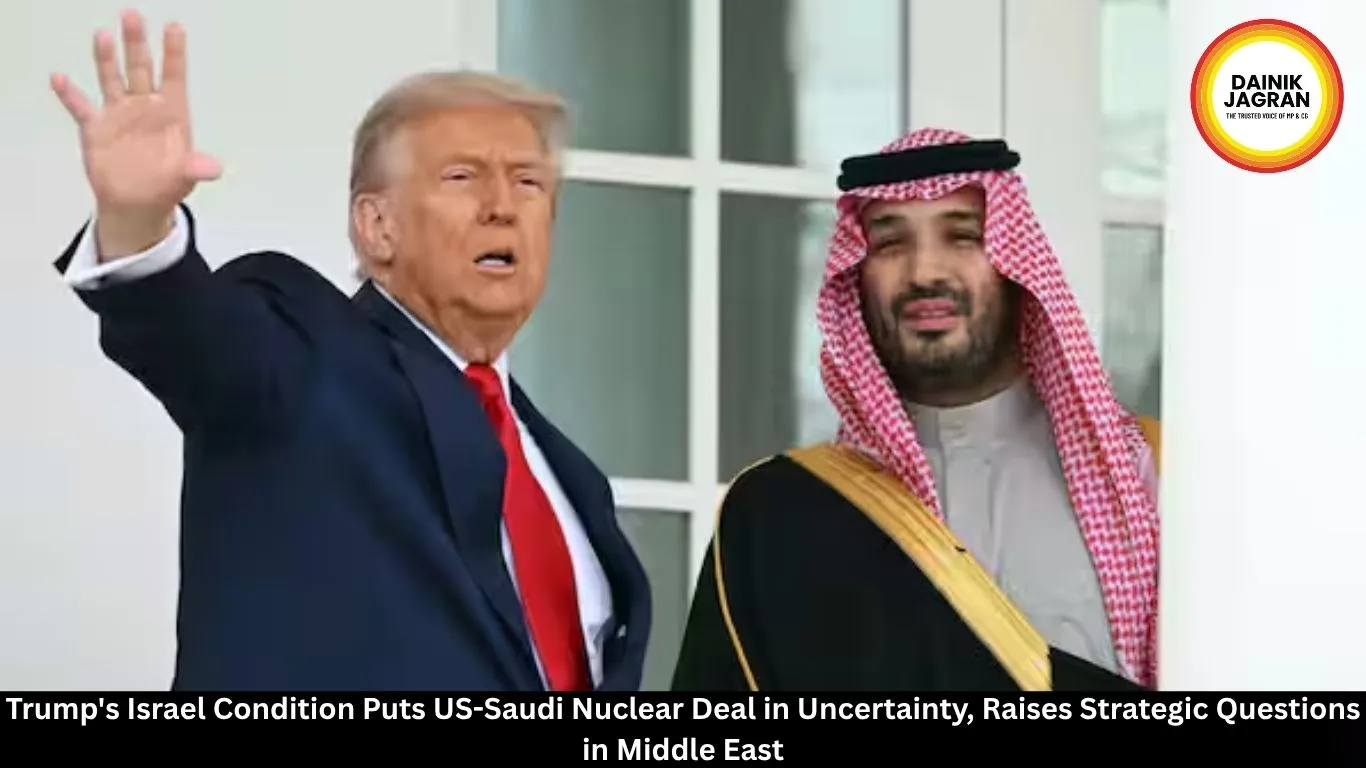
The future of the US-Saudi civilian nuclear agreement remains uncertain after President Donald Trump linked its implementation to Saudi Arabia's normalisation of relations with Israel.

 A landmark civilian nuclear cooperation agreement between the United States and Saudi Arabia has entered a period of uncertainty after US President Donald Trump linked its implementation to Saudi Arabia's recognition of Israel under the Abraham Accords.

Although both countries signed a 30-year civilian nuclear cooperation agreement on July 22, Trump later stated that the deal would move forward only if Riyadh formally normalises diplomatic relations with Israel.

The new condition has complicated negotiations, as Saudi Arabia has consistently maintained that recognition of Israel depends on the establishment of an independent Palestinian state.

Nuclear Deal Faces Diplomatic Hurdle

The agreement was signed in Washington by US Energy Secretary Chris Wright and Saudi Energy Minister Prince Abdulaziz bin Salman under the framework of a Section 123 Agreement of the US Atomic Energy Act.

The long-term partnership is expected to facilitate American participation in the development of Saudi Arabia's civilian nuclear energy programme while supporting the kingdom's efforts to diversify its energy mix under Vision 2030.

US companies, including reactor manufacturers, are expected to play a leading role in constructing Saudi Arabia's future nuclear infrastructure.

However, Trump's insistence on Saudi-Israel normalisation has introduced fresh uncertainty over the implementation of the agreement.

Saudi Position Remains Unchanged

Saudi Arabia has repeatedly stated that diplomatic relations with Israel will only be considered after meaningful progress toward creating an independent Palestinian state based on the 1967 borders, with East Jerusalem as its capital.

Saudi officials have maintained that a clear political roadmap is essential before any normalisation process can begin.

The differing positions have created a diplomatic deadlock over the future of the nuclear agreement.

Debate Over Uranium Enrichment

One of the most debated aspects of the agreement concerns the possibility of domestic uranium enrichment within Saudi Arabia.

While President Trump has publicly stated that Saudi Arabia will not enrich uranium under the agreement, reports suggest that the deal allows both countries to jointly study the feasibility of domestic enrichment during a two-year review period.

According to officials, any future enrichment activities would remain subject to strict safeguards and oversight mechanisms designed to prevent military diversion.

However, non-proliferation experts have expressed concern that civilian enrichment technology could potentially be adapted for military purposes if adequate safeguards are not maintained.

Regional and International Concerns

The agreement has attracted attention across the Middle East and beyond.

Iran has criticised the proposed cooperation, arguing that it reflects unequal treatment in international nuclear policy.

Security analysts have also warned that the agreement could influence the regional strategic balance if additional countries seek similar nuclear capabilities.

Israeli officials have welcomed Trump's demand for diplomatic normalisation but have reportedly expressed concerns over any future Saudi uranium enrichment capability.

Congressional Review Underway

The agreement has been submitted to the US Congress for its mandatory review period.

Several lawmakers from both major political parties have raised questions regarding nuclear safeguards, regional stability and non-proliferation standards.

Any attempt to block the agreement, however, would require overcoming significant legislative thresholds.

Future Depends on Diplomacy

Analysts believe the future of the agreement will largely depend on whether Washington and Riyadh can bridge differences over the issue of Israel.

If negotiations fail, observers suggest Saudi Arabia could explore civilian nuclear cooperation with alternative partners, including China, Russia or South Korea, potentially reshaping strategic competition in the Middle East.

For now, the agreement remains in diplomatic limbo as discussions continue over both regional security and broader geopolitical interests.
 

--------

🚨 Beat the News Rush – Join Now!

Get breaking alerts, hot exclusives, and game-changing stories instantly on your phone. No delays, no fluff – just the edge you need. ⚡

Tap to join: 

🟢 WhatsApp Channel: Dainik Jagran MP CG

Crave more?

🅕 Facebook: Dainik Jagran MP CG English

🅧 Twitter (X): Dainik Jagran MP CG

🅘 Instagram: Dainik Jagran MP CG

Share the fire – keep your crew ahead! 🗞️🔥

english.dainikjagranmpcg.com
28 Jul 2026 By Abhishek Joshi

Trump's Israel Condition Casts Uncertainty Over US-Saudi Nuclear Deal

Digital Desk

 A landmark civilian nuclear cooperation agreement between the United States and Saudi Arabia has entered a period of uncertainty after US President Donald Trump linked its implementation to Saudi Arabia's recognition of Israel under the Abraham Accords.

Although both countries signed a 30-year civilian nuclear cooperation agreement on July 22, Trump later stated that the deal would move forward only if Riyadh formally normalises diplomatic relations with Israel.

The new condition has complicated negotiations, as Saudi Arabia has consistently maintained that recognition of Israel depends on the establishment of an independent Palestinian state.

Nuclear Deal Faces Diplomatic Hurdle

The agreement was signed in Washington by US Energy Secretary Chris Wright and Saudi Energy Minister Prince Abdulaziz bin Salman under the framework of a Section 123 Agreement of the US Atomic Energy Act.

The long-term partnership is expected to facilitate American participation in the development of Saudi Arabia's civilian nuclear energy programme while supporting the kingdom's efforts to diversify its energy mix under Vision 2030.

US companies, including reactor manufacturers, are expected to play a leading role in constructing Saudi Arabia's future nuclear infrastructure.

However, Trump's insistence on Saudi-Israel normalisation has introduced fresh uncertainty over the implementation of the agreement.

Saudi Position Remains Unchanged

Saudi Arabia has repeatedly stated that diplomatic relations with Israel will only be considered after meaningful progress toward creating an independent Palestinian state based on the 1967 borders, with East Jerusalem as its capital.

Saudi officials have maintained that a clear political roadmap is essential before any normalisation process can begin.

The differing positions have created a diplomatic deadlock over the future of the nuclear agreement.

Debate Over Uranium Enrichment

One of the most debated aspects of the agreement concerns the possibility of domestic uranium enrichment within Saudi Arabia.

While President Trump has publicly stated that Saudi Arabia will not enrich uranium under the agreement, reports suggest that the deal allows both countries to jointly study the feasibility of domestic enrichment during a two-year review period.

According to officials, any future enrichment activities would remain subject to strict safeguards and oversight mechanisms designed to prevent military diversion.

However, non-proliferation experts have expressed concern that civilian enrichment technology could potentially be adapted for military purposes if adequate safeguards are not maintained.

Regional and International Concerns

The agreement has attracted attention across the Middle East and beyond.

Iran has criticised the proposed cooperation, arguing that it reflects unequal treatment in international nuclear policy.

Security analysts have also warned that the agreement could influence the regional strategic balance if additional countries seek similar nuclear capabilities.

Israeli officials have welcomed Trump's demand for diplomatic normalisation but have reportedly expressed concerns over any future Saudi uranium enrichment capability.

Congressional Review Underway

The agreement has been submitted to the US Congress for its mandatory review period.

Several lawmakers from both major political parties have raised questions regarding nuclear safeguards, regional stability and non-proliferation standards.

Any attempt to block the agreement, however, would require overcoming significant legislative thresholds.

Future Depends on Diplomacy

Analysts believe the future of the agreement will largely depend on whether Washington and Riyadh can bridge differences over the issue of Israel.

If negotiations fail, observers suggest Saudi Arabia could explore civilian nuclear cooperation with alternative partners, including China, Russia or South Korea, potentially reshaping strategic competition in the Middle East.

For now, the agreement remains in diplomatic limbo as discussions continue over both regional security and broader geopolitical interests.
 

https://english.dainikjagranmpcg.com/international/trumps-israel-condition-casts-uncertainty-over-us-saudi-nuclear-deal/article-23876

Trending News