Trump Pauses Iran Strikes, Says Nuclear and Hormuz Talks to Resume Today
Digital desk
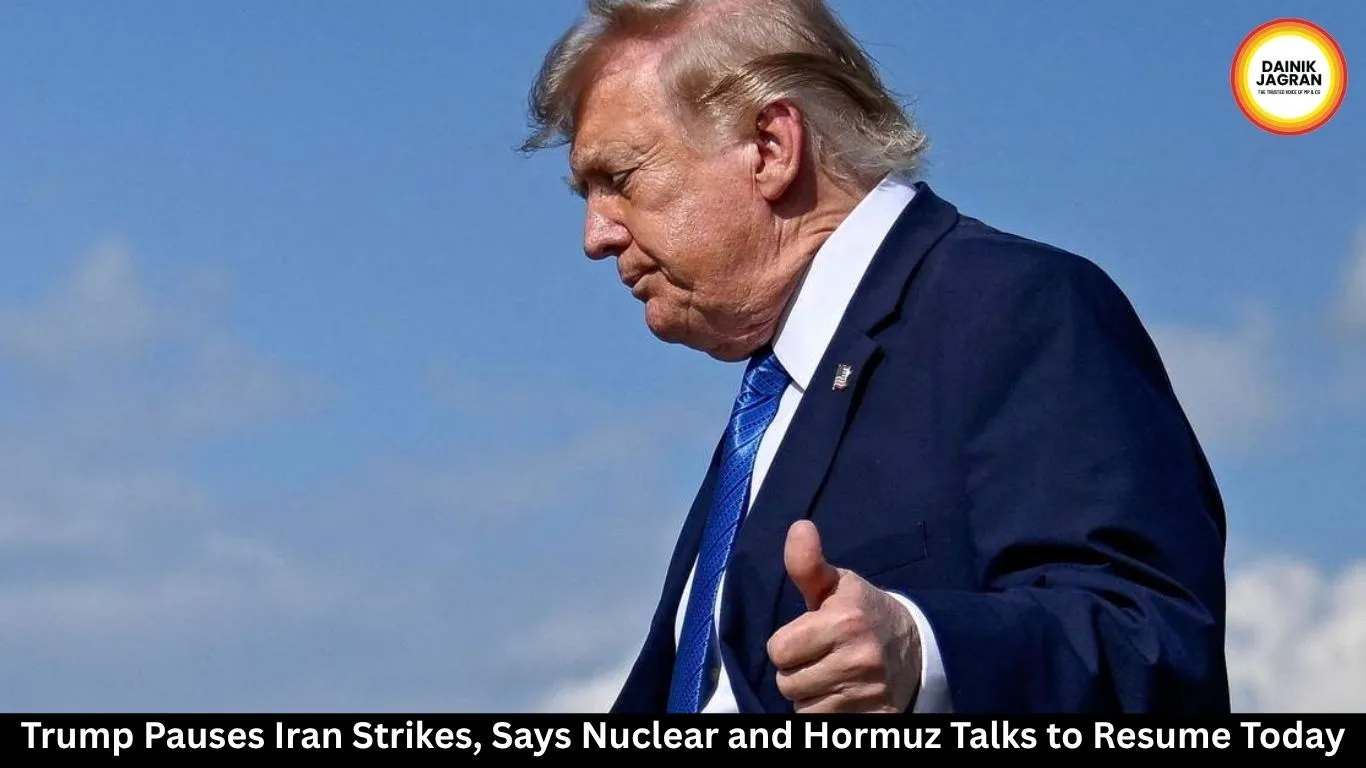
US President Donald Trump has announced that the United States will resume negotiations with Iran on Monday after shelving plans for large-scale military strikes, marking a dramatic shift from his recent threats of direct military action against Tehran.
Speaking aboard Air Force One on Sunday, Trump claimed that Saudi Arabia, the United Arab Emirates, Qatar and even Iran had urged Washington to halt the planned offensive and pursue diplomacy instead. According to Trump, the proposed agreement will focus on ensuring freedom of navigation through the Strait of Hormuz and advancing the eventual denuclearisation of Iran.
"We were all set to go. It would have been a massive attack," Trump said, adding that regional allies believed a diplomatic breakthrough was within reach. He described the planned operation as potentially "the biggest attack since World War II" before deciding to suspend it.
Sharp U-turn after strike threats
The announcement represents a major reversal in US policy. Just days earlier, Trump had warned that Iran would face "very hard strikes" following renewed tensions and attacks involving American forces in the region.
Reports suggested that US military planners were considering strikes targeting Iran's energy infrastructure. However, Trump later stated that he had agreed to postpone military action because "the perimeters of a deal have been agreed to."
Iranian state media, however, denied Trump's claim that Tehran had requested Washington to cancel the strikes.
Talks to focus on Hormuz and nuclear programme
Trump said negotiations beginning Monday would centre on two key issues:
-
Maintaining navigation through the strategic Strait of Hormuz.
-
Iran's nuclear programme and long-term denuclearisation.
Separately, Iranian Foreign Minister Abbas Araghchi said negotiations involving Oman over the management of the Strait of Hormuz were in their final stages, indicating parallel diplomatic efforts.
Iranian President Masoud Pezeshkian also called on Washington to remain committed to the memorandum of understanding signed in June, describing it as central to Iran's future foreign policy.
Oil markets and investors react positively
The renewed diplomatic push eased concerns over disruptions to global energy supplies.
Brent crude prices declined by around five per cent as markets priced in lower geopolitical risks. The positive sentiment also lifted Indian equity markets in early trade, with both the Sensex and Nifty opening higher amid expectations that stable oil supplies could reduce inflationary pressures.
Meanwhile, OPEC+ members have agreed to increase oil production from September, a move expected to improve global supply if regional tensions continue to ease.
Fighting continues elsewhere
Despite the diplomatic developments, violence continued in the region.
Fresh Israeli airstrikes in Gaza reportedly killed at least 18 Palestinians on Sunday, while military tensions remained high across West Asia. A tanker also reported an explosion near the Strait of Hormuz, underlining the continuing security risks in one of the world's busiest energy corridors.
Uncertainty remains
Although Trump has expressed confidence that an agreement is close, several questions remain unanswered, including the location of the negotiations, the identities of the negotiating teams and whether Tehran is willing to accept the terms proposed by Washington.
Iran has also publicly disputed parts of Trump's account, indicating that significant differences may still exist despite renewed diplomatic engagement.
The outcome of Monday's talks is expected to determine whether the latest diplomatic effort can prevent another escalation in the months-long US-Iran confrontation.
--------
🚨 Beat the News Rush – Join Now!
Get breaking alerts, hot exclusives, and game-changing stories instantly on your phone. No delays, no fluff – just the edge you need. ⚡
Tap to join:
🟢 WhatsApp Channel: Dainik Jagran MP CG
Crave more?
🅕 Facebook: Dainik Jagran MP CG English
🅧 Twitter (X): Dainik Jagran MP CG
🅘 Instagram: Dainik Jagran MP CG
Share the fire – keep your crew ahead! 🗞️🔥
Trump Pauses Iran Strikes, Says Nuclear and Hormuz Talks to Resume Today
Digital desk
Speaking aboard Air Force One on Sunday, Trump claimed that Saudi Arabia, the United Arab Emirates, Qatar and even Iran had urged Washington to halt the planned offensive and pursue diplomacy instead. According to Trump, the proposed agreement will focus on ensuring freedom of navigation through the Strait of Hormuz and advancing the eventual denuclearisation of Iran.
"We were all set to go. It would have been a massive attack," Trump said, adding that regional allies believed a diplomatic breakthrough was within reach. He described the planned operation as potentially "the biggest attack since World War II" before deciding to suspend it.
Sharp U-turn after strike threats
The announcement represents a major reversal in US policy. Just days earlier, Trump had warned that Iran would face "very hard strikes" following renewed tensions and attacks involving American forces in the region.
Reports suggested that US military planners were considering strikes targeting Iran's energy infrastructure. However, Trump later stated that he had agreed to postpone military action because "the perimeters of a deal have been agreed to."
Iranian state media, however, denied Trump's claim that Tehran had requested Washington to cancel the strikes.
Talks to focus on Hormuz and nuclear programme
Trump said negotiations beginning Monday would centre on two key issues:
-
Maintaining navigation through the strategic Strait of Hormuz.
-
Iran's nuclear programme and long-term denuclearisation.
Separately, Iranian Foreign Minister Abbas Araghchi said negotiations involving Oman over the management of the Strait of Hormuz were in their final stages, indicating parallel diplomatic efforts.
Iranian President Masoud Pezeshkian also called on Washington to remain committed to the memorandum of understanding signed in June, describing it as central to Iran's future foreign policy.
Oil markets and investors react positively
The renewed diplomatic push eased concerns over disruptions to global energy supplies.
Brent crude prices declined by around five per cent as markets priced in lower geopolitical risks. The positive sentiment also lifted Indian equity markets in early trade, with both the Sensex and Nifty opening higher amid expectations that stable oil supplies could reduce inflationary pressures.
Meanwhile, OPEC+ members have agreed to increase oil production from September, a move expected to improve global supply if regional tensions continue to ease.
Fighting continues elsewhere
Despite the diplomatic developments, violence continued in the region.
Fresh Israeli airstrikes in Gaza reportedly killed at least 18 Palestinians on Sunday, while military tensions remained high across West Asia. A tanker also reported an explosion near the Strait of Hormuz, underlining the continuing security risks in one of the world's busiest energy corridors.
Uncertainty remains
Although Trump has expressed confidence that an agreement is close, several questions remain unanswered, including the location of the negotiations, the identities of the negotiating teams and whether Tehran is willing to accept the terms proposed by Washington.
Iran has also publicly disputed parts of Trump's account, indicating that significant differences may still exist despite renewed diplomatic engagement.
The outcome of Monday's talks is expected to determine whether the latest diplomatic effort can prevent another escalation in the months-long US-Iran confrontation.