


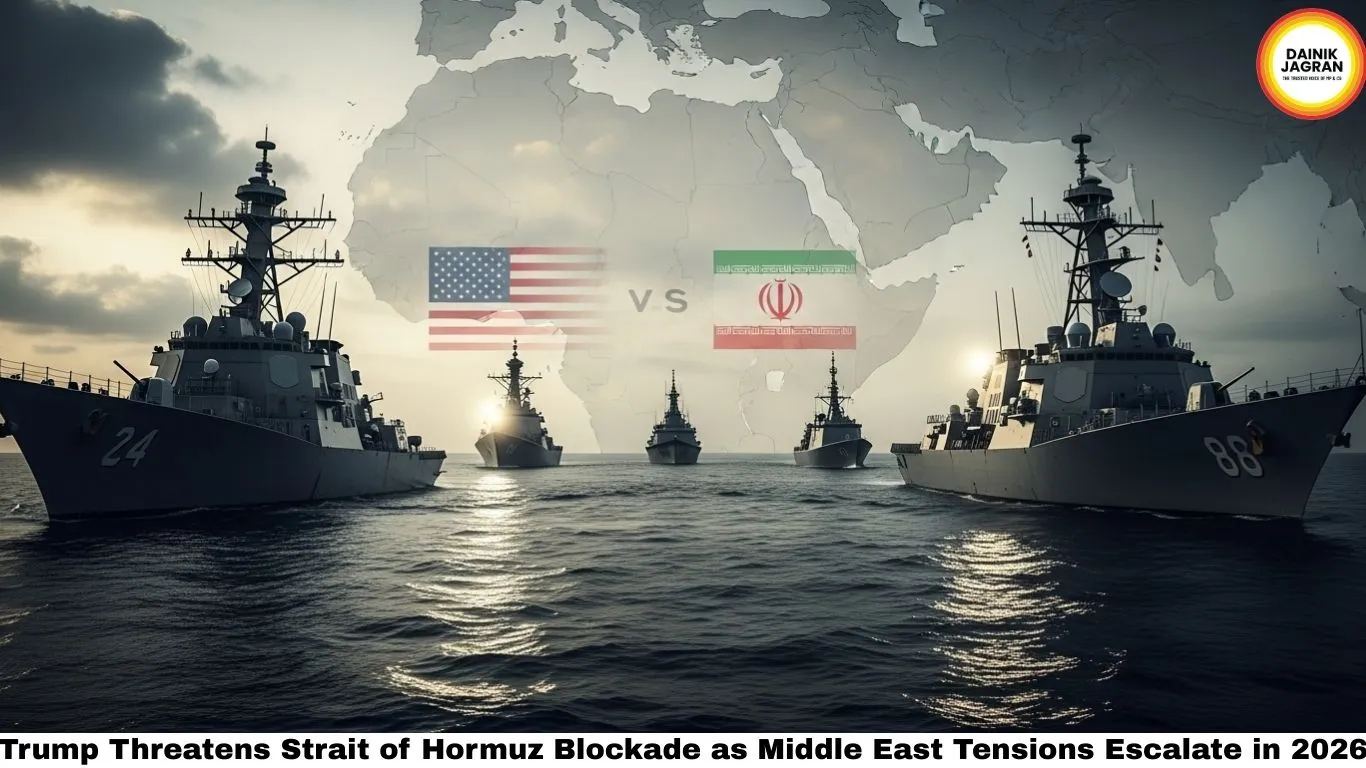
Trump Threatens Strait of Hormuz Blockade as Middle East Tensions Escalate in 2026
Digital Desk
The world is watching with growing concern as US-Iran war live updates dominate global headlines this week. President Donald Trump has escalated his rhetoric against Tehran, hinting at possible military action near the Strait of Hormuz — the world's most critical oil transit chokepoint. With Israel firmly backing Washington and Iran's Supreme Leader Ayatollah Khamenei issuing fierce warnings, the Middle East is once again on the edge of a full-blown crisis.
Here is everything you need to know about the latest developments, what experts are saying, and how this could impact ordinary lives — from oil prices to flights through Dubai.
Why Is the Strait of Hormuz at the Center of This Crisis?
The Strait of Hormuz is a narrow waterway between Iran and Oman. Nearly 20% of the world's oil supply passes through it every single day. That makes it one of the most strategically important locations on the planet.
In the past 72 hours, tensions have spiked after reports that Iran moved additional naval vessels and missile systems closer to the strait. In response, the US deployed a second carrier strike group to the Persian Gulf.
Key developments so far:
- Trump's Warning: President Trump stated that the US "will not allow Iran to hold global energy hostage" and hinted at a naval blockade if Tehran does not pull back.
- Iran's Response: Ayatollah Khamenei called the US threats "empty intimidation" and vowed Iran would "defend every inch of its waters."
- Israel's Role: Prime Minister Netanyahu publicly backed Washington, saying Israel "stands ready to act" against any Iranian aggression.
How Israel and Iran Are Fueling the Fire
The Israel Iran conflict latest chapter is deeply tied to this crisis. Israeli intelligence reportedly shared evidence with Washington that Iran has accelerated uranium enrichment at its Fordow facility — something Tehran denies.
Defense analyst Dr. Sarah Mitchell from the Brookings Institution told media outlets:
"This is not just a US-Iran standoff. Israel is playing a very active role behind the scenes. The intelligence-sharing between Tel Aviv and Washington has reached levels we haven't seen since the early 2000s."
Iran, on the other hand, accuses Israel of carrying out covert sabotage operations against its nuclear sites. This back-and-forth has made diplomacy even harder.
Dubai Airport and UAE Feel the Heat
One unexpected casualty of this escalation is civilian aviation. Several international airlines have rerouted flights away from the Persian Gulf region. Dubai International Airport — the world's busiest for international passengers — has reported delays and cancellations on multiple routes.
The UAE government has urged calm but quietly raised its security alert level. Tourists and business travelers are being advised to:
- Monitor flight status before heading to the airport
- Avoid non-essential travel to border regions near the strait
- Register with their country's embassy in the UAE
The economic impact is already being felt. Crude oil prices jumped over 6% this week, with Brent crude crossing the $98 mark for the first time in months.
Trump's Middle East Policy 2026 — Diplomacy or Confrontation?
Trump Middle East policy 2026 appears to lean heavily toward confrontation rather than negotiation. Unlike his first term, where backchannel talks sometimes softened public rhetoric, this time the White House has shown little interest in diplomatic off-ramps.
White House Press Secretary confirmed in a briefing:
"The President believes that strength is the only language Tehran understands. All options remain firmly on the table."
Critics, however, warn that this approach could backfire. Former diplomat Richard Haass noted:
"Military posturing without a clear diplomatic exit strategy is how wars start by accident. We are closer to that line than most people realize."
What Happens Next? Key Things to Watch
The situation remains highly fluid. Here are the key triggers that could escalate or de-escalate this crisis:
- UN Security Council Emergency Session — Scheduled for early next week. Russia and China are expected to oppose any US-led resolution.
- Iran's Nuclear Response — If Tehran expels IAEA inspectors, it could be seen as a point of no return.
- Oil Price Movement — If crude crosses $100/barrel, expect political pressure on all sides to find a solution fast.
- Regional Allies' Stance — Saudi Arabia and Qatar have remained unusually quiet. Their position could tip the balance.
Why This Story Matters to You Right Now
Even if you are thousands of miles away from the Strait of Hormuz, this crisis will affect you. Higher oil prices mean more expensive petrol, costlier groceries, and potential stock market volatility. If you have travel plans involving the Gulf region, disruption is a real possibility.
This is not just a story about warships and political leaders. It is about the price you pay at the pump, the stability of your investments, and whether the world can step back from a conflict nobody truly wants.

.jpg)




