US-Iran Tensions Escalate: Trump's 48-Hour Ultimatum on Strait of Hormuz Expires

Digital Desk

US-Iran Tensions Escalate: Trump's 48-Hour Ultimatum on Strait of Hormuz Expires

Tensions surge as President Trump’s 48-hour ultimatum to Iran over the Strait of Hormuz expires. Israel launches strikes on Tehran as Iran warns of closing the key oil route.

Trump’s 48-Hour Ultimatum Expires as Iran Threatens Strait of Hormuz Closure

Tensions Escalate in West Asia

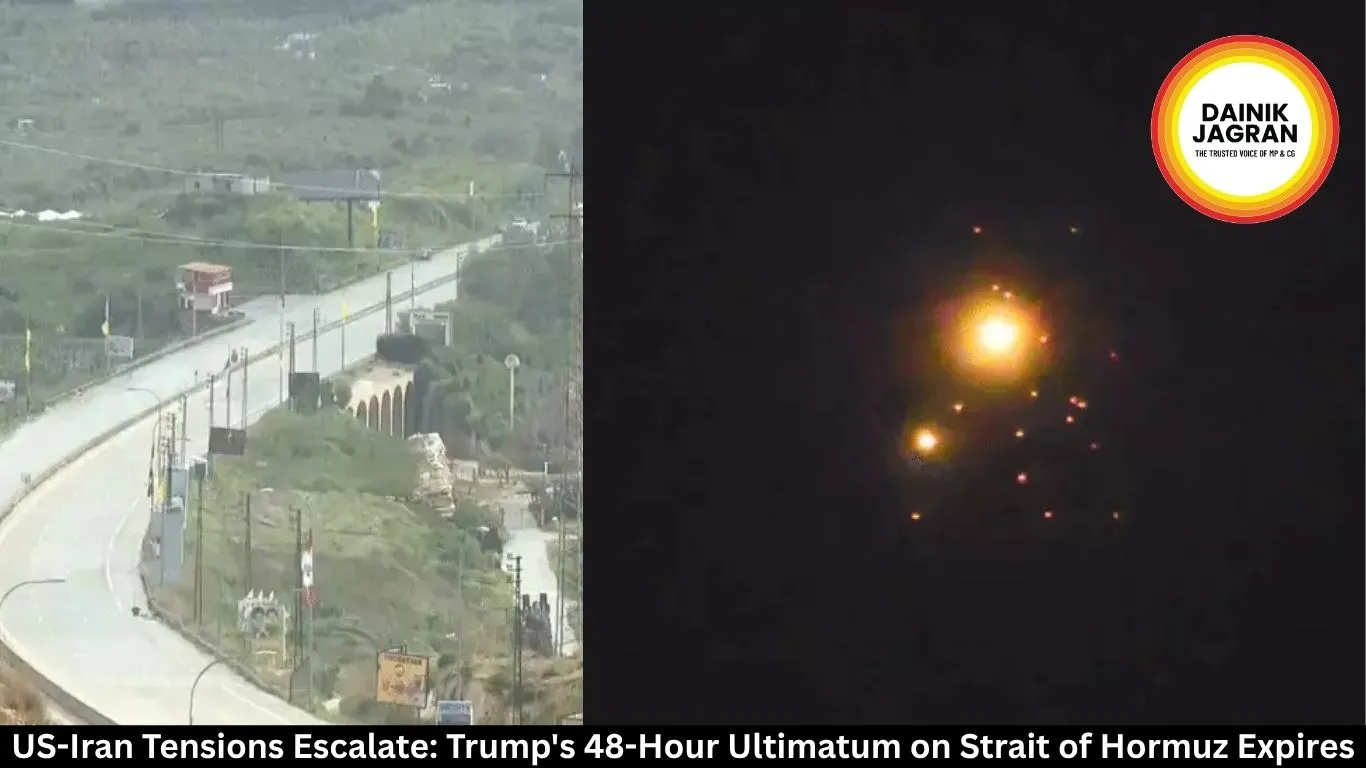
Tensions in West Asia reached a critical point on Monday as a 48-hour ultimatum issued by United States President Donald Trump to Iran officially expired. The deadline, which demanded Tehran reopen the Strait of Hormuz without conditions, lapsed amid a significant escalation of military action across the region. Reports of fresh airstrikes and retaliatory threats have placed global energy markets and international diplomacy on edge.

Israel Conducts Fresh Strikes on Tehran

In a dramatic escalation, the Israeli military announced a “wave of extensive strikes” targeting Iranian government infrastructure in Tehran. Explosions were reported across the capital by Iranian state media. The Israel Defense Forces (IDF) stated the operation was focused on “terrorist infrastructure.” This attack followed earlier missile strikes that reportedly hit residential areas, including Khorramabad and Karaj, resulting in casualties, with Iranian media confirming at least one child killed.

Iran Warns of Retaliation and Canal Closure

Responding to the military actions, Iranian President Masoud Pezeshkian issued a stark warning. He stated that any further attacks, particularly on Iranian power plants or nuclear facilities, would be met with direct retaliation. The Islamic Revolutionary Guard Corps (IRGC) specifically threatened to completely shut the Strait of Hormuz, a vital chokepoint through which approximately 20% of the world’s oil passes. Iran also warned it would target regional energy and water infrastructure if its assets are struck.

Global Markets Rattled by Conflict Fears

The escalating conflict sent shockwaves through global financial markets. Asian stock markets tumbled sharply on Monday, with Japan’s Nikkei index falling by approximately 3.5% and Hong Kong’s Hang Seng dropping around 3.3%. Investors fled to safe-haven assets as fears mounted that the war could drag on for weeks. The International Energy Agency (IEA) warned that the global economy is facing a “major, major threat” due to the energy crisis sparked by the hostilities.

Oil Prices Surge Past $100 Mark

Concerns over the potential closure of the Strait of Hormuz triggered a sharp surge in global crude oil prices. US benchmark WTI crude crossed the $100 per barrel mark, while Brent crude climbed to $113.44 per barrel before stabilizing slightly. The volatility underscores the market’s anxiety over supply disruptions. The South Korean won also weakened sharply, slipping to its lowest level since 2009, reflecting the broader economic impact of the geopolitical instability.

Diplomatic Efforts Stalled by Preconditions

Despite the military escalation, diplomatic backchannels remain active. Aides to President Trump, including Jared Kushner, are reportedly exploring ceasefire options. However, Tehran has set strict preconditions for any talks, including an immediate halt to the war, compensation for damages, and guarantees against future attacks. Washington is currently unwilling to accept these terms, and there are no direct talks between the US and Iran, with countries like Egypt, Qatar, and the UK acting as mediators.

Outlook Remains Uncertain Amid Hostilities

With the ultimatum expired and both sides showing no signs of backing down, the immediate future remains volatile. The US has reiterated its demands for Iran to suspend its missile program and halt uranium enrichment. Meanwhile, Iran’s military has vowed to continue its operations until it “teaches its enemies a lesson.” As the Strait of Hormuz remains a key flashpoint, the global community watches closely for the next move, with the risk of a wider regional conflict looming large.
 

english.dainikjagranmpcg.com
23 Mar 2026 By Abhishek Joshi

US-Iran Tensions Escalate: Trump's 48-Hour Ultimatum on Strait of Hormuz Expires

Digital Desk

Trump’s 48-Hour Ultimatum Expires as Iran Threatens Strait of Hormuz Closure

Tensions Escalate in West Asia

Tensions in West Asia reached a critical point on Monday as a 48-hour ultimatum issued by United States President Donald Trump to Iran officially expired. The deadline, which demanded Tehran reopen the Strait of Hormuz without conditions, lapsed amid a significant escalation of military action across the region. Reports of fresh airstrikes and retaliatory threats have placed global energy markets and international diplomacy on edge.

Israel Conducts Fresh Strikes on Tehran

In a dramatic escalation, the Israeli military announced a “wave of extensive strikes” targeting Iranian government infrastructure in Tehran. Explosions were reported across the capital by Iranian state media. The Israel Defense Forces (IDF) stated the operation was focused on “terrorist infrastructure.” This attack followed earlier missile strikes that reportedly hit residential areas, including Khorramabad and Karaj, resulting in casualties, with Iranian media confirming at least one child killed.

Iran Warns of Retaliation and Canal Closure

Responding to the military actions, Iranian President Masoud Pezeshkian issued a stark warning. He stated that any further attacks, particularly on Iranian power plants or nuclear facilities, would be met with direct retaliation. The Islamic Revolutionary Guard Corps (IRGC) specifically threatened to completely shut the Strait of Hormuz, a vital chokepoint through which approximately 20% of the world’s oil passes. Iran also warned it would target regional energy and water infrastructure if its assets are struck.

Global Markets Rattled by Conflict Fears

The escalating conflict sent shockwaves through global financial markets. Asian stock markets tumbled sharply on Monday, with Japan’s Nikkei index falling by approximately 3.5% and Hong Kong’s Hang Seng dropping around 3.3%. Investors fled to safe-haven assets as fears mounted that the war could drag on for weeks. The International Energy Agency (IEA) warned that the global economy is facing a “major, major threat” due to the energy crisis sparked by the hostilities.

Oil Prices Surge Past $100 Mark

Concerns over the potential closure of the Strait of Hormuz triggered a sharp surge in global crude oil prices. US benchmark WTI crude crossed the $100 per barrel mark, while Brent crude climbed to $113.44 per barrel before stabilizing slightly. The volatility underscores the market’s anxiety over supply disruptions. The South Korean won also weakened sharply, slipping to its lowest level since 2009, reflecting the broader economic impact of the geopolitical instability.

Diplomatic Efforts Stalled by Preconditions

Despite the military escalation, diplomatic backchannels remain active. Aides to President Trump, including Jared Kushner, are reportedly exploring ceasefire options. However, Tehran has set strict preconditions for any talks, including an immediate halt to the war, compensation for damages, and guarantees against future attacks. Washington is currently unwilling to accept these terms, and there are no direct talks between the US and Iran, with countries like Egypt, Qatar, and the UK acting as mediators.

Outlook Remains Uncertain Amid Hostilities

With the ultimatum expired and both sides showing no signs of backing down, the immediate future remains volatile. The US has reiterated its demands for Iran to suspend its missile program and halt uranium enrichment. Meanwhile, Iran’s military has vowed to continue its operations until it “teaches its enemies a lesson.” As the Strait of Hormuz remains a key flashpoint, the global community watches closely for the next move, with the risk of a wider regional conflict looming large.

 

https://english.dainikjagranmpcg.com/special-news/us-iran-tensions-escalate-trumps-48-hour-ultimatum-on-strait-of-hormuz/article-15826

Advertisement

Latest News