


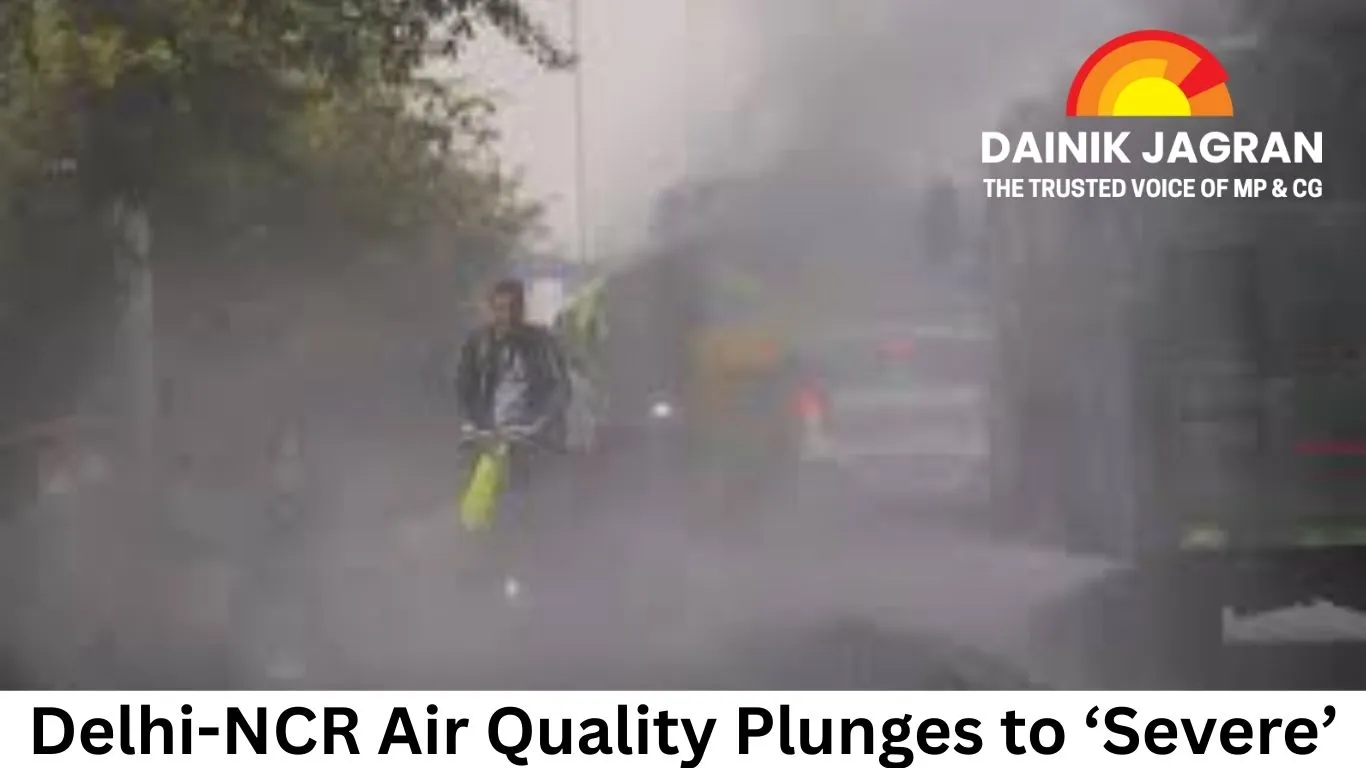
Delhi-NCR Air Quality Plunges to ‘Severe’, Flights Disrupted as Supreme Court Steps In
Digital Desk
At least 60 flights were cancelled and over 250 delayed due to poor visibility, which dropped to as low as 50 metres in parts of the city, including Akshardham and Kartavya Path. Airports reported intermittent suspensions of operations as fog and smog reduced runway visibility, while airlines issued advisories warning of further disruptions.
Despite the implementation of the strictest pollution curbs under Graded Response Action Plan (GRAP)-IV, air quality showed no improvement. GRAP-IV mandates work from home for 50% of staff, a ban on construction activities, restrictions on diesel vehicles and generators, suspension of brick kilns and stone crushers, and hybrid functioning of schools. Outdoor activities in schools have been prohibited as a precaution.
Meteorological conditions played a key role in the crisis. The India Meteorological Department said low wind speeds—below 10 kmph—prevented dispersion of pollutants after the impact of a western disturbance weakened. Pollutants remained trapped close to the surface, turning the capital into what officials described as a “gas chamber.”
The Supreme Court has taken note of the worsening situation and will hear petitions related to Delhi-NCR air pollution on Wednesday, December 17. Chief Justice of India Justice Suryakant said the court would pass “effective orders” and advised lawyers to opt for hybrid hearings given the hazardous conditions.
Health authorities have urged children, the elderly and those with respiratory ailments to remain indoors and avoid exertion. According to the Air Quality Early Warning System, severe pollution levels are likely to persist for several more days, with only marginal relief expected if wind speeds pick up later in the week.
As the capital grapples with yet another winter pollution emergency, questions are being raised over the effectiveness of existing control measures and the need for longer-term solutions.




.jpg)




